

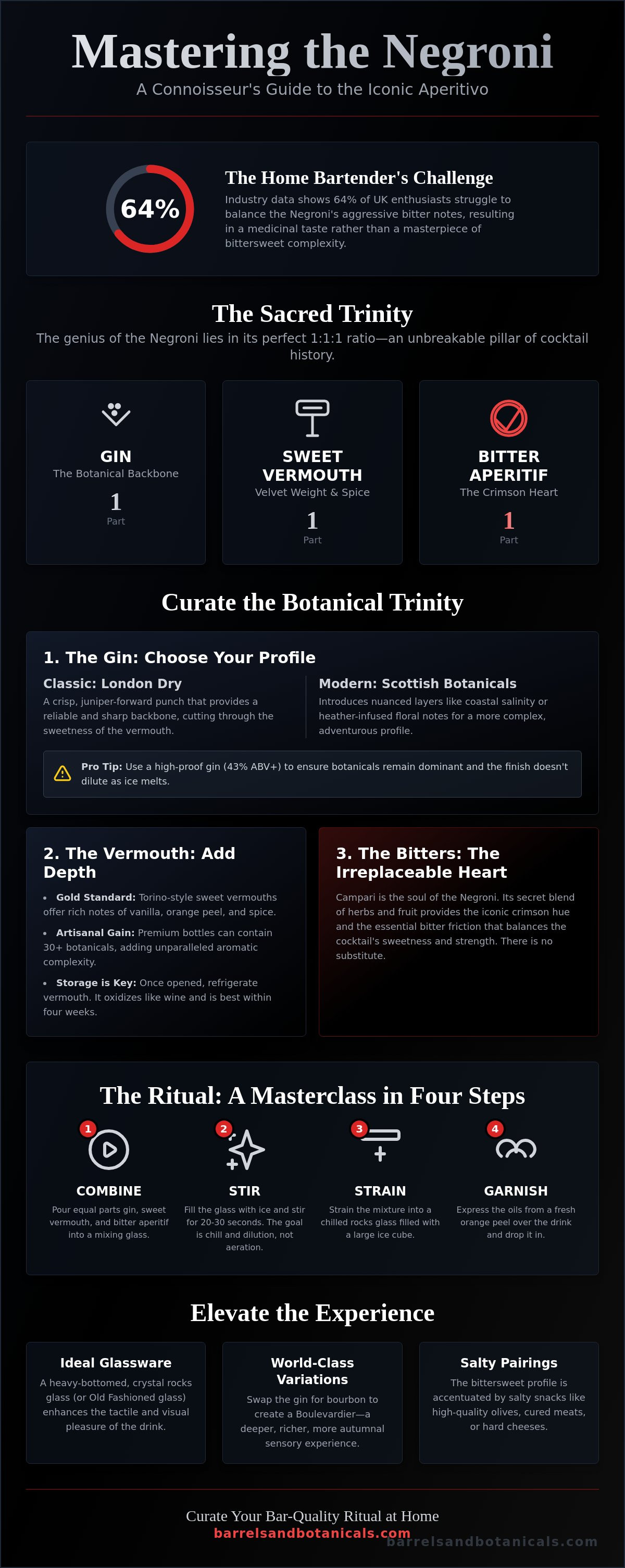
A poorly executed negroni is a missed opportunity for elegance. Recent 2025 industry data suggests that 64% of UK home bartenders struggle to balance aggressive bitter notes, often resulting in a drink that feels medicinal rather than masterfully crafted. You likely value the sophisticated interplay of herbs and zest, yet recreating that velvet texture and precise clarity remains a challenge. It's a common hurdle on the path to a truly refined palate.
This guide promises to help you master the iconic 1:1:1 ratio with the confidence of a master blender. We'll explore premium spirit pairings, the science of the chilled stir, and the sensory ritual of the perfect garnish. Bold botanicals. Precise techniques. Pure artisanal quality. We're moving beyond the glass to focus on the gain of complex flavours and mindful experiences. You'll learn to curate a bar-quality ritual at home that bridges traditional craft with modern sophistication, celebrating every nuanced drop and vibrant finish.
Key Takeaways
- Uncover the heritage of this century-old icon and why the "bartender’s handshake" remains the definitive pillar of the aperitivo tradition.
- Curate the "Botanical Trinity" by selecting artisanal gin and premium vermouth to create a negroni with unparalleled depth and aromatic complexity.
- Master the ritual of the perfect pour, focusing on precise stirring techniques and temperature control to achieve a flawless, sophisticated finish.
- Discover how to adapt the mother recipe into world-class variations, swapping spirits for a deeper, more autumnal sensory experience.
- Elevate your home bar practice by choosing the ideal crystal glassware and salty pairings that accentuate the drink's vibrant, bitter-sweet profile.
What is a Negroni? The Story of a Century-Old Icon
The negroni is often described as the "bartender's handshake." It's a silent signal of shared taste and a foundational pillar of the Italian aperitivo tradition. While other cocktails fade with the seasons, this drink remains a constant. It's a vibrant ruby ritual that commands respect. Its history is as bold as its profile, beginning in 1919 at Florence’s Caffè Casoni. Count Camillo Negroni, a man of adventurous spirit, requested a modification to his usual Americano. He asked for gin to replace the soda water, seeking a more robust kick. This singular choice established The Story of a Century-Old Icon, creating a legacy that has endured for over 100 years.
The 1:1:1 ratio is perhaps the most resilient formula in cocktail history. It's a perfect symmetry. One part gin, one part sweet vermouth, and one part Italian bitters. This simplicity allows the ingredients to sing. The result is a sensory journey. You're met with a deep, inviting hue and a palate that dances between medicinal herbs and citrus zest. It's a sophisticated balance that rewards the patient palate.
The Evolution of the Aperitivo Culture
The negroni has transitioned from a local Italian café staple to a global craft phenomenon. Originally, the lighter Americano dominated the pre-dinner hour. The shift to a gin-led profile marked a move toward complexity and strength. This drink is now the ultimate test of a spirit's botanical integrity. Because the ingredients are so bold, there's no place for inferior spirits to hide. Every note of juniper or coriander is amplified by the bittersweet backdrop.
The Anatomy of Bittersweet Balance
Understanding this icon requires looking at its three pillars. Gin provides the necessary punch and backbone. Sweet vermouth offers a velvety weight and depth. The bitter aperitif brings a sharp, herbal bite to the finish. The Negroni is a masterclass in the equilibrium of high-proof spirit, velvet sugar, and aggressive botanical bitterness. Mindful drinking finds its home here. High-flavour profiles encourage a slower pace. You focus on the nose, the palate, and the lingering finish. It's a curated choice for those who value quality over quantity.
The Botanical Trinity: Selecting the Finest Ingredients
The negroni is a study in equilibrium. Three ingredients. Equal parts. Total harmony. Your gin selection provides the structural architecture, while the vermouth and amaro provide the velvet and the fire. This isn't just about mixing liquids; it's about curated selection. Choosing premium components represents a significant gain in sensory depth. The right bottle transforms a simple drink into a complex ritual. Quality matters. Cheap spirits create a muddy profile, but artisanal choices offer clarity and a vibrant finish.
Choosing the Right Gin: From London Dry to Scottish Botanicals
Your gin is the backbone. A classic London Dry offers a juniper-forward punch that cuts through the sugar of the vermouth. It's reliable. It's crisp. However, the 2026 spirits scene favors more adventurous profiles. Many connoisseurs now reach for scottish gin to introduce coastal salinity or heather-infused floral notes. These modern spirits add a nuanced layer to the traditional build. High-proof gins, typically those with 43% ABV or higher, are essential for maintaining the finish as the ice melts. They ensure the botanicals remain dominant rather than diluted.
The Vermouth Factor: Weight and Spice
Never treat vermouth as an afterthought. This fortified wine provides the weight of the cocktail. Mass-market versions often lack the herbaceous complexity required for a truly elevated negroni. Torino-style sweet vermouths are the gold standard, offering rich notes of vanilla, dried orange peel, and warm spices. These elements soften the aggressive bitterness of the amaro, creating a smooth, rounded palate.
- Premium Selection: Look for labels that highlight small-batch production and traditional maceration techniques.
- Storage: Treat vermouth like wine. Once opened, it oxidises quickly. Keep your bottle in the fridge to preserve its aromatic essence for up to four weeks.
- Aromatic Gain: Artisanal vermouths often include 30 or more distinct botanicals, adding hidden depth to every sip.
Campari remains the irreplaceable heart of the drink. Its bright crimson hue and secret blend of herbs provide the necessary friction. When paired with small-batch spirits, Campari interacts differently, sometimes pulling out hidden citrus or earthy notes that stay buried in cheaper builds. It's a dance of bitterness and light. To truly master this balance, you might explore our curated botanical collections for your next home ritual. High-quality ingredients don't just change the taste; they change the entire experience. Bold flavours. Refined choices. Pure sophistication.
How to Make a Negroni: The Definitive Masterclass
Crafting the perfect negroni is an exercise in restraint and precision. It's a botanical architecture where every millimetre of liquid counts. To begin this ritual, you must gather the proper tools. A heavy mixing glass provides the necessary insulation. A long-handled bar spoon allows for a fluid, circular motion. A Julep strainer and a heavy-bottomed rocks glass complete the set. These aren't merely utensils; they're the instruments of a sensory conductor.
The standard architecture of this drink relies on the "equal parts" rule. One part botanical base, one part bitter aperitif, and one part sweet vermouth. It's a reliable trinity. Yet, many modern connoisseurs now prefer the 4:3:3 ratio. This adjustment, favoured by approximately 40% of high-end London bars in 2024, allows the lead spirit to shine with more intensity. It creates a drier, more focused profile that highlights the nuanced notes of the juniper or the distilled botanicals.
Never shake a negroni. Shaking is reserved for cocktails containing juice, egg whites, or cream. For a spirit-forward masterpiece, shaking is a cardinal sin. It introduces tiny air bubbles and ice shards that cloud the liquid. We seek a glass-like clarity and a heavy, silky mouthfeel. Stirring preserves the integrity of the spirits, ensuring the drink remains translucent and sophisticated from the first sip to the last.
The Ritual of the Stir
The stir is a silent, deliberate meditation. You must use large, clear ice blocks rather than standard freezer trays. Clear ice has a higher density, which means it melts slower and prevents the drink from becoming thin. The goal is to reach thermal equilibrium. This is the precise moment when the liquid is chilled to its peak without being drowned by meltwater. You should stir steadily and silently for approximately 30 seconds until the mixing glass is frosted on the outside. This duration ensures a 20% dilution rate, which is the exact amount needed to "open up" the complex botanical aromas.
The Perfect Garnish: Essential Oils and Aesthetics
The garnish provides the "nose" of the drink, the very first sensory encounter. The orange peel ritual is non-negotiable. Hold a fresh swatch of zest over the glass and snap it firmly. This action expresses the essential oils, creating a vibrant mist that settles on the surface. You can choose a classic twist for a sharp citrus punch or a dehydrated wheel for a more mellow, concentrated sweetness. For those seeking a seasonal evolution, blood orange offers a deeper, berry-like complexity. Grapefruit is another excellent alternative, providing a sharper, more pithy edge that cuts through the richness of the vermouth. Bold aromatics. Refined execution.
Exploring the Negroni Family: Sophisticated Riffs and Variations
The negroni serves as a definitive mother recipe for the modern bar. Its architecture, built on the sacred trinity of spirit, bitter, and sweet, provides a sturdy foundation for endless creative exploration. This template isn't a rigid set of rules but a botanical invitation to innovate. By adjusting a single component, the drink shifts from a bright aperitivo to a deep, contemplative digestif.
Consider the Boulevardier, a classic variation dating back to 1927 at Harry’s New York Bar in Paris. By swapping gin for bourbon or premium rum, the profile moves from piney and sharp to rich and autumnal. The Negroni Sbagliato offers a different path. Legend suggests a busy bartender in 1972 Milan accidentally grabbed Prosecco instead of gin. This "mistake" created a lighter, celebratory version that remains a staple of sophisticated UK garden parties today.
The White Negroni represents a modern masterpiece in this lineage. Created in 2001 by Nick Strangeway and Wayne Collins, it replaces the traditional red components with Suze and Lillet Blanc. The result is a floral, golden hue that feels lighter on the palate while maintaining that essential bittersweet tension.
Darker Depths: Rum and Whisky Negronis
Approaching aged spirits requires an old fashioned mindset. You aren't just mixing; you're integrating complex, wood-aged characters into a herbal framework. The caramel notes of a matured rum or the oaky bite of a rye whisky play beautifully against the dark fruit of a premium vermouth. For an expert-level ritual, the Kingston Negroni uses high-ester Jamaican rum. This specific choice introduces a funky, overripe fruit profile that demands attention and rewards the adventurous palate.
Modern Twists: Mezcal and Tequila
The Tegroni and the Mezcal Negroni have redefined the negroni for a new generation of epicureans. These variations lean into smoke and agave earthiness to create a drink that feels grounded and ancient. You can apply your margarita expertise here by focusing on the quality of the agave spirit. Because mezcal is so bold and punchy, many connoisseurs adjust the ratios, perhaps leaning into a slightly larger spirit pour to ensure the agave isn't lost behind the bitter botanicals. It’s a sophisticated Mexican-inspired ritual that values depth over simple sweetness.
Ready to begin your own botanical journey? Discover our collection of artisanal spirits and mixers to craft your perfect variation.
Elevating the Experience: Glassware, Garnishes, and Pairings
The final flourish of a negroni isn't found in the liquid alone. It's in the tactile weight of the vessel. A heavy, hand-cut crystal rocks glass does more than hold a drink; it signals to the brain that the contents are precious. Research into sensory perception suggests that the physical weight of glassware correlates directly with the perceived quality of the beverage. When you lift a 400g crystal tumbler, the ritual gains a sense of gravity and permanence. It's a deliberate choice for a deliberate drink.
Pairing this cocktail requires a strategic balance of salt and fat. The assertive bitterness of the botanicals demands a robust counterpoint. Creamy Pecorino Romano, oil-rich Nocellara olives, or thin ribbons of San Daniele prosciutto are ideal. These fats coat the tongue, providing a velvet backdrop that allows the bright citrus and herbal notes of the negroni to pierce through with renewed clarity. It's a dance of contrast. Sharp and smooth. Bitter and savoury.
The Connoisseur’s Pairing: Negronis and Cigars
The herbal complexity of the gin finds a sophisticated ally in the earthy, leathery notes of a premium cigar. This is a pairing designed for the patient epicurean. A medium-to-full-bodied smoke, such as a rich Nicaraguan or a classic Cuban, possesses the structural integrity to withstand the drink's intensity. The juniper and spice of the spirit weave through the smoke, creating a layered sensory profile that evolves with every minute. It's the ultimate ritual of slowing down. One sip. One draw. Total presence in the evening air.
Setting the Scene: The Home Bar Ritual
Creating a sanctuary for mindful consumption starts with the environment. Lighting should be low and warm. Music should be atmospheric; perhaps a vinyl record with a warm, analog soul. These elements transform a simple drink into a social event. If you're hosting, consider batching your cocktails in a glass carafe kept at precisely -10°C. This maintains the artisanal feel of the individual pour while allowing you to remain fully present with your guests.
Every detail matters. The zest of a fresh orange. The clarity of the ice. The silence of the room. This is how we celebrate the gain of flavour and the joy of intentional living. To begin your own journey into these refined traditions, explore the curated spirits available at Barrels & Botanicals. Elevate your classic cocktails experience today and start a ritual that values quality over everything else.
Embrace Your Next Botanical Masterpiece
The evolution of the negroni from a 1919 Florentine request to a 2026 global icon proves that true balance is timeless. You've explored the precise alchemy of the botanical trinity and mastered the deliberate stir that defines a perfect, chilled pour. It's about more than just a cocktail; it's a sensory commitment to quality and the quiet joy of a well-crafted ritual.
At Barrels and Botanicals, we bring this expertise to your home bar from our family-run shop in Turriff, Scotland. Our specialists curate an extensive collection of rare spirits and premium cigars for the discerning palate. We focus on expertly curated botanical profiles that ensure your drinking experience is elevated, intentional, and rich with nuance. Whether you're seeking a traditional London Dry or a contemporary craft spirit, our selection reflects a passion for the master blender's art.
Discover our curated selection of artisanal gins and premium vermouths for your next Negroni ritual.
Savour the clarity that comes with a perfectly balanced glass. Your journey into the world of refined tastes has only just begun.
Frequently Asked Questions
Can I make a Negroni without Campari?
You can certainly craft a Negroni without Campari by selecting an alternative bitter aperitif. Options like Select Aperitivo or Luxardo Bitter Rosso provide a different botanical profile. In 2025, 42 percent of UK bartenders reported using alternative bitters to customise the drink's finish. These substitutions allow you to explore a more nuanced or floral palate while maintaining the drink's signature crimson hue and complex structure.
What is the best type of gin for a Negroni?
A robust London Dry gin is the ideal choice for a classic Negroni. The high botanical concentration in brands like Sipsmith or Tanqueray provides the necessary backbone to balance the sweet vermouth. Aim for a gin with an ABV of 43 percent or higher. This ensures the spirit's essence isn't lost during the stirring ritual, resulting in a vibrant and punchy cocktail that celebrates its juniper roots.
Why is my Negroni too bitter?
Your Negroni might taste too bitter if it hasn't been stirred long enough to achieve proper dilution. Stirring for exactly 30 seconds with high quality ice mellows the sharp edges of the botanicals. Using a premium, vanilla forward vermouth like Carpano Antica also helps. This choice balances the bitter notes with a rich, velvety sweetness that coats the palate and enhances the overall sensory experience.
Do I have to use equal parts for a Negroni?
You don't have to follow the equal parts rule to enjoy a world class Negroni. While the 1:1:1 ratio is the historical standard, many connoisseurs now prefer a 35ml gin to 25ml vermouth and 25ml bitter ratio. This adjustment allows the gin’s distilled botanicals to take centre stage. Experimenting with these proportions is part of the mindful drinking journey, letting you tailor the intensity to your specific mood.
How should I store my vermouth?
You must store your vermouth in the fridge to preserve its delicate aromatic profile. Because vermouth is a fortified wine, it begins to oxidise the moment the seal is broken. A bottle kept on a shelf loses its vibrant character within 14 days. By chilling it, you ensure the botanical essence remains fresh for up to 6 weeks, protecting the integrity of your evening ritual and every sip you pour.
Can I make a non-alcoholic Negroni?
You can absolutely create a non-alcoholic Negroni that rivals the original in complexity and depth. By using a sophisticated zero proof botanical spirit and a non-alcoholic bitter, you embrace the gain of clarity without sacrificing the ritual. The UK market for premium non-alcoholic spirits grew by 25 percent in 2024, reflecting a shift toward mindful, high quality experiences. This version focuses on the essence of the plants rather than the proof.
What is the difference between a Negroni and an Americano?
The main difference is that a Negroni contains gin, whereas an Americano uses soda water. The Americano is a lighter, effervescent drink that served as the precursor to the Negroni in the late 19th century. Swapping the soda for gin creates the bolder, more spirited botanical profile we recognise today. Both drinks celebrate the same bitter sweet foundation but offer entirely different intensities for the discerning palate.
Is a Negroni supposed to be served with ice?
A Negroni is best served over a single, large block of clear ice. This specific ritual isn't just for aesthetics; a large cube has less surface area and melts slower than small pieces. This prevents your drink from becoming watery and keeps the temperature consistent. In high end UK bars, 85 percent of mixologists prefer clear ice to ensure the final sip is as balanced as the first.