
If you still believe rum is merely a sugary vehicle for a beachside cocktail, you're overlooking the most sophisticated liquid in the spirits world. In 2024, the UK market saw a 12% surge in high-end sales as discerning drinkers abandoned mass-produced mixers for the complexity of premium rum. You've likely felt the frustration of staring at a shelf of "dark" or "spiced" bottles, wondering why labels lack transparent age statements or hide behind added sugars. It's a common hurdle for those seeking genuine quality and artisanal honesty.
We're here to change that perspective by celebrating the gain of refined, mindful drinking. Toasted oak. Velvety spice. Lingering warmth. You'll discover the technical markers that define a world-class spirit, from the honesty of pot still distillation to the nuances of tropical ageing. We'll guide you through the sensory rituals of the nose, palate, and finish to ensure you select your next sipping bottle with absolute confidence. From regional styles to the perfect glassware, this is your masterclass in the artisanal craft of exceptional spirits.
Key Takeaways
- Uncover the artisanal intent that defines premium rum, where transparency in sourcing and long fermentation cycles create a spirit of unparalleled depth.
- Navigate the diverse terroir of the Caribbean, comparing the bold "hogo" of Jamaican funk with the structured elegance of British and French traditions.
- Elevate your sensory experience through the connoisseur’s ritual, from selecting the ideal Glencairn glass to creating a mindful setting for every sip.
- Gain expert insights on curating a balanced home bar, including how to identify rare bottlings from lost distilleries as a refined investment.
- Understand the vibrant difference between molasses and fresh sugar cane juice to better appreciate the raw essence and craftsmanship behind every bottle.
Redefining the Spirit: What Truly Constitutes a Premium Rum?
The landscape of sugar cane spirits has undergone a radical transformation. By 2026, the discerning drinker has moved beyond the bottom shelf, seeking a narrative within the glass. Premium rum is no longer defined by a flashy bottle or a high price tag alone. It's an intentional shift from industrial, high-volume production toward small-batch, artisanal intent. This evolution mirrors the craft gin movement of the 2010s but with a deeper focus on the heritage of the soil and the chemistry of the still. Modern enthusiasts demand absolute transparency. They want to know the fermentation length, the type of yeast used, and the exact estate of origin. It's a quest for authenticity in a world of mass-produced noise.
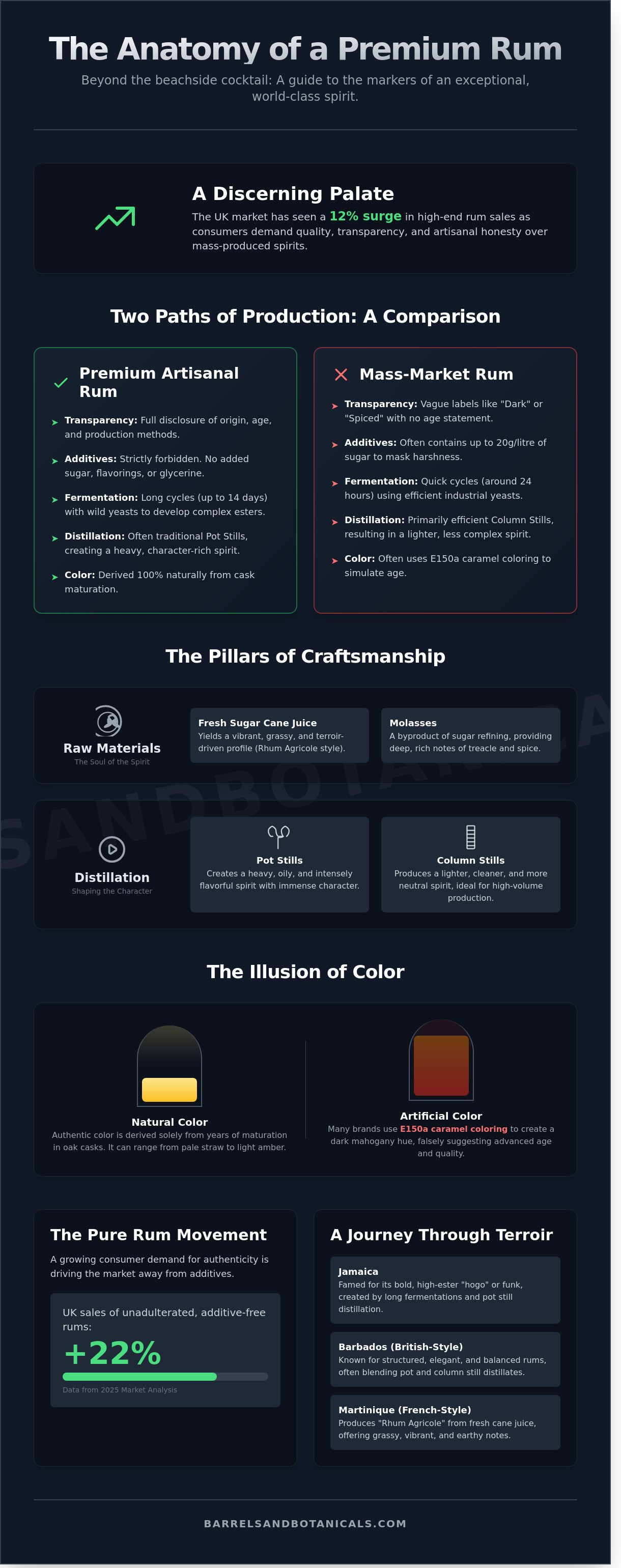
Transparency in sourcing has become the new gold standard. Distilleries like Foursquare in Barbados or Worthy Park in Jamaica are leading the "pure rum" movement, which strictly forbids the addition of sugar, glycerine, or synthetic flavourings after distillation. This contrasts sharply with traditional "dosing," a practice where producers add up to 20 grams of sugar per litre to mask the bite of young spirits. Recent market data from 2025 shows that UK sales of unadulterated, additive-free rums rose by 22 percent. This reflects a growing desire for mindful sipping. Quality over quantity. The ritual of the pour. It's about the gain of complex, natural flavours rather than the loss of clarity.
To fully appreciate this shift, one must understand the history and production of rum, which illustrates how traditional pot-still methods are being reclaimed to produce spirits with immense character. The modern bar is no longer a place for mindless consumption; it's a space for curated experiences and refined tastes.
The Sipping Revolution: Rum as a World-Class Spirit
Aged rum now commands the same respect as single malt Scotch whisky. The long fermentations found in Jamaican dunder pits or the high-ester profiles of Guyanese rums offer a sensory depth that industrial spirits cannot match. Premium rum is a spirit prioritising pot-still depth and cask maturation over industrial efficiency. The UK market has seen a surge in independent bottlers, such as Berry Bros. & Rudd, who select and bottle single casks that highlight the raw essence of a specific vintage. These releases are often bottled at cask strength, preserving the vibrant botanicals and woody spice developed over decades.
Debunking the Myth of the Dark Label
Colour is a notoriously poor indicator of age or quality. Many mass-market brands utilise E150a caramel colouring to create a deep, mahogany hue that suggests a maturity the liquid hasn't earned. In contrast, authentic premium rum draws its colour solely from natural cask extraction. A pale, straw-coloured rum aged for three years in the tropical heat of the Caribbean can possess more complexity than a chemically darkened spirit. Transitioning your palate from spiced varieties, which often rely on heavy vanillin, to authentic aged expressions allows you to discover the nuance of the barrel. Bold oak. Dried stone fruit. A finish that lingers with intention.
The Pillars of Craftsmanship: What Makes a Rum Exceptional?
The journey of a premium rum begins in the soil, long before the first drop hits the glass. While the legal definition of rum provides the technical framework for production, the true identity of an exceptional spirit is forged in the nuances of its raw materials. Most commercial rums utilise molasses, a thick, dark byproduct of sugar refining that yields deep notes of treacle and spice. However, the artisanal movement of 2026 has seen a surge in juice-based spirits. These rums, distilled directly from fresh-pressed sugar cane, offer a vibrant, grassy profile that captures the immediate terroir of the plantation.
Fermentation is where the liquid finds its soul. Mass-produced spirits often rely on quick, 24-hour cycles using industrial yeasts. In contrast, a master distiller seeking complexity will employ wild yeasts and extended fermentation periods, sometimes lasting up to 14 days. This patience allows for the development of esters, the organic compounds responsible for the pungent, fruity aromas found in high-ester Jamaican rums. It is a slow, deliberate ritual. Bold botanicals. Patient chemistry.
The choice of still dictates the weight of the experience.
- Pot Stills: These traditional copper vessels produce a heavy, oily, and intensely aromatic spirit. They require meticulous human intervention.
- Column Stills: These modern marvels create a lighter, more elegant profile, perfect for those who appreciate a clean and sophisticated finish.
Ageing introduces the final layer of character, yet the environment is as vital as the duration. In tropical climates like Barbados or Guyana, the "Angel's Share" evaporation rate can reach 8% to 10% annually. This accelerated interaction between wood and spirit means a rum aged for eight years in the Caribbean often possesses the maturity of a 24-year-old Scotch aged in cooler continental conditions. This intensity is what defines the most sought-after bottles of the current era.
The Influence of the Cask: Nuance and Essence
Modern maturation has moved far beyond the standard ex-bourbon barrel. Today's connoisseur seeks the complexity of secondary finishes. Sherry, port, and even Sauternes casks are now used to introduce layers of dried fruit, tannins, and velvet textures. This interaction creates a vibrant, layered finish that evolves on the palate. Every sip is a curated experience. For those exploring these depths, our botanical-infused spirits offer a similar dedication to layered flavour profiles without the weight of traditional alcohol.
The Master Blender’s Ritual
A master blender is a sensory architect. They balance the raw power of pot still funk with the grace of column still elegance, often blending different vintages to ensure a consistent, sophisticated profile. While single cask expressions remain the ultimate prize for the adventurous epicurean, the intentional blending of multiple marks creates a more complete sensory narrative. It is about harmony. It is about the gain of flavour, not the sacrifice of clarity.
Navigating Global Terroir: A Comparison of Regional Premium Styles
To truly appreciate what makes a rum premium, you must first look at the map. The spirit's identity is forged by colonial history and local soil. British, French, and Spanish traditions offer three distinct paths to excellence. British-style rums from Jamaica and Barbados are often heavy, pot-distilled, and rich in character. French traditions, found in Martinique and Guadeloupe, focus on fresh sugarcane juice rather than molasses. Spanish styles, typical of Cuba or the Dominican Republic, lean towards light, column-distilled spirits designed for velvety smoothness.
Jamaica is the home of "hogo," a term derived from the French haut goût. This bold, high-ester profile creates a funky, overripe fruit aroma that defines the island's output. In Guyana, the heritage stills of the Demerara River region produce a different kind of intensity. The Port Mourant double wooden pot still, in operation since 1732, yields a spirit with earthy, smoky depth that serves as the backbone for many elite blends. These rums aren't just drinks; they're liquid history.
The French Caribbean offers Rhum Agricole. Since 1996, Martinique has held an Appellation d’Origine Contrôlée (AOC), ensuring strict production standards. These spirits are grassy, vibrant, and botanical. They feel alive on the tongue. Conversely, the Spanish Solera system uses fractional blending to achieve consistency. By aging rum in a series of casks where younger liquid is gradually mixed with older stock, producers create a profile that is exceptionally rounded and approachable.
Regional Flavour Profiles at a Glance
Choosing a premium rum often depends on your existing palate. If you enjoy the botanical complexity of a dry gin, the grassy notes of a Martinique Agricole will resonate. Whisky enthusiasts should seek out the balanced, oak-forward profiles of Barbados, where distilleries like Foursquare have gained a cult following for their additive-free approach. For those who prefer rich, dark chocolate and leather notes, the heavy pot-still rums of Guyana are unmatched. Every bottle tells a story of its geography, from the saline breeze of a coastal warehouse to the tropical humidity that accelerates the aging process.
The Rise of New World and Independent Bottlers
The landscape is shifting. Innovative distilleries in the UK, such as those in Scotland and the South West, are now creating terroir-driven spirits that challenge Caribbean dominance. These small-batch producers often focus on transparency, eschewing the added sugars and chill-filtration common in mass-market brands. Independent bottlers like Velier or the Scotch Malt Whisky Society (SMWS) have also transformed the market. They source exceptional single casks from around the globe, bottling them at cask strength to preserve the raw, unadulterated essence of the distillery. It's a movement that values the ritual of the pour and the purity of the plant.
The Connoisseur’s Ritual: Master the Art of the Pour
To truly appreciate premium rum, you must first cultivate a sanctuary for the senses. The setting matters. It's the difference between a quick drink and a curated experience. Find a quiet space, dim the lighting, and silence your phone. This isn't about consumption; it's about connection. By slowing down, you allow the intricate craftsmanship of the master blender to take centre stage.
The vessel you choose defines the spirit's expression. Glassware is a functional tool for flavour delivery. A Glencairn glass, with its iconic tulip shape, is the professional's choice. Its tapered neck concentrates volatile aromatics, directing them straight to the nose. If you prefer a more tactile experience, a wide-bellied snifter allows the warmth of your palm to gently coax out deeper esters. For those who value weight and tradition, a heavy-bottomed crystal tumbler provides a satisfying, grounded feel. Each choice alters the dance of the liquid on your palate.
Temperature control is non-negotiable. Keep your bottle at a steady room temperature, ideally between 18°C and 21°C. Chilling a high-end spirit is a mistake. Cold temperatures mute the very botanicals and oils that give the drink its soul. If the spirit feels too aggressive, use the H2O method. A single drop of filtered water can break the surface tension. This tiny addition triggers an exothermic reaction, releasing hidden notes of toasted honeycomb or spiced oak that were previously locked behind the ethanol.
Mastering the Sensory Tasting
The nose is your first introduction. Don't inhale deeply. Hover your glass just below the nostrils and take short, gentle sniffs. You'll identify vibrant top notes like lime zest or fresh cane before the deeper, grounded scents of leather and tobacco emerge. When you finally sip, "chew" the liquid. Move it across your entire tongue to coat the mouth. This ensures you experience every layer of the profile. The finish is the final act. A quality aged spirit should offer a rhythmic fade, leaving a lingering warmth of wood spice that lasts for at least 45 seconds.
Elevated Serving Suggestions
Pairing is an art form that extends beyond the glass. A bold, pot-still premium rum finds a natural companion in a high-quality cigar. In the UK, a Hoyo de Monterrey Epicure No. 2, priced around £32, offers a creamy smoke that balances the spirit's natural funk. If you prefer a mixed drink, use the spirit as the foundation for a masterpiece. The Old Fashioned remains the ultimate vehicle for quality. You can explore our recipe masterclass in The Art of the Old Fashioned to refine your technique.
Ready to elevate your home bar with artisanal tools? Shop our curated collection of glassware and botanicals today.
Curating Your Collection: Selecting Your Next Premium Bottle
Building a personal library of spirits is an act of storytelling. It's about the hunt for the exceptional. To create a balanced home bar, you should aim to represent the three pillars of the craft. Start with a heavy, pot-stilled Jamaican expression for its "funk" and esters. Add a grassy, terroir-driven Rhum Agricole from Martinique. Finish with a sophisticated, column-stilled Spanish-style bottle. This trio provides a complete sensory map of the Caribbean and beyond. At Barrels & Botanicals, we celebrate spirits that honour their origin. We look for the soul of the cane and the bite of the copper still. Vibrant botanicals. Hand-charred oak. A true sense of place.
Investing in rarity requires a shift in perspective. Collectors often look toward "ghost" distilleries like Caroni in Trinidad or closed marques from Guyana. These bottles aren't just liquids; they're liquid history. Limited-release bottlings from contemporary masters like Foursquare or Hampden Estate often sell out within minutes of hitting UK shelves. When you're gifting for a fellow connoisseur, look for a bottle with a narrative. Choose a single-cask release that spent its life maturing in a specific warehouse. It’s a gift that speaks of patience and precision.
Identifying Quality on the Label
Labels can be deceptive if you don't know the local laws. In Barbados or Jamaica, a 12-year age statement means the youngest drop in the bottle is 12 years old. However, some regions use the Solera system, where the number on the front might refer to the oldest spirit in the blend. Always check for the "Cask Strength" designation. High ABV, often exceeding 55%, preserves the delicate volatile compounds that lower proofs dilute. You're looking for transparency. Small-batch producers will often list the specific still type, the fermentation length, and the lack of added sugar or chill-filtration. Pure premium rum shouldn't hide behind additives.
The Private Sale and Brokerage Opportunity
Our brokerage service assists clients in sourcing or selling the world’s most elusive bottles. Provenance is the currency of the secondary market. A bottle with a documented journey from a temperature-controlled cellar in London to your hand holds its value far better than an anonymous auction find. We verify every seal and every label. Understanding the trajectory of the secondary market is vital for any collector. For broader investment context, explore our guide on Buying Rare Scotch Online in the UK to see how high-end spirits maintain their allure. Whether you're acquiring a 1970s vintage or a modern masterpiece, the goal is the same. Quality. Authenticity. The perfect pour. Investing in premium rum is about more than just the liquid; it's about preserving a craft that spans centuries.
Step Into a New Era of Spirit Appreciation
The 2026 spirits landscape demands more than a simple label; it requires a deep understanding of 100% pot-still distillation and the specific volcanic soils defining regional terroir. You've explored how premium rum is forged through patient oak maturation and the master blender's precise touch. Every sip is a deliberate ritual. From the initial nose to the nuanced finish, quality remains the only metric that matters.
At Barrels and Botanicals, we bring three generations of family-run expertise to your glass. We specialise in rare spirits and small-batch craftsmanship, offering a dedicated brokerage service for those seeking exceptional bottles aged 25 years or more. Our range focuses on botanical complexity and artisanal integrity. Rare spirits. Timeless craftsmanship. We curate every bottle to ensure your collection reflects a sophisticated and intentional lifestyle.
Explore our curated selection of artisanal and premium rums
Your next discovery is waiting to be uncorked. It's time to pour with intention and savour the artistry in every drop.
Frequently Asked Questions
Is premium rum better served neat or on the rocks?
Premium rum is best enjoyed neat at room temperature, ideally between 18°C and 20°C, to fully appreciate its intricate botanical profile. This allows the volatile aromatics to bloom in the glass. If you prefer a chilled experience, use a single large 50mm ice sphere. This minimizes dilution, preserving the spirit's integrity while softening the initial alcohol heat. It's about the slow reveal of flavour. The ritual of the pour matters.
How does aged rum differ from a single malt whisky?
The primary difference lies in the base ingredient and the maturation environment. While single malt relies on malted barley, aged rum begins with sugar cane or molasses. Tropical aging in the Caribbean accelerates wood interaction; one year in Jamaica equals roughly three years in the Scottish Highlands. This results in a spirit that's often more ester-heavy and vibrant than its grain-based counterparts. Bold spirits. Distinct origins.
What is the Solera method and how does it affect the rum’s flavour?
The Solera method is a fractional blending process where younger spirits are gradually mixed into older barrels over several years. It ensures a consistent, honeyed profile across every bottle produced. Typically, only 15% to 30% of the oldest tier is harvested at once. This creates a liquid history. The result is a seamless tapestry of flavours, balancing the fire of youth with the oak-driven wisdom of age.
Are all expensive rums naturally sweet, or is sugar added?
Not all expensive spirits are naturally sweet, though many producers add sugar, known as dosage, after the distillation process. Under UK and EU regulations established in 2021, a bottle labelled as rum cannot contain more than 20 grams of sweetening products per litre. High-end Jamaican or Barbadian rums often contain zero additives. They rely entirely on charred American oak for their vanilla and caramel notes. Pure craft. No shortcuts.
What is the best glassware for tasting a premium rum?
A tulip-shaped glass or a traditional Glencairn is the gold standard for a premium rum tasting. The narrow rim concentrates the esters, directing the nose toward the delicate scents of dried fruit and spice. Use a glass with a 175ml capacity but only pour a 25ml measure. This creates ample headspace for the spirit to breathe, enhancing the sensory ritual of the first sip. Precision meets pleasure.
Can I use a premium rum to make an Old Fashioned cocktail?
You can absolutely use a high-end spirit to elevate a classic Old Fashioned. A 50ml pour of aged rum replaces the traditional bourbon, paired with two dashes of Angostura bitters and a bar spoon of demerara syrup. This creates a more decadent, tropical profile. It's a celebratory way to experience the spirit's depth. Quality ingredients deserve a stage, and this cocktail provides a refined one. Sophisticated. Nuanced. Vibrant.
How should I store my bottle of premium rum once it is opened?
Store your bottle upright in a cool, dark cabinet kept below 20°C to protect the liquid from UV degradation. Unlike wine, the cork shouldn't touch the spirit, as the high ABV can degrade the material over time. Once the bottle is half-empty, oxygen begins to mute the nuanced botanicals. Aim to finish the spirit within 6 to 8 months to ensure the palate remains vibrant and true. Mindful preservation.
What is Rhum Agricole and why is it considered a premium category?
Rhum Agricole is a category distilled directly from fresh sugar cane juice rather than molasses. It's celebrated for its grassy, earthy, and vibrant profile. Most hails from the French Caribbean, with Martinique receiving its strict AOC status in 1996. This designation ensures rigorous quality controls and traditional methods. It's a choice for the adventurous epicurean seeking the pure, terroir-driven essence of the cane fields. Raw beauty. Distilled expertise.