
Why does the world’s most iconic cocktail often taste like a cloying, diluted afterthought when prepared at home? It is a frustration shared by many who appreciate the finer details of a well-made drink. You know the feeling of anticipating a complex, warming experience only to be met with a glass of melted ice and syrupy sweetness. An old fashioned should be a sophisticated ritual; it is a slow, intentional celebration of depth and character that demands respect for every ingredient.
We believe that your choice to drink mindfully shouldn't mean sacrificing the elegance of a classic serve. You are about to master the precise techniques that professional mixologists use to achieve perfect balance, from the 30-second stir to the release of essential oils from a fresh citrus twist. This masterclass provides a definitive look at spirit pairings, artisanal sweeteners, and the sensory flourishes that turn a simple pour into an event. We will guide you through the exact steps to ensure your next creation is as refined and nuanced as any £16 cocktail found in a top London bar.
Key Takeaways
- Reconnect with the historical essence of the original "Whiskey Cocktail" and understand why this minimalist ritual emerged as a sophisticated rebellion against over-complicated mixology.
- Navigate the spirituous core of a perfect old fashioned by exploring the nuanced profiles of bourbon, rye, and the smoky, artisanal elegance of premium single malt.
- Discover the secret to texture and clarity by mastering the precise balance of bitters and sweeteners, ensuring every sip delivers a vibrant, layered palate.
- Perfect the art of the 30-second stir to achieve the ideal chill and dilution, transforming simple ingredients into a masterfully crafted, build-in-glass masterpiece.
- Elevate your final serve with expert garnish techniques, learning how to properly express citrus oils for a sensory finish that complements a curated cigar pairing.
Defining the Ritual: What is a True Old Fashioned?
The ritual begins with a single, clear block of ice. It's a practice rooted in the May 13, 1806, definition of a "cocktail" published in The Balance and Columbian Repository; a potent blend of spirits, bitters, water, and sugar. Originally, this was simply the Whiskey Cocktail, a sharp morning tonic designed to stimulate the senses. By the 1880s, as bartenders began cluttering recipes with flamboyant liqueurs and absinthe, purists staged a quiet rebellion. They demanded their drinks be made the "old fashioned" way. This return to simplicity transformed a basic mixture into a timeless icon of the bar. It's a drink that values clarity over clutter.
The old fashioned serves as the ultimate showcase for premium aged spirits, allowing the complex narrative of the barrel to speak without interruption.
The Evolution of a Classic
In the early 19th century, this mixture was a functional stimulant. Today, in 2026, it represents the pinnacle of the craft spirits movement. The transition from a 6:00 AM "eye-opener" to a 9:00 PM evening staple reflects a shift in how we value depth over volume. Within British bar heritage, particularly in London's legendary hotel bars, the drink evolved from a crude import into a sophisticated measure of a bartender's skill. It's about precision. It's about patience. Modern palates now seek out the nuanced botanicals and aged essences that define the contemporary British cocktail scene.
Why Quality is Non-Negotiable
Minimalism offers no sanctuary for inferior ingredients. When a recipe consists of only four elements, every drop must be exceptional. Choosing artisanal botanicals and small-batch syrups provides a sensory gain that mass-produced mixers cannot replicate. The structure is transparent. There's nowhere for low-grade spirits to hide. This drink is the cornerstone of mindful drinking. It encourages us to slow down and appreciate the physical craft of the build.
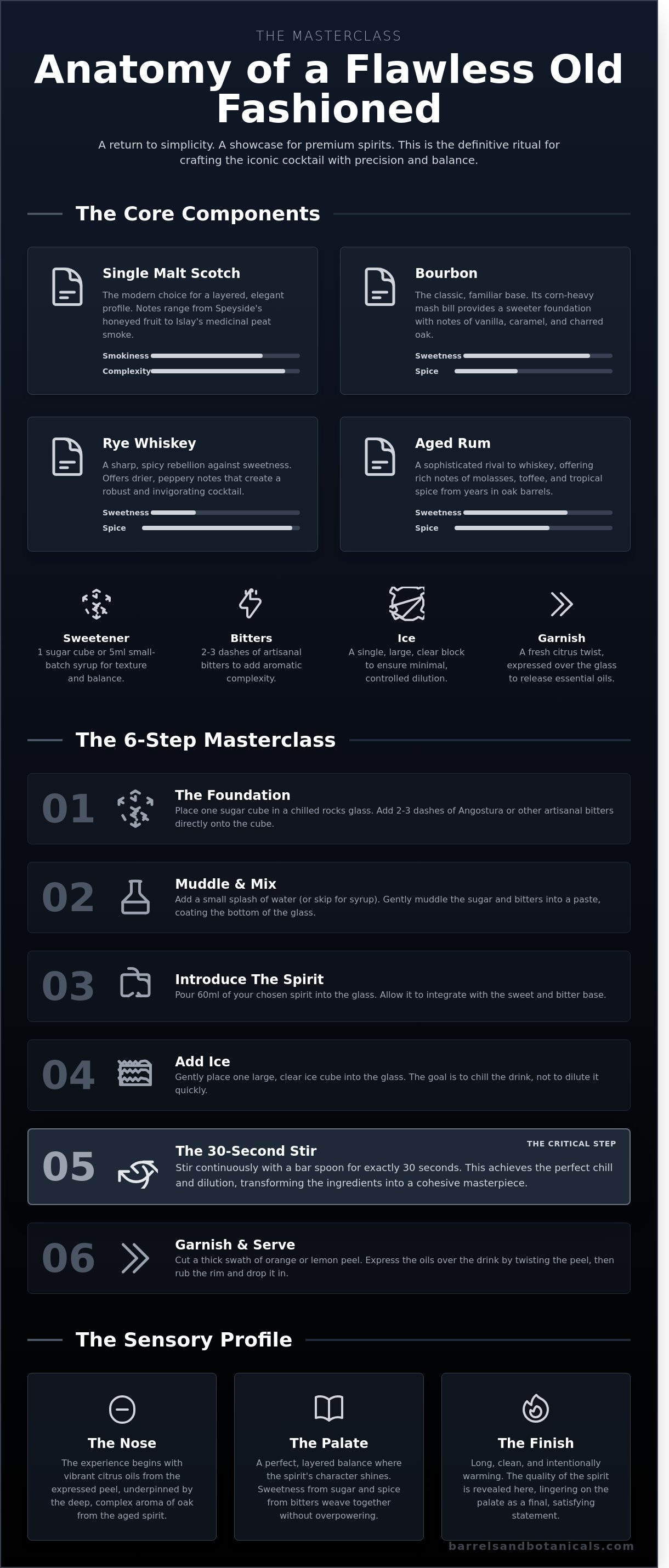
- The Nose: Vibrant citrus oils and deep oak.
- The Palate: A layered balance of sweetness and spice.
- The Finish: Long, clean, and intentionally warming.
The old fashioned isn't just a beverage; it's an invitation to experience quality without compromise. By focusing on the essence of the ingredients, we celebrate a lifestyle of intentionality. Every stir is a tribute to two centuries of mixology history.
The Spirituous Core: Choosing Your Favourite Base
The soul of an old fashioned lies in the character of its base. It's a choice of architecture. Bourbon provides a familiar, corn-heavy sweetness. Rye offers a sharp, spicy rebellion. However, the modern palate seeks more. Sophisticated drinkers in the UK now look toward the layered elegance of Single Malt or the sun-drenched richness of aged Rum to redefine this classic. Every pour tells a story of the cask and the climate.
Before the first drop hits the glass, you must identify the "nose" and "finish" of your chosen spirit. A 2025 consumer report from the UK Spirits Alliance indicates a 14% rise in premium spirit sales, as enthusiasts prioritise quality over quantity. Seek out aromas of charred oak, vanilla, or dried citrus. A spirit with a finish that persists for 30 seconds or more ensures the cocktail anchors itself firmly on the palate. Quality is paramount. Pure essence. No compromise.
The Single Malt Revolution
Single Malt Scotch brings a library of flavour to the glass. Speyside malts introduce delicate notes of heather honey and orchard fruit. Islay expressions provide a punch of medicinal peat and campfire smoke. In a Highland malt, the bitters act as a bridge, pulling forward hidden notes of clove and spice. To begin your journey, explore a curated Single Malt Scotch Whisky that resonates with your personal taste. It's about finding the balance between the grain and the botanical influence of the bitters.
Aged Rum and Beyond
Premium Caribbean rum is no longer reserved for tropical punch. When aged in oak barrels for 12 years or more, rum develops a sophisticated profile that rivals the finest whiskies. It offers vibrant, tropical notes. Molasses. Toffee. Clove. This old fashioned method works for any spirit aged in wood because the oak provides the essential structure. The tannins from the barrel interact with the sugar cube to create a velvety mouthfeel that lingers long after the final sip.
The ritual of selection is the first step toward a mindful drinking experience. For those seeking a refined evening, consider how a premium botanical base can elevate your home bar through complex, layered flavours and artisanal craftsmanship.
The Nuanced Accoutrements: Bitters, Sweeteners, and Ice
The architecture of a superior old fashioned rests on the precision of its minor components. While the spirit provides the foundation, the accoutrements define the character. It's a delicate interplay of chemistry and craft. Every element serves a purpose in the ritual of the pour.
Sweetness and Balance
Choosing between a sugar cube and simple syrup is a choice between tradition and texture. A white sugar cube offers a classic, slightly granular finish, yet modern mixology leans towards a rich Demerara syrup. This 2:1 ratio of unrefined sugar to water adds a velvety weight. It complements the toasted oak and caramel notes of a premium spirit. Ensure the sugar is fully dissolved; a gritty residue at the base of your heavy-bottomed tumbler is a technical failure. Keep the sweetness restrained. You want to enhance the botanicals, not mask them. A single teaspoon of syrup is often the limit for a balanced profile. It's about a subtle lift rather than a saccharine mask.
The Architecture of Ice
Ice isn't merely a coolant; it's a functional ingredient. Standard domestic cubes often carry "freezer burn" taints from nearby frozen foods. Professional results require directional freezing to create crystal-clear blocks. These lack the trapped oxygen bubbles that cause rapid melting and cloudiness. A single 5cm clear ice sphere has significantly less surface area than a handful of small cubes. Research indicates this reduces the dilution rate by approximately 18 percent, keeping your drink cold without drowning the essence. The visual impact of a glass-like block in a heavy tumbler creates an immediate sense of occasion. It's the hallmark of an intentional host. Pure ice. Pure flavour.
Dilution serves a vital botanical purpose. As water mingles with the spirit, it lowers the ethanol concentration. This chemical shift releases volatile aromatic compounds that would otherwise remain trapped. Bitters act as the "seasoning" in this process. Two dashes of Angostura provide the spicy, herbal bass notes. A single dash of orange bitters provides a vibrant citrus lift. This combination creates a three-dimensional flavour profile. It transforms a simple pour into a curated experience. Every drop counts. The old fashioned becomes a living, breathing composition as the ice slowly yields to the glass.
The Masterclass: How to Stir a Flawless Old Fashioned
Crafting a definitive old fashioned is a sensory ritual that rewards the patient hand. It's a study in precision where every movement serves the final profile. The goal is a drink that feels heavy on the tongue, glowing with a clarity that only a controlled stir can provide. This is mixology as an art form. Pure. Intentional. Refined.
The Preparation Ritual
Begin with temperature. A room-temperature glass is the enemy of a fine cocktail. Chill your rocks glass in the freezer for at least 15 minutes before you begin. This small detail preserves the integrity of the ice and the viscosity of the liquid. Use a weighted jigger to measure exactly 60ml of your spirit base. Precision ensures the balance between bitter, sweet, and botanical remains consistent every time you pour.
- The Muddle: Place one white sugar cube in a mixing glass.
- The Saturation: Add two to three dashes of aromatic bitters directly onto the cube.
- The Dissolve: Add a bar spoon of warm water. Muddle until the sugar grains have vanished into a rich, dark syrup.
This traditional method creates a textured foundation that anchors the drink. While some modernists prefer simple syrup for speed, the muddle remains the heartbeat of the original 1806 recipe. It offers a depth of flavour that defines the classic experience.
The Perfect Stir
Never shake an old fashioned. Shaking introduces oxygen and tiny ice shards that cloud the liquid. It destroys the silky, viscous mouthfeel that defines this classic. Use a heavy mixing vessel rather than building directly in the glass to ensure total control over dilution. Fill the vessel with large, clear ice cubes. These melt slower than standard tray ice, preventing the drink from becoming watery and thin.
Insert a long-handled bar spoon against the inside edge of the glass. Stir with a fluid, circular motion for exactly 30 seconds. This specific timing, often cited by top London bartenders, achieves the ideal 18% to 21% dilution. It mellows the bite of the spirit while releasing its hidden aromatics. The result is a liquid that coats the palate like velvet. Bold. Nuanced. Perfectly chilled. Stop when the outside of the mixing glass feels frosty to the touch.
Elevate your home bar with the same tools the professionals use by exploring our range of premium botanical mixers and barware.
Elevating the Experience: Garnishes and Cigar Pairings
The final act of crafting a masterful old fashioned isn't found in the stirring spoon, but in the sensory details that frame the very first sip. It begins with the vessel. A heavy, diamond-cut crystal rocks glass, ideally weighing between 350g and 450g, offers a tactile gravity that thin glass simply cannot replicate. This weight acts as a psychological anchor. It signals to the brain that this is a moment of intentionality. In the UK, the 2025 trend toward "slow drinking" has seen a 14% rise in the sale of premium barware, as enthusiasts embrace the physical ritual of the serve. The cold crystal retains the temperature of the large-format ice, ensuring the final drop is as crisp as the first.
Botanical Flourishes
Precision is essential when handling your citrus. Use a sharp Y-shaped vegetable peeler to harvest a wide, clean ribbon of orange zest, ensuring you leave the bitter white pith behind. The "express and drop" technique is the soul of the cocktail's aroma. Twist the peel sharply over the glass to release a fine mist of essential oils across the surface. These oils provide the vibrant, citrus greeting that defines a world-class old fashioned. While a high-quality Maraschino cherry offers a nostalgic, syrupy depth, it remains an optional luxury. The citrus oil is the non-negotiable element. For a seasonal shift, consider these botanical alternatives:
- Winter: A scorched cinnamon stick or a sprig of fresh rosemary for resinous, woody warmth.
- Autumn: A thin slice of dehydrated pear paired with a star anise pod.
- Spring: A twist of grapefruit zest to introduce a sharper, more floral acidity.
The Ultimate Pairing: Whisky and Cigars
The marriage of smoke and spirit is a timeless sensory pursuit. When you pair your cocktail with a premium cigar, you're looking for a conversation between flavours rather than a competition. A peated Scotch base demands the robust, earthy notes found in a Nicaraguan New World cigar. The smoke bridges the gap between the charred oak of the barrel and the caramelised sweetness of the sugar. If your palate leans toward a lighter, spice-forward rye, choose a cigar with a Connecticut shade wrapper for a creamy, mellow finish. Balance is everything. You must match the body of the smoke to the intensity of the liquid. Explore our curated collection of Cuban and New World Cigars to find the perfect companion for your evening. It's about the gain of flavour. Bold botanicals. Rich tobacco. A curated choice for the modern epicurean.
Savour Your Next Masterpiece
Crafting an exceptional old fashioned isn't a matter of chance; it's a deliberate, sensory ritual. You've seen how a precise 30-second stir achieves the ideal dilution and why a spirit with at least 12 years of maturation provides the necessary structural integrity. Since 2019, our family-run team has acted as a guide for those who value quality over quantity. We specialise in rare and old whiskies sourced directly from the Scottish Highlands, ensuring every sip is a celebration of craft rather than a mere habit.
The journey doesn't end with the last drop of bitters. It's about building a collection that reflects your refined palate, from peated malts to our premium selection of artisanal Scottish gins and rums. It's time to elevate your evening with ingredients that respect the traditions of the master blender. Explore our curated range of Single Malts to find your perfect Old Fashioned base. Trust in our expertise to help you discover a vibrant finish that lingers long after the ice has melted. Pour with intention and enjoy the clarity of a truly sophisticated drink.
Frequently Asked Questions
Can I use Scotch instead of Bourbon in an Old Fashioned?
You can certainly use Scotch instead of Bourbon to create a smokier, more peated profile. While the 1881 recipe traditionally calls for American whiskey, using a Highland single malt adds a nuanced depth. Expect notes of heather and brine. It's a sophisticated twist for those who prefer a drier, more medicinal finish on the palate. Bold spirits. Refined choices.
Is a sugar cube better than simple syrup for a traditional recipe?
A sugar cube is the superior choice for the traditional ritual, providing a textured, evolving sweetness. Simple syrup offers 100% consistency, but the granular soak of a cube creates a sensory experience. Muddle one white cube with 3 dashes of bitters. This method ensures the last sip is as vibrant as the first, maintaining the artisanal integrity of the drink.
What is the best glass to serve an Old Fashioned in?
The best glass is a heavy-bottomed rocks glass, often called a Lowball or an Old Fashioned glass. A standard 300ml vessel provides the weight needed for a steady, mindful sip. It's designed to hold a single large ice sphere. This prevents over-dilution, keeping the essence of the botanicals intact for the full 15 minutes it takes to enjoy the drink properly.
Why do you stir an Old Fashioned instead of shaking it?
You stir an old fashioned to maintain crystal clarity and a silky, viscous mouthfeel. Shaking introduces air bubbles and ice shards, which cloud the liquid and thin the texture. A 30-second stir ensures the temperature drops to a precise 0 degrees Celsius without ruining the aesthetic. It's about preservation. Pure elegance in a glass.
Can I make a non-alcoholic Old Fashioned that still tastes complex?
You can craft a non-alcoholic old fashioned using high-quality distilled spirit alternatives that mimic the oak and spice of traditional rye. Use 50ml of a dark cane or wood-forward botanical blend. Add alcohol-free aromatic bitters. This creates a complex, adult profile that celebrates the ritual of the drink without the morning fog. Bold botanicals. Zero proof.
What is the difference between an Old Fashioned and a Manhattan?
The primary difference lies in the sweetener; an Old Fashioned uses sugar while a Manhattan uses sweet vermouth. A Manhattan also requires a 2:1 ratio of rye to vermouth. In contrast, the Old Fashioned is spirit-forward, relying on 60ml of whiskey and a hint of citrus oils. Both are classics, but the Manhattan offers a more herbal, wine-like finish on the palate.
How long should I stir my Old Fashioned for the best result?
Stir your cocktail for exactly 30 seconds to achieve the perfect dilution and chilled temperature. Research from the 2023 Mixology Institute suggests this timeframe balances the bite of the spirit with the softening effect of the ice. Use a long-handled bar spoon. Move the ice gently in a circular motion. This ritual transforms the raw ingredients into a cohesive, chilled masterpiece.
Do I really need special bitters for this cocktail?
You need high-quality bitters to act as the seasoning that binds the drink's flavours together. While Angostura is the 1824 gold standard, experimenting with orange or chocolate bitters adds a modern, artisanal layer. Two or three dashes are sufficient. These concentrated essences provide the aromatic backbone, lifting the nose and grounding the palate in botanical complexity.