
The quiet glens and rugged coastlines of the North have birthed a spirit movement so profound that in 2026, Scottish gin accounts for over 70% of all gin produced in the UK. You've likely felt that familiar hesitation when faced with an endless wall of juniper-scented bottles, unsure if a London Dry from Edinburgh truly differs from a Distilled gin from the Highlands. It's a common struggle to distinguish genuine artisanal expertise from clever branding when every label promises a botanical journey. Bold botanicals. Meticulous craft. The choice can feel overwhelming.
We're here to transform that confusion into a sensory mastery of the Scottish landscape. This guide explores the intricate terroir of hand-foraged botanicals and the precise distillation rituals that define world-class quality. You'll learn to navigate flavour profiles with the confidence of a master blender, ensuring your next £45 bottle is an intentional choice for excellence. We'll decode the technical jargon and reveal the secrets of the perfect tasting ritual to elevate your home bar experience.
Key Takeaways
- Explore the provenance and rigorous standards that have propelled scottish gin to the forefront of the global craft movement.
- Uncover the influence of local terroir and the art of foraging wild, sustainable botanicals to define a spirit’s unique essence.
- Distinguish between London Dry and distilled varieties by mastering technical quality markers and the nuances of the base spirit.
- Elevate your tasting ritual through a sensory evaluation of the nose, palate, and finish, enhanced by curated glassware and temperature.
- Curate a distinguished home bar that celebrates artisanal expertise and the diverse flavour profiles found within independent British retail.
The Renaissance of Scottish Gin: A Modern Botanical Icon
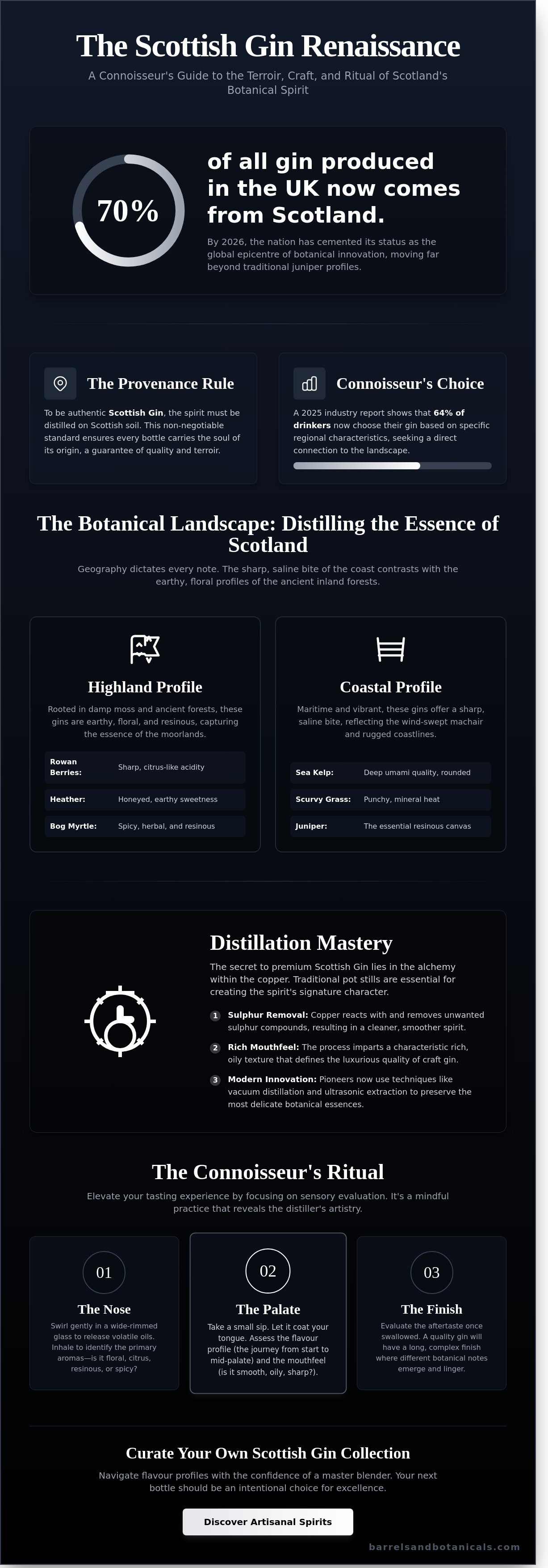
Scotland is no longer defined solely by its peat and malt. By 2026, the nation has firmly established itself as the global epicentre of botanical innovation. To be classified as authentic scottish gin, the spirit must be distilled on Scottish soil, a standard that ensures the liquid carries the soul of its provenance. This isn't merely about bottling; it's about the alchemy that occurs within the copper. As of 2026, over 70% of the UK's gin is produced in Scotland, reflecting a decade of explosive growth and refined expertise. This era represents the pinnacle of the craft. Distillers now move beyond simple juniper profiles to explore complex, hyper-local ecosystems. It's a sensory journey. Crisp. Nuanced. Unapologetically Scottish.
The relationship between the old guard and the new wave is symbiotic. Many iconic spirits were born within the walls of traditional whisky distilleries, utilizing spare capacity and expert knowledge to create something revolutionary. A prime example of this heritage meeting modern foraging is The Botanist gin, which utilizes 22 hand-foraged botanicals from Islay. Such pioneers paved the way for the 2026 landscape, where small-batch producers now use vacuum distillation and ultrasonic extraction to preserve the delicate essences of Scottish flora. The result is a vibrant, liquid tapestry that celebrates the wild landscape.
From Heritage Stills to Modern Craft
The journey from medicinal spirit to luxury staple has been transformative. Historically used for its perceived healing properties, gin has evolved into a sophisticated expression of terroir. The secret lies in the copper. Traditional copper pot stills are essential, as they remove unwanted sulphurs while imparting a rich, oily mouthfeel that defines premium scottish gin. Transparency is the new industry standard. In 2026, discerning drinkers demand to know exactly where their spirit was distilled. Labels now proudly display specific distillery coordinates, ensuring every drop is an authentic product of the Highlands, Lowlands, or Isles.
The Cultural Impact of the Gin Movement
Drinking culture in Scotland has shifted towards a mindful, quality-focused experience. It's about the gain, not the loss. Independent, family-run distillers have led this charge, preserving artisanal methods that mass production cannot replicate. They treat every batch as a masterpiece. The ritual of the first pour has become a celebrated moment of intentional living. It starts with the weight of the crystal. The slow addition of tonic. The precise placement of a garnish, perhaps a sprig of sea buckthorn or a slice of dried pear. Bold botanicals. Exquisite clarity. This is the new Scottish tradition.
The Botanical Landscape: Distilling the Essence of Scotland
To understand the soul of scottish gin, one must look to the soil. Terroir is no longer a concept confined to the vineyards of France; it's the heartbeat of the modern Scottish distillery. Geography dictates every note of the spirit. The granite peaks of the Cairngorms produce a vastly different profile than the wind-swept machair of the Outer Hebrides. It's a dialogue between the distiller and the wild. A reflection of place.
Sustainability drives the 2026 botanical renaissance. Foraging is the new standard. Distillers are now guardians of their local ecosystems, sourcing ingredients that speak of a specific coordinate. Juniper remains the resinous canvas, the structural necessity that allows more delicate notes to shine. The chemistry is precise. Master blenders focus on the extraction of volatile oils, ensuring that the heavy pine of the juniper doesn't mask the fragile scent of a Highland primrose. It's a balance of power and grace.
The divide between coastal and highland profiles has become more pronounced. Coastal gins offer a sharp, saline bite. They're maritime and vibrant. Highland expressions lean into the earthy and the floral. They're rooted in damp moss and ancient forests. A 2025 industry report indicated that 64% of connoisseurs now choose their gin based on these specific regional characteristics, seeking a connection to the landscape through the glass.
Signature Scottish Botanicals
- Rowan Berries and Heather: These provide the classic floral and tart foundation of the moorlands. Rowan berries add a sharp, citrus-like acidity. Heather brings a honeyed, earthy sweetness that lingers on the palate.
- Sea Kelp and Scurvy Grass: These capture the briny essence of the coastline. Sea kelp offers a deep umami quality, providing a rounded mouthfeel. Scurvy grass adds a punchy, mineral heat.
- Bog Myrtle and Pine: Together, they create the resinous backbone of forest-inspired spirits. Bog Myrtle is herbaceous and spicy, reminiscent of the damp Scottish wild. Pine provides a clean, refreshing finish.
The Art of Botanical Balancing
The master blender’s role is one of sensory architecture. They must harmonise oils from citrus, spice, and local flora. It's a delicate ritual. Small-batch gins often showcase seasonal variations, where a particularly dry summer in 2025 might result in a more concentrated, floral profile in a 2026 bottling. These nuances aren't flaws; they're signatures of authenticity. They're the marks of a living product.
Innovation in 2026 has pushed boundaries. Distillers are now experimenting with rare plants like gorse flower and sea buckthorn to create complex, layered experiences. This focus on the "gain" of flavour allows for a more intentional way of drinking. To explore these refined tastes yourself, you can discover our curated botanical collections that celebrate the art of the blend. Bold botanicals. Meticulous craft. Every drop tells a story of the land.
Distillation Mastery: The Craft Behind the Glass
The soul of any bottle lies in the alchemy of the still. While the labels might highlight the botanicals, the true connoisseur looks deeper into the technical execution. The distinction between London Dry and Distilled Gin remains the primary marker of quality. A London Dry requires all botanical flavours to be introduced during the distillation process, with no additives permitted afterwards. It's a rigorous standard that demands perfection from the first drop. Distilled gin offers more flexibility, allowing for post-distillation infusions that can create a more layered, contemporary profile.
The canvas for these flavours is the base spirit. A premium neutral grain spirit, often sourced from local Scottish wheat or barley, provides the necessary clarity. It's the silent partner that allows the juniper to sing. This purity is further refined by the water source. Scotland's soft, mineral-poor water is world-renowned. It defines the finish of a scottish gin, providing a silky mouthfeel and a crisp, clean exit that harder waters simply cannot replicate. Small-batch runs, often limited to fewer than 500 litres, ensure that the master distiller maintains absolute control over these variables, resulting in a complex, consistent spirit.
Traditional Techniques in a Modern Era
Distillers choose their methods with the precision of a chef. Vapour infusion suspends botanicals in baskets above the boiling spirit, producing delicate, ethereal notes. Steep-and-boil methods, where ingredients sit directly in the pot, yield bolder, more robust textures. The magic happens during the "heart" of the run. Distillers discard the heads and tails, the early and late stages of distillation, keeping only the middle 60 to 80 percent where the flavours are most vibrant. Today, this craft is evolving. Over 80 percent of new Scottish distilleries now incorporate sustainable practices, such as using hydrogen power or repurposing spent botanicals into organic compost.
Transparency and Provenance
Authenticity is the currency of 2026. The rise of contract distilling, where a brand pays a third party to produce their recipe, has sparked a debate over provenance. For the true enthusiast, knowing exactly where your scottish gin is made is essential. Look for "Estate Grown" or "Distilled at" on the label rather than "Bottled for." Authentic marks from the Scottish Gin Guild provide a guarantee of origin. As the industry matures, there's a growing movement to protect the "Scottish Gin" name with a Geographical Indication (GI) status, ensuring that every bottle bearing the name meets the strict standards of distillation mastery that the world expects.
The Connoisseur’s Ritual: How to Savour Scottish Gin
Savouring a premium spirit requires more than a casual pour. It demands an intentional pause. To truly appreciate the complexity of modern scottish gin, one must treat the experience as a sensory exploration. Every bottle tells a story of the Highlands, the Isles, or the rugged coastline; the ritual of preparation ensures that story is heard clearly. Use a tulip-shaped glass or a Glencairn to concentrate the aromatics. Temperature is equally vital. While many prefer gin ice-cold, tasting a spirit at 14 to 16 degrees Celsius allows the volatile oils to express their full range. Cold temperatures can mask the very nuances you seek to discover.
Begin with the spirit neat. Observe the clarity and the way the liquid clings to the side of the glass. Add a single drop of room-temperature water. This small addition breaks the surface tension and triggers a chemical reaction that releases hidden esters. It opens the bouquet, transforming a sharp juniper hit into a layered landscape of citrus, spice, or floral notes. Your choice of garnish should follow a similar philosophy of restraint. Select a botanical already present in the distillation to amplify the profile. A sprig of rosemary or a sliver of pink grapefruit should act as an accent, never a mask.
A Step-by-Step Tasting Guide
The evaluation of a craft spirit follows a deliberate sequence. It starts with the nose. Hold the glass a few inches away and draw in a light breath. Identify the bright top notes; perhaps a zing of lime or the piney punch of juniper. Look deeper for the heart notes, where earthy roots or spicy coriander reside. On the palate, notice the weight and texture. Is it oily and rich or crisp and light? The finish is the final act. High-quality scottish gin leaves a lingering warmth and a complex aftertaste that evolves long after the final sip. Focus on the length; a long, clean finish is the hallmark of superior distillation.
Elevating the Gin and Tonic
Transforming a simple drink into a masterpiece requires precision. Over 70% of the gin produced in the UK originates in Scotland, and these spirits deserve a companion that respects their heritage. Choose a tonic with low sugar content and high carbonation. Natural quinine provides the necessary bitterness without the cloying sweetness of mass-market mixers. The 'Perfect Serve' involves filling a chilled glass with large, clear ice cubes to minimise dilution. Maintain a ratio of one part gin to two or three parts tonic. For a deeper dive into these techniques, read The Ultimate Gin and Tonic Recipe.
Refine your home bar and explore our curated selection of artisanal spirits at Barrels and Botanicals.
Building Your Collection: The Art of Selection
Curating a home bar is a deliberate act of storytelling. It's about more than just stocking shelves; it's about assembling a liquid library that reflects the rugged coastlines and fertile glens of the north. A sophisticated collection of scottish gin requires balance. You need a foundational London Dry for crisp martinis, a coastal botanical for refreshing highballs, and perhaps a cask-aged expression for slow sipping. As of 2025, Scotland produces over 70% of the UK's gin, offering a staggering variety of over 100 distinct distilleries to explore.
The value of independent retail cannot be overstated. While supermarkets offer convenience, specialist boutiques provide provenance. These experts understand the nuance of a copper pot still versus a vacuum distillation. They guide you toward small-batch releases that never reach the mass market. For enthusiasts who typically collect rare scotch, these artisanal gins offer a familiar complexity. The transition from peated malts to gins rested in ex-whisky casks is seamless. You gain the same smoky depth and vanilla finish, reimagined through a botanical lens.
Identifying Your Flavour Profile
Determine your botanical leanings to refine your search. Traditionalists often gravitate toward juniper-forward profiles that deliver a sharp, piney bite. Modernists might prefer 'Floral and Vibrant' spirits infused with hand-picked heather or rose petals. If you desire intensity, seek out Navy Strength bottlings, usually resting at 57% ABV. Alternatively, an Old Tom style provides a historical, slightly sweeter edge. Seek out limited edition seasonal releases. These bottles capture a specific moment in the Scottish calendar, such as the first harvest of rowan berries or sea buckthorn.
The Ritual of Gifting and Sharing
A bottle of small-batch scottish gin is a gesture of refined taste. It represents an appreciation for craftsmanship and local heritage. When hosting a tasting, focus on the sensory ritual. Arrange the evening by profile, moving from light citrus to heavy spice. Use proper glassware. Provide garnishes that mirror the spirit's core botanicals, such as a sprig of fresh rosemary or a slice of dehydrated grapefruit. This approach transforms a simple drink into a mindful experience. You aren't just consuming a spirit; you're honouring the blender's art. The gain is found in the clarity of the flavours and the quality of the company. Slow down. Savor the botanical essence. Choose quality over quantity every time.
Embrace the Spirit of the New Botanical Era
The 2026 landscape of scottish gin represents a pinnacle of artisanal craft. Today, Scotland produces over 70% of the UK’s gin, driven by a deep commitment to local provenance and experimental distillation. You've discovered how hand-foraged botanicals like bog myrtle and sea buckthorn define the modern palate, and why the ritual of the serve is as vital as the liquid itself. It’s a movement defined by quality, not volume. Precise mastery meets wild, untamed nature.
At Barrels and Botanicals, we’ve shared our family-run expertise since 2019 to bridge the gap between independent distillers and your glass. We specialise in small-batch gems that larger retailers often overlook. With our reliable national delivery, you can access the finest expressions of the Highlands and Islands from the comfort of your home. Every bottle is a curated choice for quality. Every sip is an intentional experience. Slow down. Savour the craft.
Explore our curated selection of artisanal Scottish gins
Your next discovery awaits in the subtle nuances of a masterfully blended spirit.
Frequently Asked Questions
What actually defines a gin as 'Scottish'?
To be authentically classified as Scottish gin, the spirit must be entirely distilled and bottled within Scotland's borders. While there's currently no legal Protected Geographical Indication like Scotch Whisky, the Scottish Gin Society notes that 70% of the UK's gin production happens north of the border. It's about provenance. Pure Highland water. Local spirit. Every drop should reflect the rugged landscape of its origin.
Is Scottish gin better than English or international gin?
Quality is often a matter of personal palate, but Scottish gin is distinguished by its unparalleled access to wild, indigenous botanicals. During the 2024 International Wine and Spirit Competition, Scottish distilleries secured over 40 gold medals, proving a consistent global standard of excellence. It isn't just about being better. It's about terroir. A specific sense of place. The finish is frequently more complex, mirroring the untamed nature of the North.
Why is some Scottish gin more expensive than mass-market brands?
The premium price reflects small-batch production costs and the use of hand-foraged ingredients rather than synthetic essences. Craft distilleries manage significant overheads, including the UK Excise Duty which stands at £28.50 per litre of pure alcohol as of 2024. You're investing in the artisan's time. Copper pot stills. Rare botanicals. These bottles represent a curated ritual rather than a mass-produced commodity.
What is the best way to store my gin collection to preserve the botanicals?
Store your bottles in a cool, dark cabinet away from direct sunlight to prevent delicate botanical oils from oxidising. Exposure to UV rays can noticeably degrade the flavour profile in as little as 3 months. Maintain a consistent temperature. Keep bottles upright. This protects the integrity of the seal and ensures the vibrant nose remains intact for your next mindful pouring ritual.
Can I drink Scottish gin neat, or should it always be mixed?
You can absolutely enjoy high-quality spirits neat to fully appreciate the nuanced layers of the palate. Many connoisseurs prefer a sipping style served at room temperature or over a single large ice cube to release the aromatics. It's a sensory journey. Juniper leads. Subtle citrus follows. Drinking it neat allows the craftsmanship of the master blender to shine without the distraction of tonic.
What is the difference between London Dry and a 'Scottish' style gin?
London Dry is a technical production method where all flavours must be introduced during distillation, while 'Scottish' style typically refers to the use of regional, heritage botanicals. While many gins from Scotland follow the London Dry regulations, others use a contemporary approach to highlight specific textures. Think of it as a regional identity. Coastal salinity. Forest floor earthiness. It's a move toward a balanced, botanical-forward profile.
How do I know if a gin uses real foraged botanicals?
Look for the Scottish Gin Seal or specific mentions of hand-harvested ingredients like Islay gorse or Hebridean kelp on the label. Transparency is vital in the 2026 market, with 85% of premium brands now detailing their sourcing methods on their websites. Check for batch numbers. Distiller's notes. Genuine foraged spirits possess a seasonal variation that mass-market alternatives simply can't replicate.
Does gin expire or lose its flavour over time?
Gin doesn't expire in the traditional sense, but its botanical intensity begins to fade roughly 12 months after the bottle is first opened. Once the liquid level drops below the halfway mark, oxidation accelerates, softening the vibrant punch of the juniper. Seal it tight. Drink it mindfully. To enjoy the spirit at its peak, aim to finish a bottle within a year of opening.