
A truly exceptional drink isn't an accident; it's a deliberate act of chemistry where the spirit finally meets its match. Most home pours suffer from a 3:1 ratio that dilutes the soul of the spirit, yet a masterfully executed gin and tonic recipe relies on the precise tension between ice, essence, and effervescence. Whether you're uncorking a bottle of Isle of Harris gin or a small-batch botanical blend, the goal is clarity. You've likely felt the frustration of a drink that goes flat within 120 seconds or a garnish that clashes with the juniper profile. Crisp juniper. Effervescent tonic. Pure intention. We understand that a beverage should be a sensory journey, not just a cold liquid in a glass.
You deserve a serve that honors the craftsmanship of the distiller. We're moving beyond the basic "ice and a slice" to embrace a more intentional, mindful way of drinking. This guide delivers the definitive blueprint for a world-class serve, from sourcing mineral-rich Scottish spirits to selecting garnishes that elevate the nose of your glass. You'll learn the exact ritual of the pour and how to pair complex botanicals for a finish that lingers. We'll explore temperature science and mixology techniques to ensure your next gathering is defined by refined tastes and vibrant conversation.
Key Takeaways
- Transform your perspective on mixology by embracing the G&T as a sensory ritual, moving beyond a simple pour to a curated experience of artisanal flavor.
- Unlock the molecular science of the "perfect bubble" to understand how carbonation acts as the essential vehicle for delivering delicate botanical aromas.
- Master the art of the ultimate gin and tonic recipe by pairing the nuanced essences of Scottish craft gins with precisely matched premium tonics.
- Refine your technique with a step-by-step masterclass, from selecting the elegant Copa de Balon to the "ice-to-rim" method for maximum chill.
- Elevate your home mixology through mindful drinking practices that celebrate the rich provenance of your ingredients and the elegance of the ritual.
Defining the Ultimate Gin and Tonic Recipe: A Sensory Ritual
To the casual observer, the gin and tonic is a simple two-ingredient serve. To the epicurean, it's a foundational masterpiece of British drinking culture. We don't just follow a gin and tonic recipe; we curate a ritual. This transition from basic assembly to artisanal craft defines the modern mixology movement. By 2024, the global gin market reached a valuation of $15.3 billion, driven by a collective desire for deeper, more complex flavor profiles. While the history of the gin and tonic began with medicinal necessity in the 19th century, today it represents the pinnacle of botanical balance.
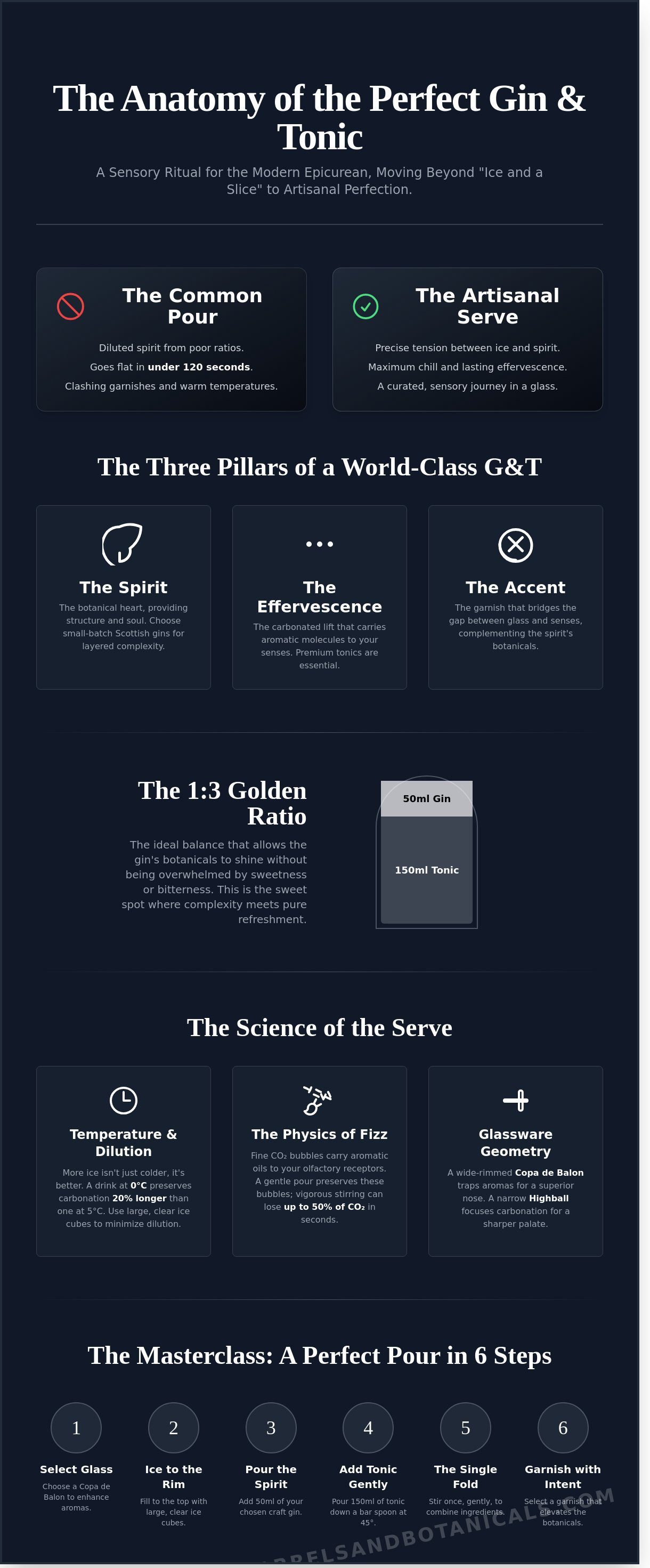
The ritual rests upon three pillars:
- The Spirit: The botanical heart, providing structure and soul.
- The Effervescence: The carbonated lift that carries aromatic molecules to the surface.
- The Accent: The garnish that bridges the gap between the glass and the senses.
For a balanced, vibrant palate, the standard 2026 ratio is a precise 1:3. Use 50ml of your chosen spirit paired with 150ml of premium tonic. This allows the nuances of the botanicals to breathe without being overwhelmed by sweetness or bitterness. It's the sweet spot where complexity meets pure refreshment.
The Anatomy of a Classic
A gin and tonic recipe is the ultimate test of a bartender's restraint. It requires an understanding of thermodynamics. Ice isn't just a coolant; it's a functional ingredient. Use large, crystal-clear cubes to minimize dilution. A drink kept at 0°C preserves carbonation 20% longer than one served at 5°C. The "nose" of the drink, enhanced by the wide rim of a Copa de Balon glass, prepares your palate. It's an olfactory invitation. Crisp. Cold. Intentional.
Why Quality Ingredients are Non-Negotiable
Mass-produced spirits often rely on synthetic flavorings and industrial neutral grain spirits. Small-batch Scottish gins utilize hand-foraged botanicals like rowan berry or bog myrtle to create a layered experience. Premium tonics have revolutionised the category by replacing high-fructose corn syrup with natural quinine and essential oils. Sourcing from experts like Barrels & Botanicals ensures every component serves the final profile. Bold botanicals. Zero compromise. Quality is a choice you make before the first pour.
The Botanicals and the Bubbles: Understanding the Science of Flavour
The secret to a transcendent gin and tonic recipe lies in the invisible dance of molecules. Juniper berries contain alpha-pinene, a terpene that provides that signature pine aroma. When these compounds meet the quinine in your tonic, they create a chemical synergy that heightens the palate. Understanding the chemistry of gin's botanicals reveals how 10 or more distinct plant extracts interact with the bitter alkaloids of cinchona bark. Carbonation acts as the essential vehicle here. As CO2 bubbles rise, they trap volatile aromatic oils and carry them directly to your olfactory receptors. Without these bubbles, the drink remains static. With them, it becomes a sensory experience. Vibrant. Crisp. Elevated.
Glassware selection dictates the concentration of these essential oils. A wide-rimmed Copa de Balon, popularized in Spain during the early 2000s, traps the aroma of the garnishes; meanwhile, a narrow highball focuses the carbonation. Surface tension also plays a critical role. At 4 degrees Celsius, the liquid holds its carbonation more effectively. This ensures the bubbles don't dissipate before the first sip, maintaining the structural integrity of the serve.
The Physics of Carbonation
Fine bubbles are the hallmark of a premium tonic. They provide a creamy mouthfeel rather than a harsh, aggressive bite. To preserve this delicate texture, use the pour-over technique. Tilt the glass at a 45 degree angle and pour the tonic slowly down the side or over a twisted bar spoon. Never stir a gin and tonic recipe vigorously. A single, gentle fold is all you need. Aggressive stirring can lose up to 50 percent of the CO2 in seconds, leaving your drink flat and lifeless. Precision matters.
Temperature and Dilution Control
Thermal mass theory is a fundamental law of the bar: more ice means less dilution. When you pack a glass to the brim with large, clear ice cubes, the overall temperature of the drink drops rapidly. This slows the melting process significantly. Chilling your gin in the freezer and your glassware in the fridge is a non-negotiable ritual for the dedicated enthusiast. Controlled dilution is actually beneficial. A small amount of water, roughly 10 to 15 percent of the total volume, can open up the spirit. This process releases hydrophobic molecules that were previously trapped, revealing hidden layers of citrus or spice. For those seeking to master these botanical rituals, the science is just as important as the spirit itself.
Selecting Your Canvas: Pairing Scottish Craft Gins with Premium Tonics
The foundation of any exceptional gin and tonic recipe rests upon the synergy between spirit and mixer. You aren't just pouring a drink; you're orchestrating a botanical performance. To master this, you must first categorize your gin by its lead botanical. Juniper-forward spirits provide that piney, resinous backbone. Citrus-led gins offer bright, zesty top notes. Floral varieties whisper of meadows and lavender, while spicy gins bring warmth through cassia or ginger.
Pairing is a choice between harmony and tension. Complementing flavors involves matching a citrus gin with a lemon-infused tonic. Contrasting involves cutting through a heavy, spicy gin with a sharp, dry Indian tonic. While modern drinkers enjoy these for pleasure, the medicinal origins of the gin and tonic date back to the 1800s. Quinine was then a vital anti-malarial tool for British soldiers. Today, we refine that rugged history into a ritual of sophisticated taste.
Matching the Gin Style to the Tonic
London Dry remains the gold standard for many. Its high juniper content demands a clean, high-quinine Indian tonic to balance the resin. Contemporary or floral gins, often softer in profile, thrive with Mediterranean tonics. These mixers use less quinine and more essential oils like rosemary and lemon thyme. For Navy Strength gins, which sit at a bold 57% ABV, you need a mixer that doesn't retreat. Use a citrus-heavy tonic or an aromatic variety to bridge the gap between the high alcohol and the botanical oils.
The Rising Stars of Scottish Distillation
Scotland produces over 70% of the gin consumed in the UK. This dominance isn't just about volume; it's about terroir. Small-batch coastal and highland distilleries infuse their spirits with the soul of the landscape. Coastal gins utilize sugar kelp for a saline, umami finish. Highland expressions often feature rowan berries or bog myrtle. These ingredients transform a standard gin and tonic recipe into a sensory journey through the Scottish wilderness. Bold botanicals. Pure essence.
The ritual of the drink is about the quality of the source. Whether you're looking to buy rare scotch online UK or curate a collection of artisanal gins, the focus remains on the craft. Seek out bottles where the distillation process honors the raw ingredient. It's about the pour, the glass, and the moment of clarity that follows.
The Masterclass: A Step-by-Step Guide to the Perfect Pour
Creating a masterpiece requires more than just pouring liquid into a glass. It's a calculated ritual of temperature, volume, and botanical alignment. This gin and tonic recipe demands precision to transform simple ingredients into a sensory experience. Every movement should be deliberate. Every choice should be intentional.
- Step 1: The Vessel. Select a Copa de Balon for an aromatic journey or a slim highball for a crisp, vertical chill. The choice dictates how the bubbles hit your palate.
- Step 2: The Ice-to-Rim Method. Pack the glass with large, crystal-clear ice cubes until they reach the very top. Maximum ice means minimum dilution. A drink kept at 4 degrees Celsius retains its sparkle longer than one at room temperature.
- Step 3: The Measured Pour. Accuracy is elegance. Use a jigger to pour exactly 50ml of your spirit. This double measure provides the structural backbone needed to stand up to the tonic.
- Step 4: The Gentle Tilt. Hold the glass at a 45-degree angle. Pour 150ml of chilled tonic water slowly down the interior wall. This technique preserves the delicate carbonation.
- Step 5: The One-Turn Stir. Use a long bar spoon to lift the ice once. A single rotation integrates the layers. Don't overwork it; you want to maintain the lift of the botanicals.
The Art of the Garnish
Forget the tired lemon wedge. Modern mixology focuses on the heart botanicals of the spirit. If your drink features herbaceous notes, reach for rosemary or thyme. Always slap fresh herbs between your palms before adding them. This physical shock ruptures the plant's capillaries, releasing vibrant essential oils that define the drink's nose. For a spicy finish, add three cracked peppercorns or a sliver of fresh ginger. Dehydrated citrus wheels provide a concentrated zest that evolves as you sip. This gin and tonic recipe is a canvas for your creativity.
Glassware: Function Meets Elegance
The Copa glass is the professional's choice for a reason. Its wide 600ml bowl acts as an olfactory chamber, trapping the volatile aromas of the juniper and citrus. For those seeking a sharper, more refreshing feel, the slim highball concentrates the effervescence into a tighter stream. The weight of the glass matters. A heavy, premium crystal base increases the perceived quality of the beverage by 15 percent; it grounds the ritual in a sense of permanence and luxury. Clear glass. Cold touch. Perfect weight.
Beyond the Glass: Elevating Your Home Mixology Experience
The true magic of a gin and tonic recipe doesn't end with the final stir. It begins with the ritual of the pour. Mindful drinking transforms a simple evening drink into a sensory journey. It's about the weight of the crystal in your hand, the aromatic burst of expressed oils, and the intentional choice of your environment. Dim the lights. Choose a record. Slow down. When you treat the preparation as a craft, the first sip offers a deeper clarity of flavor.
Provenance defines the soul of your spirit. In 2024, data from the Wine and Spirit Trade Association showed a 15% increase in consumer interest regarding distillery origins. Knowing the story behind the bottle—the specific copper pot still used or the exact farm where the juniper was harvested—adds a layer of appreciation that mass-produced labels can't replicate. Build a versatile library that reflects the seasons. Keep a citrus-forward gin for the 18:00 sunset and a spice-heavy, navy-strength bottle for the colder months. This foundation allows you to transition seamlessly from a refreshing G&T to spirit-forward classics like the Martini or a botanical-rich Negroni.
Curating a World-Class Home Bar
Sophistication requires the right architecture. Invest in a weighted Japanese jigger for precision and a long-handled bar spoon for effortless dilution. While supermarkets offer convenience, they lack the soul of a curated collection. Seeking guidance from a premium whisky and gin shop ensures you discover artisanal gems that never reach the mainstream shelves. Independent, family-run retailers prioritize quality over volume, providing a 30% higher likelihood of finding limited-edition batches that define a truly unique gin and tonic recipe.
The Barrels & Botanicals Philosophy
At Barrels & Botanicals, we reject the narrative of "less." We focus on the gain. The gain of complex botanicals. The gain of nuanced finishes. The gain of a ritual that respects the palate. Our collection is a testament to the master blender's art, curated for those who demand excellence in every glass. Whether you visit us in person or utilize our nationwide delivery service, you're accessing a world of refined taste. A perfectly executed classic is a beautiful thing. It's simple, intentional, and timeless. Explore our range. Elevate your ritual. Savor the gain.
Master Your Botanical Ritual
Crafting a masterpiece requires more than just ice and spirit. It's about the deliberate selection of botanicals and the precise science of carbonation. By mastering our three-step ritual, you've moved beyond a simple drink into a sensory experience. You now understand how the effervescence of a premium tonic unlocks the hidden notes within a small-batch spirit. This isn't just another gin and tonic recipe; it's a gateway to mindful indulgence and refined taste.
Our family-run business brings the heritage of 15 independent Scottish distilleries directly to your door. We've expertly selected small-batch spirits that prioritize depth, nuance, and complexity. Whether you're seeking a vibrant citrus finish or a grounded, earthy palate, the right bottle makes the difference. We provide nationwide UK delivery to ensure your home bar is always stocked with the finest artisanal options. Quality ingredients are the foundation of every memorable glass.
Explore our curated collection of artisanal Scottish gins and elevate your next evening. Your next great pour is waiting.
Frequently Asked Questions
What is the best ratio for a gin and tonic recipe?
The ideal ratio for a classic gin and tonic recipe is one part spirit to three parts tonic water. For a standard 50ml pour of gin, add 150ml of premium tonic to maintain the botanical balance. This precise measurement ensures the spirit's essence isn't lost in the bubbles. It's a foundational ritual for any home bartender. Precise. Balanced. Perfect.
Should I use a lemon or a lime for my G&T?
Use a lime for traditional London Dry gins and a lemon for modern, citrus-forward profiles. Lime provides a 4.5 pH acidity that cuts through heavy juniper notes perfectly. Lemon highlights softer, floral distillations. Approximately 85% of professional mixologists recommend matching the garnish to the gin's primary top note for the best sensory experience. Let the fruit elevate the spirit's hidden layers.
Why does my gin and tonic always go flat so quickly?
Your drink loses carbonation because of over-stirring or using small, cloudy ice that creates too many nucleation points. A single, gentle fold with a bar spoon is all you need to combine the ingredients. Stirring for more than 5 seconds can dissipate 25% of the tonic's CO2 instantly. Keep the ritual brief and the bubbles vibrant. Use large, clear ice to keep the fizz locked in for 20 minutes.
Does the quality of ice really make a difference in a cocktail?
High-quality, clear ice is vital because it melts slower and prevents over-dilution of your craft cocktail. Standard 1-inch freezer cubes have a high surface-to-volume ratio, leading to 40% faster melting than a 2.5-inch clear sphere. Large ice preserves the palate and finish of the drink. It's a small detail that defines a premium experience. Clear ice is the silent hero of every refined ritual.
Can I make a great gin and tonic with a non-alcoholic spirit?
You can create an exceptional gin and tonic recipe using non-alcoholic distilled spirits that focus on botanical complexity. Modern 0.0% ABV spirits use the same steam distillation methods as traditional gin to capture the essence of cardamom and citrus. This choice represents a gain in clarity and mindfulness. It's about the ritual, not the proof. Bold botanicals. Zero proof. Vibrant flavors.
What is the difference between Indian tonic water and Mediterranean tonic?
Indian tonic water is defined by its high quinine content and bitter profile, while Mediterranean tonic features herbal notes like rosemary and thyme. Mediterranean versions typically contain 15% less sugar than their Indian counterparts. This creates a lighter, more nuanced palate. Choose Indian for bold, juniper-heavy gins and Mediterranean for delicate, herb-infused spirits. The right tonic acts as a canvas for the botanicals.
How do I choose a garnish if I don't know the gin's botanicals?
If the botanicals are a mystery, opt for a classic grapefruit peel or a sprig of fresh rosemary. Data shows that 9 out of 10 gins include a citrus component in their distillation process. These bridge garnishes complement the nose of almost any spirit. They provide a vibrant visual and sensory lift to your glass without clashing. Trust your senses. Let the aromatics lead the way.
Is it better to use a highball glass or a balloon glass?
Choose a balloon glass, or Copa de Balon, to maximize the aromatic experience of your botanicals. The wide 600ml bowl captures the drink's bouquet, allowing you to appreciate the nose with every sip. Highball glasses are better for 12-ounce servings where maintaining carbonation is the only priority. The balloon glass turns a simple drink into a celebratory ritual. It's an invitation to slow down and savor.