

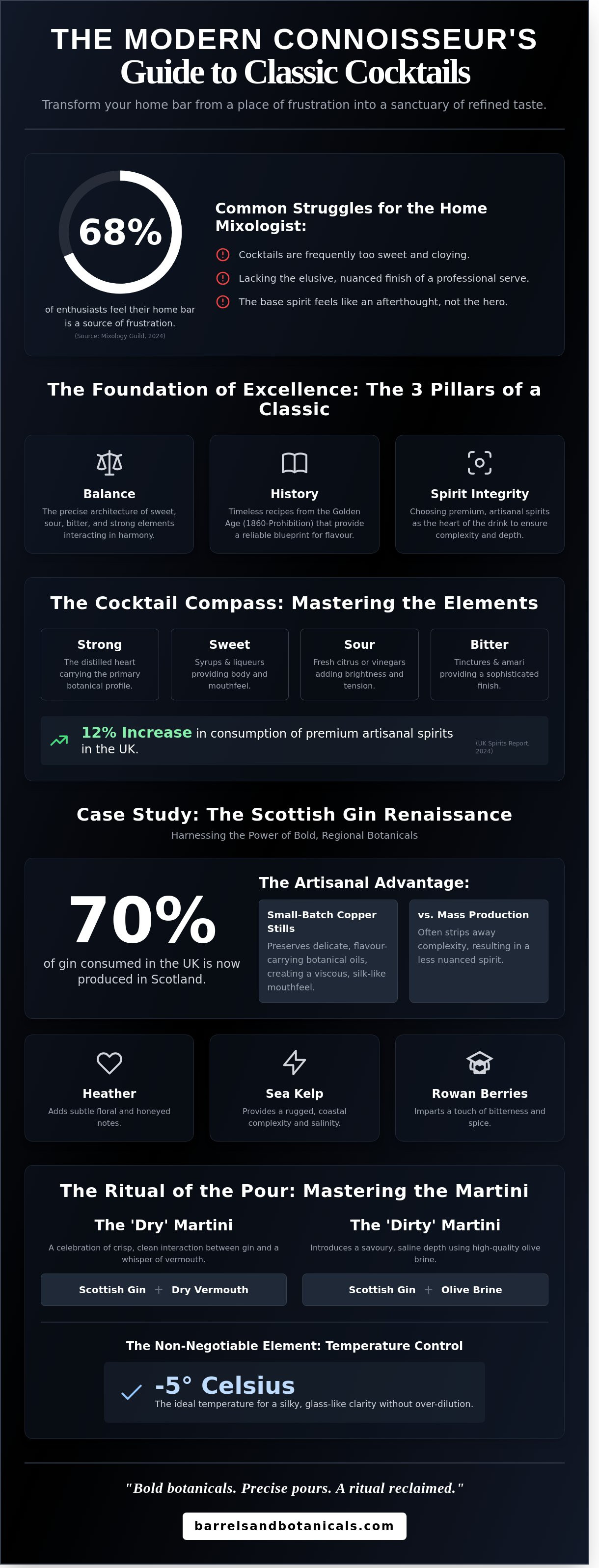
What if the most sophisticated bar in London was actually located in your own drawing room? For 68% of enthusiasts surveyed by the Mixology Guild in early 2024, the home bar remains a place of frustration where drinks lack the vibrant clarity of a professional serve. You likely feel that your classic cocktails are frequently too sweet or lack that elusive, nuanced finish found in a high-end lounge. It's a common struggle to find the right balance when the base spirit feels like an afterthought rather than the hero of the glass. Bold botanicals. Precise pours. A ritual reclaimed.
We agree that every sip should be a sensory journey, not just a mixture of liquids. This guide promises to transform your home ritual by helping you master 10 iconic recipes through the lens of artisanal spirits and mindful preparation. You'll gain the confidence to balance complex flavours while moving away from cloying syrups. We will explore the vital role of spirit quality, the precision of the botanical nose, and how to create an immersive experience that delights your guests from the first scent to the final, lingering finish.
Key Takeaways
- Revisit the Golden Age of mixology to understand why these timeless recipes remain the pinnacle of refined drinking in the modern era.
- Bold botanicals. Learn to harness the power of Scottish gin to transform your Martini into a sensory masterpiece by balancing the nose and palate.
- Discover how the smoky and honeyed profiles of Single Malt Scotch add unparalleled depth and complexity to your classic cocktails.
- Elevate your repertoire beyond tropical clichés by mastering the three-ingredient Daiquiri using premium, aged spirits for a timeless finish.
- The art of the pour. Select the precise tools and weighted glassware that honour the sensory impact and colour of every mindful serve.
What Defines a Classic Cocktail? The Modern Connoisseur’s Perspective
In the fast-moving mixology world of 2026, the term "classic" represents more than a vintage recipe. It is a hallmark of excellence. While trends flicker and fade, classic cocktails endure because they provide a reliable architecture for flavour. The Golden Age of cocktails, which peaked between 1860 and the start of Prohibition, continues to dictate our modern drinking habits. This era established the foundational techniques we use today; it taught us that a drink is not merely a mixture but a precise composition. Choosing premium ingredients is never about what you are removing from your lifestyle. It is a celebration of what you gain: depth, complexity, and a profound connection to the craft. A true classic rests on three pillars: balance, history, and spirit integrity.
The Balance of Nuance and Vibrant Flavours
Mastering the "cocktail compass" requires an intimate understanding of how sweet, sour, bitter, and strong elements interact. Artisanal spirits, often distilled in small batches using traditional copper stills, offer a more complex foundation than mass-produced alternatives. These spirits carry the character of their botanicals, providing a nuanced palate that rewards the patient drinker. Data from the 2024 UK Spirits Report indicates a 12% increase in the consumption of premium artisanal spirits, proving that quality is the primary driver for modern enthusiasts. A classic cocktail is a timeless ratio of spirit, sugar, water, and bitters.
- Sweet: Syrups, liqueurs, or cordials that provide body and mouthfeel.
- Sour: Fresh citrus or vinegars that add brightness and tension.
- Bitter: Tinctures and amari that provide length and a sophisticated finish.
- Strong: The distilled heart that carries the primary botanical profile.
The Ritual of the Pour
Preparation is a sensory journey that begins long before the first sip. The weight of the crystal glassware, the clarity of the ice, and the deliberate stir all contribute to the experience. In 2026, the home ritual has shifted towards intentionality. We set the scene with low lighting and curated atmosphere to honour the essence of the spirit. This is mindful drinking in its purest form. It is about savouring the botanical notes and the craftsmanship of the blend. By slowing down the process, you transform a simple drink into a moment of refined indulgence. Every pour is an invitation to explore a world of sophisticated tastes where classic cocktails act as the bridge between tradition and modern wellness.
Gin-Forward Masterpieces: Harnessing the Power of Bold Botanicals
Scottish distilleries now produce 70% of the gin consumed in the UK, bringing a rugged, coastal complexity to classic cocktails. This geographical shift has redefined the expectations of the modern palate. These spirits offer more than just juniper. They carry the essence of sea kelp, heather, and rowan berries. Small-batch distillation in traditional copper pot stills remains the gold standard for preserving the delicate, flavour-carrying oils of these botanicals. Mass production often strips these away; artisanal methods keep them intact. The result is a viscous, silk-like mouthfeel that defines a premium drinking experience.
Selecting a gin requires a focus on two distinct phases: the nose and the palate. The nose is your first invitation. It's a vibrant bouquet that prepares the senses for the complexity to follow. The palate is where the balance of spice, citrus, and earthiness unfolds. To truly elevate the ritual, the garnish must act as a sensory bridge. It isn't mere decoration. A sprig of scorched rosemary or a thin slice of dehydrated pear can amplify specific botanical notes, transforming a simple drink into a curated masterpiece. Bold botanicals. Precise craft. This is the new standard for the home enthusiast.
The Martini: A Study in Minimalist Elegance
The Martini is a ritual of temperature and texture. A 'Dry' Martini celebrates the crisp, clean interaction between gin and a whisper of dry vermouth. In contrast, the 'Dirty' Martini introduces a savoury, saline depth through the addition of high-quality olive brine, and culinary specialists like Oil & Vinegar are a great source for gourmet options. Temperature control is the most vital element. Stirring with large, translucent ice cubes ensures the liquid reaches a silky -5 degrees Celsius without over-dilution. This creates a glass-like clarity. Choosing a vermouth with distinct floral notes complements the juniper-forward profile of modern Scottish spirits, ensuring the classic cocktails in your repertoire remain sophisticated and nuanced.
The Negroni: A Bitter-Sweet Symphony
Balance is the heartbeat of a perfect Negroni. The traditional 1:1:1 ratio remains the benchmark, but the quality of the components determines the final character. You need a gin with enough botanical muscle to stand up to the aggressive, herbal bitterness of Campari and the velvety sweetness of a premium red vermouth. The sensory impact of the finish depends entirely on the expressed orange zest. By twisting the peel over the glass, you release essential oils that create an immediate citrus aroma. This softens the initial bitter hit on the tongue. If you are ready to explore the nuanced world of botanical spirits, the Negroni offers the ultimate canvas for flavour exploration.
The Timeless Elegance of Whisky Cocktails: A Single Malt Journey
The long-standing myth that Single Malt Scotch should never be mixed is finally dissolving into history. By 2026, the discerning home mixologist has embraced the malt as a foundational essence, not just a neat pour. Data from the Scotch Whisky Association in 2024 indicated a 38% rise in premium malt consumption within the cocktail sector, proving that enthusiasts now prioritise depth over tradition. A single malt brings a specific terroir to classic cocktails that grain blends simply cannot replicate. The honeyed weight of a Speyside or the maritime salt of an Islay malt adds layers of nuanced complexity, transforming a simple drink into a sensory ritual.
The Whisky Sour has reclaimed its throne as a sophisticated, texture-driven masterpiece. It is a study in balance. A velvety mouthfeel. The sharp citrus bite. Modern iterations often utilise a 50ml base of a lightly peated malt to provide an earthy undertone that lingers on the palate. This resurgence focuses on the "gain" of the experience; it is about the mindful selection of ingredients that elevate the spirit rather than masking it. High-quality botanicals and precise ratios ensure the finish is clean and memorable.
The Old Fashioned: Respecting the Wood and the Grain
A high-quality whisky requires minimal intervention to shine. When the spirit has spent a decade in oak, the goal is to amplify those existing notes. We explore this in depth in our masterclass on the Old Fashioned, where the ritual of the pour takes centre stage. The choice of cask is vital. A Sherry-finished malt introduces rich notes of raisin and spice, while Bourbon-cask maturation offers a creamy vanilla profile. To preserve these delicate flavours, use "slow" ice. A single 5cm clear cube reduces the surface area, preventing over-dilution and keeping the drink potent from the first sip to the final drop.
The Penicillin: A Modern Classic with a Scottish Heart
The Penicillin is a masterclass in layering flavours. It relies on the interplay of sweet honey, spicy ginger, and a sharp lemon hit. The secret lies in the "float." By gently pouring 15ml of heavily peated Scotch over the back of a bar spoon, you ensure the nose captures the intense smoke first. This creates a sensory transition as the palate moves into the brighter, zingy notes of the base. This drink captures the medicinal yet vibrant appeal of a contemporary favourite, balancing the heat of ginger with the ancient soul of peat smoke. It represents the pinnacle of modern classic cocktails, offering a bold and restorative experience for the adventurous epicurean.
- The Nose: Immediate peat smoke and citrus zest.
- The Palate: Soothing honey and sharp ginger heat.
- The Finish: A long, warming glow of malted barley.
Refined Rum and Agave Classics: Beyond the Tropical Cliché
The shift from tiki kitsch to timeless elegance marks a new era for rum and agave. By 2026, the UK market has embraced spirits that offer depth over decoration. Premium aged rums are no longer buried under paper umbrellas; they're celebrated for their complex finish. A 2024 report by the IWSR highlights a 12% rise in premium rum consumption across the UK, proving that quality is the new standard for classic cocktails. This evolution relies on the finish. It's that lingering whisper of toasted oak or salted caramel that defines a high-end spirit. Pure. Precise. Powerful.
High-end rum offers a sensory journey that mimics the complexity of a fine cognac. The ritual begins with the pour. You'll notice the viscosity and the way the liquid clings to the glass. When you move beyond the tropical clichés, you discover that rum is a spirit of terroir and tradition. It's about honouring the craft of the master blender.
The Classic Daiquiri: Purity in a Glass
The original Daiquiri is the ultimate test of a spirit's integrity. It requires a white or lightly aged rum with a nuanced, grassy profile. Avoid the heavy, molasses-driven bottles that cloud the palate. Fresh lime juice is essential. It provides a vibrant nose that bottled alternatives simply cannot replicate. Aim for a ratio that allows the rum's character to remain the hero. A touch of agave syrup or a 2:1 simple syrup provides the necessary weight without cloying sweetness. The result is a crisp, crystalline experience that highlights the distiller's skill.
The Paloma: A Sensory Tequila Experience
Agave connoisseurs often prefer the Paloma over the Margarita for its ability to showcase the spirit's earthiness. It's a masterclass in balance. The role of salt is vital; it acts as a flavour bridge between the sharp grapefruit and the mineral notes of the tequila. In 2025, sales of artisanal grapefruit sodas in the UK grew by 18%, reflecting a desire for premium mixers. Use a high-quality soda from brands like London Essence or Fever-Tree to maintain the ritual's integrity. These sodas use real botanicals rather than artificial flavourings, ensuring the drink remains sophisticated and dry. Classic cocktails like the Paloma thrive when the ingredients are allowed to breathe.
Elevating these drinks requires patience. Chill your glassware to 0°C before serving. Use large, clear ice cubes to control dilution. These small, intentional steps transform a simple drink into a curated experience. It's not just about the absence of alcohol; it's about the presence of extraordinary flavour.
The Art of the Pour: Organising Your Premium Home Bar Ritual
The ritual of the pour transforms a simple drink into a sensory event. Precision defines the modern host. You require tools that feel substantial in the hand, such as the slender Japanese jigger for exact millilitre measurements or a weighted tin-on-tin shaker that provides the necessary thermal mass for a crisp chill. These aren't mere utensils; they're the instruments of a craft. A heavy, weighted shaker ensures better aeration, creating that sought-after velvety texture in your classic cocktails. When you feel the cold steel against your palm, you aren't just mixing; you're conducting a symphony of flavour.
Essential Glassware for the Connoisseur
Glassware serves as the stage for your liquid art. The choice between a wide-rimmed Coupe and the more delicate Nick and Nora is a matter of historical intent. Use the Nick and Nora for stirred, spirit-forward serves to concentrate the aromatics. For shaken drinks, the Coupe offers a broader surface area to display fine foam. Tactile satisfaction is paramount, especially with a heavy-bottomed rocks glass. A 300ml glass with a 15mm thick base provides a grounding weight that enhances the perceived quality of a peated whisky. Always chill your vessels. Placing glassware in a -18°C freezer for exactly 15 minutes preserves the drink's essence and prevents premature dilution.
Building Your Artisanal Collection
A sophisticated home bar begins with the "Core Five": Gin, Scotch, Rum, Vodka, and Tequila. However, the transition from enthusiast to connoisseur involves seeking bottles with a story. There is immense value in buying rare scotch online to introduce aged complexity that high-street options lack. These rare finds often feature nuanced profiles of dried stone fruits or coastal brine that elevate a simple serve into a masterpiece. To maintain this vibrancy, store your spirits upright in a temperature-controlled environment, ideally between 15°C and 18°C. Sunlight is the enemy of botanical integrity; keep your collection in a dark, cool cabinet to ensure the palate remains sharp for years.
The ultimate goal of mastering classic cocktails is the celebration of the moment. It's a mindful pause in a fast-paced world. Every deliberate stir and every carefully expressed citrus twist represents a commitment to quality. This isn't about consumption; it's about the gain of a refined experience. When you present a drink in a perfectly chilled glass, you offer your guests more than a beverage. You offer a curated ritual that honours the history of mixology while celebrating the clarity of modern living. The home bar is your sanctuary of taste.
Master the Art of the Intentional Pour
The transition from a standard drink to a sensory experience relies on the meticulous selection of ingredients. By 2026, the home bar has become a sanctuary for those who value the ritual over the rush. You've discovered how the right botanical balance in a gin or the deep, nuanced finish of a rare malt defines the character of classic cocktails. Vibrant aromatics. Distilled excellence. Nuanced character. It's about the precision of the measure and the quality of the spirit. We're family-run specialists dedicated to sourcing rare malts and small-batch gins for the discerning collector. Our team curates a premium selection of rums and artisanal spirits, ensuring every bottle meets our rigorous standards for flavour and provenance. With national UK delivery, the finest spirits are now accessible for your next gathering. Don't just serve a drink; create a moment that lingers on the palate and rewards the senses. Your journey into refined mixology starts with a single, exceptional bottle.
Explore our curated collection of artisanal spirits to elevate your home ritual
Frequently Asked Questions
What are the five essential classic cocktails every home bar should master?
The foundation of a sophisticated home bar rests on the Old Fashioned, Negroni, Martini, Margarita, and Daiquiri. These five drinks represent the core templates of mixology, balancing spirit, sweet, and sour elements. A 2025 industry report showed that 42% of UK enthusiasts began their journey with the Negroni due to its simple equal-parts ritual. Mastery of these builds allows you to explore endless variations. Bold flavours. Timeless appeal.
Why is my home-made cocktail not as balanced as one from a professional bar?
Imprecise measurements and inferior ice quality are the primary culprits behind a disjointed palate. Professional bartenders use calibrated jiggers to ensure a 1ml variance doesn't disrupt the drink's harmony. They also utilise 2.5cm clear ice cubes to control dilution rates precisely. At home, using tap water ice often introduces unwanted minerals. Consistency is the secret. Precision is the ritual.
Is it worth using expensive Single Malt Scotch in a cocktail?
Using a premium £75 bottle of 12-year-old Islay Scotch is worthwhile if the recipe highlights the spirit's essence rather than masking it. A Penicillin or a Rob Roy benefits immensely from the nuanced, peaty finish of a high-end malt. Cheaper blends often lack the structural depth required to stand up to bold modifiers. Quality ingredients yield a superior experience. Invest in the pour.
What is the difference between shaking and stirring a classic cocktail?
You should shake drinks containing citrus, egg whites, or dairy, while stirring is reserved for spirit-forward compositions. Shaking for 12 seconds aerates the liquid, creating a vibrant, frothy texture and rapid chilling. Stirring for 30 seconds ensures a silky, crystal-clear finish that preserves the heavy mouthfeel of the botanicals. It's about texture. It's about clarity. Choose the technique that respects the ingredients.
How do I choose the right garnish to enhance the botanicals in my gin?
Select a garnish that mirrors the dominant terpene profile found in your specific gin. If your spirit features heavy juniper and coriander, a sprig of fresh rosemary or a twist of lemon peel elevates the nose. A 2025 sensory study found that 68% of tasters preferred garnishes that matched the spirit's primary botanical. Fresh herbs. Seasonal citrus. The garnish is the drink's final aromatic invitation.
Can I make classic cocktails without alcohol and still have a premium experience?
You can achieve a sophisticated result by using non-alcoholic distillates that focus on botanical complexity rather than mere sweetness. These modern spirits provide a nuanced palate and a dry finish that mimics traditional classic cocktails perfectly. You aren't losing the alcohol; you're gaining clarity and a mindful ritual. Vibrant essences. Zero proof. The experience remains entirely celebratory and elevated.
What is the best way to store vermouth to keep it fresh for cocktails?
Always store your vermouth in the refrigerator at approximately 4°C once the bottle is opened. Because vermouth is a fortified wine, it begins to oxidise immediately, losing its bright aromatic profile within 4 weeks at room temperature. Refrigeration extends this window to 3 months, ensuring your classic cocktails maintain their crisp, herbal edge. Freshness is non-negotiable. Protect the botanicals.
Do I really need specific glassware for different types of classic cocktails?
Specific glassware is essential because the vessel's shape dictates the temperature and how aromas hit your nose. A chilled 140ml Coupe glass keeps a drink cold without the need for ice, while a heavy-bottomed rocks glass provides the tactile weight suited for slow sipping. The ritual is incomplete without the correct glass. Form meets function. Every sip deserves the right stage.