
What if the drink you associate with neon salts and sugary hangovers was actually a masterclass in botanical balance? A 2023 survey of UK cocktail enthusiasts revealed that 64 per cent of drinkers now prefer a drier, spirit-forward profile over the cloying sweetness of traditional mixes. You likely agree that a poorly made margarita, with its unbalanced acidity and synthetic syrups, is a missed opportunity for true sensory pleasure. It's time to move beyond the "loss" of the standard party drink and embrace the "gain" of a refined craft.
This guide promises to transform your approach to agave mixology. You'll discover how to curate a sophisticated ritual using artisanal techniques and premium botanicals that honour the spirit's complex terroir. Deep agave notes. Vibrant citrus. A whispered finish of sea salt. We're providing a complete masterclass on selecting the right distilled essence and mastering the professional ratios that define a premium social experience for your guests.
Key Takeaways
- Trace the floral lineage of the "Daisy" to transform your serve from a basic cocktail into a sophisticated sensory ritual.
- Discover how the terroir of 100% Blue Agave influences the palate, allowing you to select spirits with either vibrant Highland florals or earthy Lowland notes.
- Master the science of ratios to craft the ultimate margarita, achieving a bespoke balance between sharp citrus and smooth agave sweetness.
- Learn artisanal techniques for preparation, including precision chilling and the extraction of the brightest botanical essences from fresh limes.
- Elevate your repertoire with advanced mixology variations, exploring the minimalist elegance of agave nectar or the vibrant kick of infused heat.
The Margarita Ritual: Defining the Sophisticated Agave Classic
The margarita stands as the undisputed pinnacle of the Sour cocktail family. It represents a masterclass in balance, where the sharp edge of citrus meets the depth of the agave plant. To understand its soul, we must look at its name. In Spanish, "Margarita" translates to "Daisy," a nod to the 19th-century category of drinks that combined a spirit with citrus and a sweet liqueur. This Margarita cocktail history reveals a lineage rooted in floral elegance and structured simplicity. It's a formula that has endured because it's fundamentally perfect.
For the modern epicurean, choosing a sophisticated version of this drink isn't about a loss of experience. It's an intentional gain. We trade the dulling effects of traditional spirits for a heightened sensory journey. We focus on the vibrant, complex layers that high-end mixology provides. The ritual begins long before the first sip. It's the weight of the chilled coupe glass. It's the precise placement of the sea salt rim. It's the moment the first drop of lime zest hits the air. This is mindful drinking at its most refined.
The Heritage of the Agave Spirit
The journey from the blue agave fields of Jalisco to the sophisticated bars of London has been transformative. What began as a regional Mexican tradition is now a global symbol of artisanal taste. By 2026, the connoisseur no longer sees the margarita as a simple party drink. Instead, it's a canvas for botanical expression. This evolution is part of a wider movement toward elevated home mixology. You can explore this further in our definitive guide to classic cocktails, which examines how traditional structures are being reimagined for a mindful generation.
The Sensory Architecture of the Drink
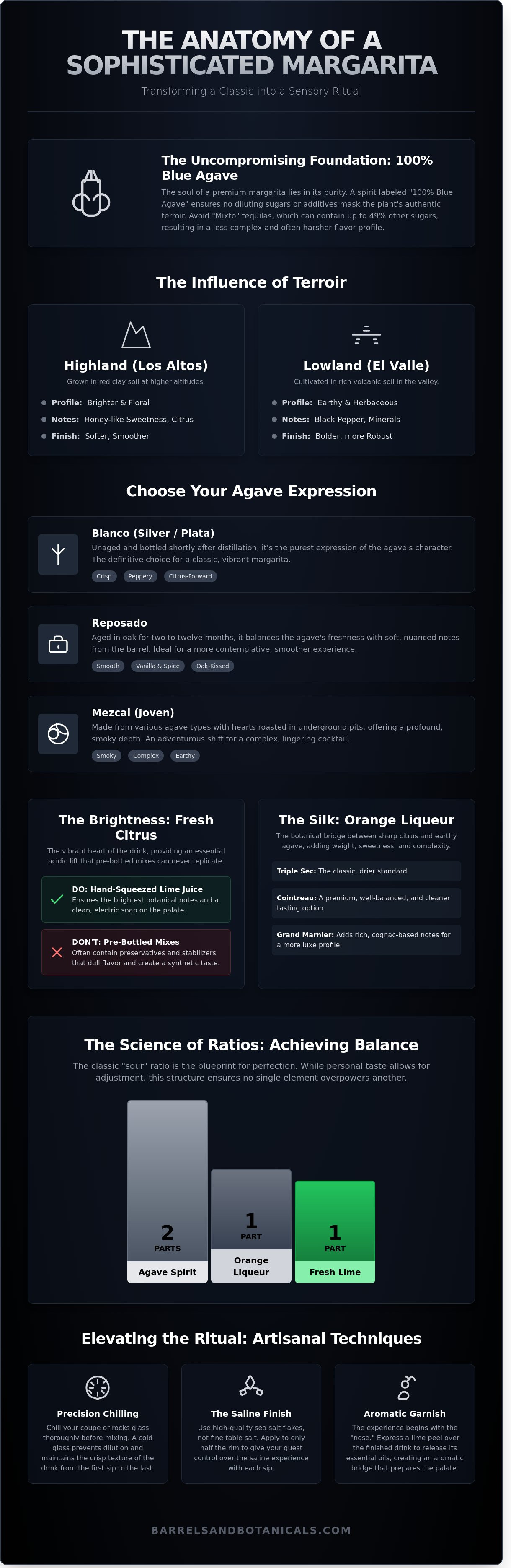
A truly exceptional margarita relies on a delicate interplay of textures and scents. The foundation is the earthy, peppery essence of agave, which provides a grounding depth. This meets the bright, electric snap of fresh citrus. A silken liqueur adds the necessary weight to the palate, ensuring a smooth, lingering finish. The "nose" is the first invitation. When you express a lime peel over the glass, the release of fresh oils creates an immediate aromatic bridge. It prepares the senses for the sharp, clean, and deeply satisfying journey to follow.
- The Base: Earthy, botanical agave notes.
- The Brightness: Hand-pressed lime juice.
- The Silk: Premium orange-scented liqueur.
- The Finish: A crisp, saline edge.
The Botanical Blueprint: Selecting Premium Spirits and Liqueurs
The architecture of a superior drink begins with the soil. To craft a truly exceptional margarita, your foundation must be absolute. 100% Blue Agave is the only acceptable starting point for a discerning palate. Anything less is a "mixto," which is often diluted with cane sugars and industrial additives that mask the plant's authentic soul. Pure agave provides a clean, vibrant base that respects the tradition of the spirit.
Tequila carries the distinct signature of its terroir. Highland tequilas, grown in the red clay of Los Altos, typically offer a brighter, floral profile with a natural, honey-like sweetness. In contrast, Lowland varieties from the valley floor deliver a more masculine, earthy character defined by herbaceous notes and a peppery finish. This choice dictates the entire trajectory of your cocktail. Freshness is equally vital. Hand-squeezed lime juice is the vibrant heart of the drink, providing a sharp, acidic lift that pre-bottled mixes can never replicate. These commercial shortcuts often contain stabilisers that dull the tongue; fresh citrus ensures the botanical notes of the agave remain the protagonist.
Blanco, Reposado, or Mezcal? Choosing Your Base
Blanco tequila is the purest expression of the agave plant. It's unaged and bottled shortly after distillation, offering a crisp, peppery bite that defines the classic margarita experience. For those seeking a more contemplative ritual, Reposado serves as an elegant middle ground. Aged in oak for two to twelve months, it introduces nuanced layers of vanilla and soft spice. If you desire an adventurous shift, Mezcal provides a profound, smoky depth. Its artisanal production involves roasting agave hearts in underground pits, resulting in a complex profile that lingers beautifully on the palate.
The Liqueur: Triple Sec vs. Cointreau vs. Grand Marnier
Orange liqueur acts as the botanical bridge between the sharp citrus and the potent agave. A standard Triple Sec is often light and straightforward, while Cointreau offers a sophisticated, crystalline balance of sweet and bitter orange peels. For a weightier, more luxurious finish, Grand Marnier introduces a cognac base that adds significant body. While many variations exist, the New York Times Margarita Recipe remains a benchmark for those seeking a classic, balanced ratio.
The choice of liqueur should complement the specific notes of your chosen spirit. Premium rum enthusiasts often appreciate the complexity of an aged tequila base paired with a darker, more intense orange liqueur. This combination mirrors the rich, molasses-driven profiles found in high-end Caribbean spirits. To perfect your own signature serve, you might explore our collection of artisanal mixers and botanicals designed to enhance every subtle note of your craft creation.
Precision and Palate: The Science of Ratios and Rims
The most frequent critique of a poorly executed margarita is a lack of equilibrium. It's often either a sharp assault of acidity or a cloying, sugary mess. Achieving a sophisticated profile requires moving beyond guesswork into the realm of precise ratios. While historical recipes varied wildly, modern mixology has distilled the ritual into two primary schools of thought. The 2:1:1 ratio (50ml agave spirit, 25ml orange liqueur, 25ml lime) delivers a bright, citrus-forward punch. In contrast, the 3:2:1 ratio (45ml spirit, 30ml liqueur, 15ml lime) offers a softer, more liqueur-heavy finish. To truly appreciate the history of the margarita, you must experiment to find the exact point where the botanical notes of the agave meet the vibrant zest of the lime.
Temperature control is the silent partner in this equation. Standard freezer ice contains trapped oxygen and impurities, causing it to shatter and melt rapidly. This over-dilutes the drink within three to five minutes. Switch to 50mm clear ice cubes. These dense, transparent blocks melt approximately 20% slower than cloudy ice produced in domestic trays. They chill the liquid without compromising the integrity of the spirit. It's about preservation. Bold botanicals. Zero compromise.
Artisanal Salts and Botanical Rims
Think of the rim as a seasoning rather than a garnish. Move away from abrasive table salt. Use Maldon sea salt flakes for a delicate crunch or smoked Halen Môn salt to accentuate the earthy notes of a Reposado. A half-rim technique is essential; it grants the guest control over every sip. For a Blanco, a dusting of Tajín or dried hibiscus provides a tart, spicy counterpoint that wakes up the palate. Sensory. Sharp. Intentional.
The Glassware: Aesthetics of the Ritual
Glass choice dictates the physical journey of the liquid. A classic chilled coupe encourages small, elegant sips, directing the margarita to the tip of the tongue where sweetness is most easily perceived. A heavy-bottomed rocks glass, preferred for drinks served over ice, allows the aromas to aerate more freely. Data from 2022 sensory trials suggests that the weight of the vessel influences the perceived quality of the cocktail. A heavier glass reinforces the premium nature of the experience. Choose wisely.
The Masterclass: A Step-by-Step Guide to the Perfect Margarita
Creating a world-class margarita requires more than just mixing liquids; it demands a commitment to the ritual of craft. Begin by placing your crystal coupe or rocks glass in the freezer for at least 15 minutes. A chilled vessel preserves the delicate temperature and prevents the rapid dilution of the agave spirit. Organise your botanical garnishes early. Freshness is paramount. For the juice, ensure your limes are at room temperature. A 2024 study in culinary physics suggests that room-temperature citrus yields up to 30% more juice than refrigerated fruit. Squeeze them just before assembly to capture the brightest, most volatile citrus notes.
The shake is where the texture is forged. A "hard shake" isn't just about cooling; it is about aeration. By shaking vigorously for 12 to 15 seconds, you introduce tiny air bubbles that create a luxurious, frothy head. This aeration carries the scent of the botanicals directly to your palate, softening the citrus bite while highlighting the earthy notes of the agave. When you pour, the presence of a delicate foam indicates a job well done.
Step-by-Step Execution
- Step 1: Prepare the rim. Run a fresh lime wedge around the edge of your chilled glass. Press the rim gently into a saucer of artisanal sea salt or a citrus-infused salt blend. This provides a savoury counterpoint to the tartness of the drink.
- Step 2: Build the foundation. Combine 50ml premium tequila, 25ml orange liqueur, and 25ml freshly squeezed lime juice in your shaker. Precision is the key to balance.
- Step 3: Add the chill. Fill the shaker to the brim with large, solid ice cubes. Shake with intent until the metal exterior is frost-chilled and the contents are perfectly emulsified.
- Step 4: The silken finish. Fine-strain the liquid through a Hawthorne strainer and a fine mesh tea strainer. This removes small ice shards, ensuring a crystal-clear, velvet texture in the glass.
The Final Flourish: Garnishing for the Nose
Visual elegance meets olfactory delight in the final stage. A thin lime wheel or a dehydrated citrus slice provides a modern, minimalist aesthetic. For a truly elevated experience, express a fresh zest of lime over the surface. This action releases essential oils that linger on the glass, greeting your senses before the first sip. This attention to detail transforms a simple drink into a sensory event.
Treat this process as a ritual similar to crafting an Old Fashioned. It is an act of mindfulness. Each step builds a layer of complexity that defines a superior margarita. Clarity, temperature, and aroma must work in harmony.
Ready to master your mixology? Discover our premium agave botanicals and elevate your home bar experience.
Elevating the Ritual: Advanced Variations and Pairings
Mastering the classic ratio is only the beginning of your journey. To truly honour the agave, you must explore its capacity for transformation. The Tommy’s Margarita, conceived by Julio Bermejo in the early 1990s, remains the definitive choice for the minimalist. By removing the orange liqueur and replacing it with organic agave nectar, the drink achieves a linear, crystalline sweetness. This adjustment allows the nuances of a premium highland tequila to shine without distraction. It’s a masterclass in restraint.
For those who crave a sensory jolt, the Spicy Margarita introduces a vibrant, controlled heat. Infusing your spirit with two slices of fresh jalapeño for precisely twenty minutes creates a sharp, peppery kick that dances against the lime’s acidity. If you prefer a more evocative, moody profile, the Mezcalita provides the perfect alternative. Swapping tequila for an artisanal mezcal introduces notes of campfire smoke, damp earth, and roasted agave. It’s a complex, layered experience that lingers on the palate.
The ritual of the margarita isn't confined to the glass. It’s an atmospheric endeavour. Consider the environment as carefully as your ingredients. Dim the lighting to a warm, amber glow. Select a playlist of rhythmic, organic sounds; perhaps something with a deep, acoustic resonance. The company you keep should match the intentionality of the pour. When every element aligns, the cocktail becomes more than a drink; it becomes a curated moment of connection.
Mindful Drinking and Low-ABV Alternatives
We don't view the absence of alcohol as a loss. It’s an opportunity to focus on the "gain" of pure botanical essence. Premium non-alcoholic agave spirits now offer the same sophisticated "nose" and "finish" expected by any connoisseur. In these zero-proof versions, the botanicals are the undisputed heroes. Distilled extracts of sea salt, charred oak, and citrus zest provide a sensory depth that ensures the margarita ritual remains vibrant and inclusive. Clarity of mind meets complexity of flavour.
The Connoisseur’s Collection
Building a home bar is an act of curation. We encourage you to move away from mass-produced labels and prioritise artisanal, small-batch spirits that respect traditional methods. A £50 bottle of independently distilled agave spirit often carries a story of heritage and terroir that larger brands simply cannot replicate. Every choice you make reflects a commitment to quality and craftsmanship. We invite you to explore our curated selection of spirits and botanical blends to find the perfect foundation for your next creation.
Master the Art of the Mindful Pour
Crafting the perfect margarita requires more than just a shaker; it demands a deep respect for the botanical harmony between sharp citrus and earthy agave. You've now mastered the 3:2:1 ratio and the technical precision of a perfectly chilled glass. These foundational steps transform a simple drink into a sophisticated ritual. By selecting spirits that prioritise complexity over proof, you ensure every sip is a deliberate choice for quality and wellness. The Dalgarno family curates each bottle in our collection with this exact philosophy in mind. We specialise in small-batch, artisanal spirits that bring the vibrant essence of the distillery directly to your home bar.
Elevating your evening shouldn't be a compromise on flavour or social elegance. Discover our curated selection of premium agave spirits and artisanal botanicals. With national UK delivery available for the mindful connoisseur, you can begin your journey into refined, zero-proof mixology today. It's time to savour the clarity of a well-made drink. Your next masterclass starts with the very first pour.
Frequently Asked Questions
What is the best tequila for a margarita?
Choose a 100% Blue Weber Agave Blanco tequila for a crisp, vibrant profile. This unaged spirit captures the raw, vegetal essence of the plant. If you prefer a velvet finish with whispers of oak, a Reposado aged between 60 and 365 days adds sophisticated depth. Premium bottles like El Rayo or Casamigos, typically priced from £35 to £45 in UK boutiques, provide the perfect foundation for your margarita ritual.
Should I use Cointreau or Triple Sec in my margarita?
Cointreau is the superior choice for those seeking a structural backbone and complex aromatic intensity. It boasts a 40% ABV and a refined distillation of bitter and sweet orange peels. Standard triple secs often contain only 15% to 25% ABV and rely on heavy sugar content. By choosing a premium orange liqueur, you elevate the drink's architecture. It transforms a simple beverage into a curated, artisanal experience with a dry, lingering finish.
Can I make a margarita without a cocktail shaker?
You don't need professional equipment; a clean jam jar with a secure lid serves as an excellent alternative. Fill the jar two-thirds with ice and shake vigorously for 12 to 15 seconds until the glass feels painfully cold. This movement is essential for aeration and thermal dilution. It creates the tiny ice shards and frothy texture required for a true margarita. Strain the liquid through a fine tea strainer to ensure a smooth, elegant pour.
How do I stop my margarita from being too sour?
Balance is a precise science, so increase your sweetener by 5ml or 10ml to counteract excessive citric acid. While the 2:1:1 ratio is a traditional benchmark, many modern palates prefer 50ml tequila, 25ml lime, and 20ml agave syrup to soften the bite. Ensure your limes are at room temperature before juicing. This technique yields 20% more juice and results in a mellower acidity that doesn't overwhelm the delicate botanical notes of the agave.
Is agave nectar better than simple syrup for sweetening?
Agave nectar is the preferred choice because it shares the same botanical DNA as the base spirit. It possesses a rich, honeyed viscosity and a glycemic index of approximately 17, which is significantly lower than the 65 found in white sugar. Since agave is 1.5 times sweeter than standard syrup, you can use a smaller volume. This creates a lean, focused flavour profile that highlights the earthiness of the distilled agave without a cloying aftertaste.
What is the difference between a margarita and a tequila sour?
The distinction lies in the choice of modifiers and the resulting texture. A margarita relies on the orange liqueur for its sweetness and citrus complexity. Conversely, a Tequila Sour replaces the liqueur with simple syrup and often incorporates 25ml of egg white or aquafaba. This addition creates a silky, pillowy head and a softer mouthfeel. Both drinks celebrate the spirit, but the sour is a more delicate, foam-topped ritual for a slow, mindful evening.
How can I make a spicy margarita at home?
Infuse your creation by muddling 2 to 3 thin slices of fresh jalapeño at the bottom of your shaker before adding the liquids. For a controlled heat, let the pepper steep in the tequila for 30 seconds then strain the seeds out. This adds a vibrant, capsaicin-led kick that pairs beautifully with a smoked salt rim. It transforms the drink into a sensory journey that warms the palate while respecting the integrity of the botanicals.
Do I really need to salt the rim of the glass?
The salt rim is a functional component of the drink’s flavour architecture rather than a mere decoration. It suppresses bitterness and heightens the perception of sweetness and citrus on the palate. Use high-quality Maldon sea salt flakes instead of table salt to avoid a harsh, metallic finish. Only coat half the rim. This allows you to choose when to engage with the salinity, making each sip a deliberate and personal choice during your drinking ritual.