
The bottle on your bar cart is far more than a simple spirit; it is a meticulous map of global trade routes and centuries of botanical alchemy. It's understandable if you feel a sense of hesitation when faced with a sprawling back bar in London or Manchester. With over 900 gin brands now competing for space in the UK market as of early 2025, the various types of gin can feel like a riddle rather than a refinement. You likely find yourself puzzled by the technical divide between a classic London Dry and the contemporary styles that swap heavy juniper for delicate floral notes.
You deserve to select your next pour with the quiet confidence of a master blender. This guide transforms that uncertainty into expertise, helping you master the nuances of the global gin landscape from its historic roots in Genever to the vibrant innovations of today's craft scene. We will decode the terminology that dictates flavor, explore the ritual of the perfect serve, and identify the specific botanical profiles that resonate with your unique palate. Prepare to move beyond the label and into the essence of the glass.
Key Takeaways
- Understand the artisanal "botanical gain" that defines the spirit, starting with the foundational juniper-led requirements and the 37.5% ABV standard in the UK.
- Uncover the distinct heritage of traditional types of gin, contrasting the crisp elegance of London Dry with the rich, historical sweetness of Old Tom.
- Venture into the contemporary craft movement, where "New Western" distillations celebrate vibrant florals and local herbs as the heroes of the palate.
- Explore the depth of character found in aged and high-proof spirits, learning how wood-ageing and Navy Strength intensity add layers to your sensory experience.
- Curate the ultimate ritual by pairing your chosen profile with precise garnishes and glassware to enhance every nuanced botanical note.
The Essence of Juniper: Defining the Gin Spectrum
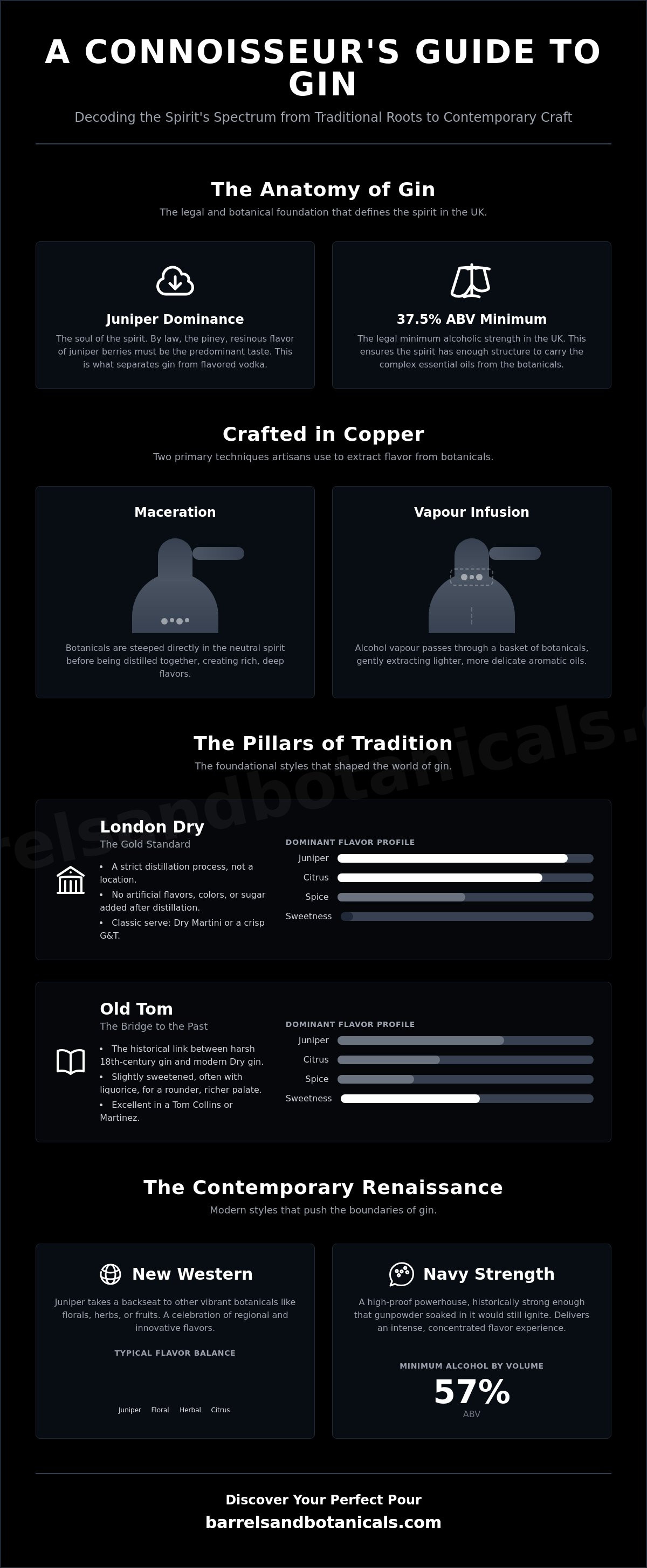
Gin represents a deliberate choice for the modern epicurean. It isn't just a spirit; it's a botanical landscape captured in a bottle. In the United Kingdom, the Spirit Drinks Regulations 2008 dictate that for a liquid to bear the name, it must possess a minimum alcoholic strength of 37.5% ABV. This baseline ensures the structural integrity needed to carry complex essential oils. Choosing between different types of gin becomes an exploration of the "botanical gain." This philosophy shifts the focus from what's missing in a drink to the vibrant, layered complexity added through meticulous sourcing. It's a celebratory ritual for those who value clarity and craft.
The foundation begins with the base spirit. While neutral grain spirit made from wheat or barley is the standard, modern distillers often experiment with grape or apple bases. These choices provide a subtle texture; wheat offers a crisp, clean finish, while grape introduces a silky mouthfeel and faint floral sweetness. Before the first sip, a connoisseur looks to "the nose." The aroma acts as a blueprint of the distiller's intent. High-quality spirits reveal their botanical hierarchy through the scent alone, signaling a well-balanced blend of roots, citrus, and spice.
The history and production of gin reveal a spirit that began as a 17th-century herbal medicine before evolving into the sophisticated craft we celebrate in 2026. It remains one of the few spirits defined by its flavor profile rather than its raw ingredients.
The Juniper Requirement
Juniper isn't a mere ingredient; it's the soul of the spirit. For a bottle to be legally classified as gin, the flavor of juniper berries must be predominant. These small, dark cones provide a profile that's piney, resinous, and intensely vibrant. Gin is a botanical-led spirit rooted in 17th-century herbal medicine. This specific sensory requirement separates gin from flavored vodkas. It demands a balance where the juniper provides the backbone, allowing secondary botanicals like coriander seed or angelica root to flourish without overshadowing the lead.
The Distillation Ritual
Quality begins with the method. Distilled Gin involves redistilling neutral spirit with botanicals, whereas Compounded Gin relies on simply adding flavorings to a base. Artisans use copper pot stills for two primary techniques: maceration, where botanicals steep directly in the spirit; or vapour infusion, where rising steam gently coaxes out delicate oils. The "cut" is the most critical moment in this ritual. A master distiller separates the "heads" and "tails" to keep only the "heart," which is the purest, most flavorful portion of the distillation run. This precise selection defines the elegance of the final types of gin found on premium shelves.
The Pillars of Tradition: London Dry, Plymouth, and Old Tom
The 18th century "Gin Craze" was a period of botanical chaos that redefined British drinking culture. Between 1720 and 1751, Londoners consumed an estimated 10 million gallons of spirit annually, often of dubious quality. This era of excess eventually birthed the Gin Act of 1751, which pushed production into the hands of reputable distillers and paved the path for the regulated, refined types of gin we celebrate today. Understanding these foundational styles requires a look at The Gin Guild's gin categories; these distinctions show how rigorous production methods define the final character of the spirit.
London Dry: The Gold Standard
London Dry is a process, not a location. To carry this label under UK law, all flavours must be introduced through distillation with natural botanicals. No sugar or colour can be added after the spirit leaves the still. The profile is sharp and crisp. It's unapologetically juniper-forward with bright, piercing citrus notes. This clarity makes it the essential spirit for a classic cocktails masterclass. It provides the structural backbone for a dry Martini or a bracing Gin and Tonic. Pure. Precise. Powerful.
Old Tom: The Bridge to the Past
Old Tom represents the missing link between the harsh "bathtub" gins of the 1700s and the refined spirits of the Victorian era. In the 1800s, distillers used sugar or liquorice to mask the rough edges of early distillation technology. The result is a richer, rounder palate that sits comfortably between gin and a light whisky. It's the original soul of the Martinez, the historical precursor to the Martini, and it defines the classic Tom Collins. While modern drinkers explore many experimental types of gin, Old Tom remains the essential bridge to our cocktail ancestors. Modern craft distillers revived this style around 2007, meeting a new demand for authentic, heritage-driven mixology.
Plymouth Gin: A Singular Heritage
Plymouth Gin is a liquid time capsule. Since 1793, it has been distilled at the Black Friars Distillery, the oldest working distillery in England. For decades, it held a Protected Geographical Indication, meaning it could only be produced within the city walls of Plymouth. Its profile is unique; it uses a higher concentration of root botanicals like orris and angelica. This creates an earthy, citrus-heavy nose and a remarkably soft finish. It lacks the sharp, stinging bite of a London Dry. This smoothness made it a staple for the British Royal Navy, who famously paired it with Angostura bitters to create the Pink Gin.
Exploring these heritage profiles is more than a history lesson; it's an invitation to appreciate the botanical architecture of your glass. For those who value these intricate layers but prefer a clearer head tomorrow, exploring a premium alcohol-free alternative allows you to maintain the ritual without the weight. Mindful drinking is about the gain of flavour, not the loss of spirit.
The Contemporary Renaissance: New Western and Small Batch Craft
The world of gin underwent a seismic shift as we entered 2026. While traditional styles remain foundational, the emergence of "New Western" or "Contemporary" styles has redefined the category for a new generation. In these modern types of gin, juniper often takes a back seat. It's no longer the aggressive, piney lead. Instead, it acts as a subtle canvas for hero botanicals. Think delicate florals. Pungent spices. Hand-foraged local herbs. This shift represents a significant gain for the epicurean. It's about flavour complexity. It's about a mindful exploration of the natural world. While the U.S. legal definition of gin requires a characteristic flavour derived from juniper berries, modern distillers are pushing the boundaries of what that balance looks like. The result is a spirit that feels more like a perfume or a culinary masterpiece than a standard bar rail staple.
The Art of the Small Batch
Small-scale production has become the heartbeat of the industry. Independent distillers are moving away from mass-market uniformity. They focus on the meticulous sourcing required for small batch gin. This approach is inherently nuanced. It relies on seasonal botanicals gathered at their peak. Producing in batches of fewer than 500 litres allows for a vibrant, experimental profile. Every bottle tells a story of a specific time and place. It's a ritual of quality over quantity. These independent makers often use traditional copper pot stills, ensuring a heavy, oily mouthfeel that mass production simply cannot replicate.
Modern Botanical Profiles
The 2026 palate craves terroir. This concept, once reserved for fine wine and Scotch, now defines the most exciting types of gin. We see a surge in the scottish gin movement, where distillers use ingredients straight from the rugged landscape to create a sense of place.
- Sea Kelp: Provides a coastal, umami finish that mimics the spray of the Atlantic.
- Rowan Berries: Offers a bright, tart acidity that balances earthy base notes.
- Peppercorns: Delivers a sophisticated, lingering heat on the finish.
To truly appreciate these profiles, skip the sugary mixers. Try a simple pour over a single large ice cube. Observe the nose. Savour the palate. Experience the essence of the plants without distraction. This is the new era of gin. Bold. Artisanal. Intentional. It's an invitation to slow down and appreciate the craftsmanship in every drop.
Beyond the Clear Spirit: Navy Strength, Aged, and Infused Gins
The world of gin extends far beyond the crystalline clarity of a standard London Dry. While most bottles sit between 40% and 43% ABV, connoisseurs often seek more adventurous types of gin that challenge the palate and reward the senses. These expressions offer a deeper ritual. They provide a more intentional drinking experience. By exploring high-proof distillations and barrel-aged mysteries, you move from simple refreshment to a curated exploration of flavor.
Navy Strength: Bold and Vibrant
Navy Strength gin isn't just about the heat. It's about the essence. Historically, the British Royal Navy required spirits to be at least 57% ABV. This ensured that if the gin spilled on gunpowder during a battle, the powder would still ignite. Today, this high proof serves a culinary purpose. It carries essential oils with unmatched intensity. These spirits don't hide. They cut through heavy mixers like tonic or vermouth. They preserve the botanical integrity in complex cocktails. Bold botanicals. High proof. Unrivalled clarity.
Oak-Aged and Cask-Finished Gins
Resting gin in wood creates a bridge between botanical brightness and the warmth of a barrel. These gins absorb vanilla, caramel, and spice from the oak. It's a sophisticated marriage of two worlds. For those who frequently buy rare scotch online UK, these cask-rested spirits offer a familiar comfort. The juniper softens. The wood sings. These types of gin are best enjoyed neat or as the foundation of a "Gin Old Fashioned" to honour the maturation process. It's a slow, deliberate ritual for the refined palate.
Sloe Gin and Fruit Infusions
True sloe gin is a British institution. It involves macerating wild sloe berries in gin and sugar for a period of three to six months. The result is a tart, ruby-red elixir. It's worlds apart from modern "pink" gins that often rely on artificial syrups and mass-produced sweeteners. Authentic fruit infusions celebrate the season. They offer a vibrant, earthy profile that feels alive. When selecting an infused spirit, look for:
- Natural colour that may fade slightly over time.
- A balanced tartness rather than cloying sweetness.
- Visible sediment, indicating real fruit maceration.
Ready to transform your evening glass into a masterpiece of flavour? Explore our collection of artisanal botanical spirits and begin your journey into mindful mixology.
Curating the Ritual: Matching Gin Styles to Your Palate
The journey through various types of gin culminates in the glass. It's where theory meets the senses. Every pour represents an opportunity for a curated ritual. You aren't just making a drink; you're orchestrating a botanical performance. This final stage is about alignment. It's about matching the liquid's soul to your current mood. Mindful drinking begins with this intentionality. Slow down. The glass, the ice, and the garnish aren't secondary details. They're the architecture of your experience.
Selecting by Flavour Profile
Choosing your next bottle requires an honest assessment of your palate. Citrus-led spirits offer a bright, sharp edge. They're perfect for sun-drenched afternoons. These often feature Sicilian lemon or pink grapefruit peels. Spice-forward profiles bring heat and complexity. Think cardamom, cracked black pepper, or grains of paradise. Floral varieties provide a softer, more ethereal experience. They use lavender, rose, or chamomile to create a delicate bouquet. Use your nose before your first sip. Inhale deeply. The primary aroma provides a blueprint of the taste to follow. High-quality tonic water acts as the stage. It shouldn't mask the spirit. It should elevate the botanicals. A dry, crisp tonic allows the nuances of the types of gin you've chosen to breathe and evolve in the glass.
The Connoisseur’s Home Bar
A sophisticated home bar thrives on variety. A well-rounded collection includes at least three distinct styles to suit different occasions. Consider this essential trio:
- The Anchor: A classic London Dry for structured, juniper-heavy cocktails.
- The Explorer: A contemporary botanical gin featuring unique local or exotic herbs.
- The Occasion: A spiced or barrel-aged expression for sipping or complex mixing.
Proper storage is vital for maintaining quality. Keep your bottles in a cool, dark place. This preserves the volatile oils and delicate essences. Heat is the enemy of botanical integrity. Treat every serve as a sensory celebration. To truly refine your technique, explore our gin and tonic recipe masterclass. It transforms a simple serve into a high-art ritual.
Mindful drinking is about the joy of discovery. It's a commitment to quality over quantity. Every botanical tells a story of origin and craft. Savour the nuance. Celebrate the clarity. The world of gin is vast and vibrant; find the profile that speaks to your spirit and enjoy the ritual of the pour.
Elevate Your Botanical Ritual
Navigating the diverse landscape of spirits reveals that the choice of a drink is a personal expression of taste. You've explored how the crisp structure of a London Dry contrasts with the honeyed history of Old Tom and the bold innovation of New Western craft. Market analysis from the Wine and Spirit Trade Association indicates that the British gin industry continues to thrive, with hundreds of unique botanical profiles now available to the mindful epicurean. Finding your preferred types of gin isn't just about the pour. It's about the nose, the palate, and the lingering finish of a well-crafted spirit.
At Barrels and Botanicals, we act as your guide to this sensory world. We're family-run experts in Scottish spirits who specialize in small-batch botanical rituals designed for those who value quality. Whether you're seeking a vibrant citrus-led contemporary blend or a robust Navy Strength, our selection prioritizes the essence of the plant. We offer national UK delivery to ensure your next discovery arrives safely at your door.
Explore our curated collection of artisanal gins and transform your evening into a celebration of refined flavor. Your perfect botanical match is ready to be poured.
Frequently Asked Questions
What is the difference between London Dry gin and regular gin?
London Dry gin is defined by strict legal regulations requiring all botanical flavours to be introduced through distillation. Producers cannot add artificial ingredients, sugars, or colourings after the spirit leaves the still. Regular distilled gin offers more flexibility, allowing makers to infuse flavours or essences post-distillation to create a more contemporary, experimental profile.
Is Genever actually considered a type of gin?
Genever is the historical ancestor of modern gin, protected by a Geographical Indication (GI) that limits production to the Netherlands, Belgium, and specific regions of Germany and France. It differs from other types of gin because it uses a malt wine base. This creates a richer, grain-forward palate that feels closer to a light whisky than a crisp London Dry.
Why is Navy Strength gin so much more expensive?
The higher price point reflects the significantly higher alcohol content and the resulting UK Excise Duty. Navy Strength is bottled at 57% ABV, while standard gins usually sit between 37.5% and 43% ABV. Since HMRC taxes spirits based on the litre of pure alcohol, a 57% bottle incurs roughly 40% more duty than a standard strength alternative.
What makes a gin "small batch" compared to mass-market brands?
Small batch production typically involves stills with a capacity of 1,000 litres or less, allowing the master distiller to monitor every nuance of the run. Mass-market brands often utilize continuous stills or massive pots exceeding 50,000 litres. This artisanal approach ensures a more vibrant essence. Precise cuts. Meticulous botanical balance.
Can I use any type of gin for a classic Gin and Tonic?
You can certainly experiment with all types of gin, but the botanical profile should dictate your tonic choice. A traditional London Dry pairs perfectly with the quinine bite of Indian tonic water. If you're pouring a contemporary gin with heavy floral notes, try a light Mediterranean tonic to avoid masking the delicate hibiscus or lavender oils.
What is the shelf life of different types of gin once opened?
Gin doesn't spoil in the way wine does, but oxidation begins to dull the botanical vibrancy after 12 months. For the best sensory experience, finish your bottle within 365 days of opening. Keep it in a cool, dark cupboard. Avoid direct sunlight. This preserves the nuanced aromatic oils that define a premium spirit.
Does a higher price always mean better quality in gin?
A higher price often signifies slower distillation and more expensive, ethically sourced botanicals. However, a £45 bottle isn't guaranteed to taste "better" than a £30 craft option. Many independent spirits awards in 2024 have seen mid-range bottles outscore luxury brands. Quality lies in the balance of the spirit and the purity of the distillation cuts.
What are the most common botanicals used across all types of gin?
Juniper is the essential heartbeat of the drink, providing the signature pine aroma required by law. Most recipes build on this foundation with coriander seed for citrus spice and angelica root for an earthy, binding finish. Dried orange peel. Orris root. Cardamom pods. These elements create the complex ritual of the perfect pour.