
A port cask finish is not a mask for a young spirit; it's a structural gain that bridges Scottish grit with Mediterranean soul. You may have found yourself asking, what is a port cask finish scotch, while staring at a bottle glowing with a deep, ruby-tinted hue. It's a valid curiosity. This process isn't about artificial additives or hiding flaws. It's a disciplined second act. By resting a fully matured malt in casks that once held Portuguese fortified wine, blenders create a nuanced masterpiece of dark fruit and toasted spice. Vibrant. Intentional. Exceptional.
You likely appreciate the complexity of a fine dram but find the distinction between finishing and full maturation frustratingly opaque. This guide promises to clarify that boundary. We'll explore the technical precision required by the 2009 Scotch Whisky Regulations and the sensory impact of different wood types. You will learn to identify specific flavor markers, understand why a premium bottle like the Arran Port Cask Finish retails around £103.99 in this 2026 market, and master the ritual of pairing these whiskies for a truly elevated experience. Prepare to move beyond the basics into a world of refined, multi-layered taste.
Key Takeaways
- Master the technical distinction between primary maturation and the refined secondary ritual of finishing in ex-port pipes.
- Identify the vibrant red fruit and spice markers that define what is a port cask finish scotch, distinguishing it from standard oak profiles.
- Contrast the grippy tannins and Mediterranean vibrancy of port-finished drams against the heavier, nutty notes found in sherry-cask alternatives.
- Perfect your serving ritual by choosing the ideal glassware and temperature to unlock the nuanced essence of these multi-layered spirits.
- Gain insight into the 2026 investment landscape, focusing on the growing scarcity of high-quality casks and the rise of vintage-specific releases.
Defining the Port Cask Finish: A Symphony of Scotch and Fortified Wine
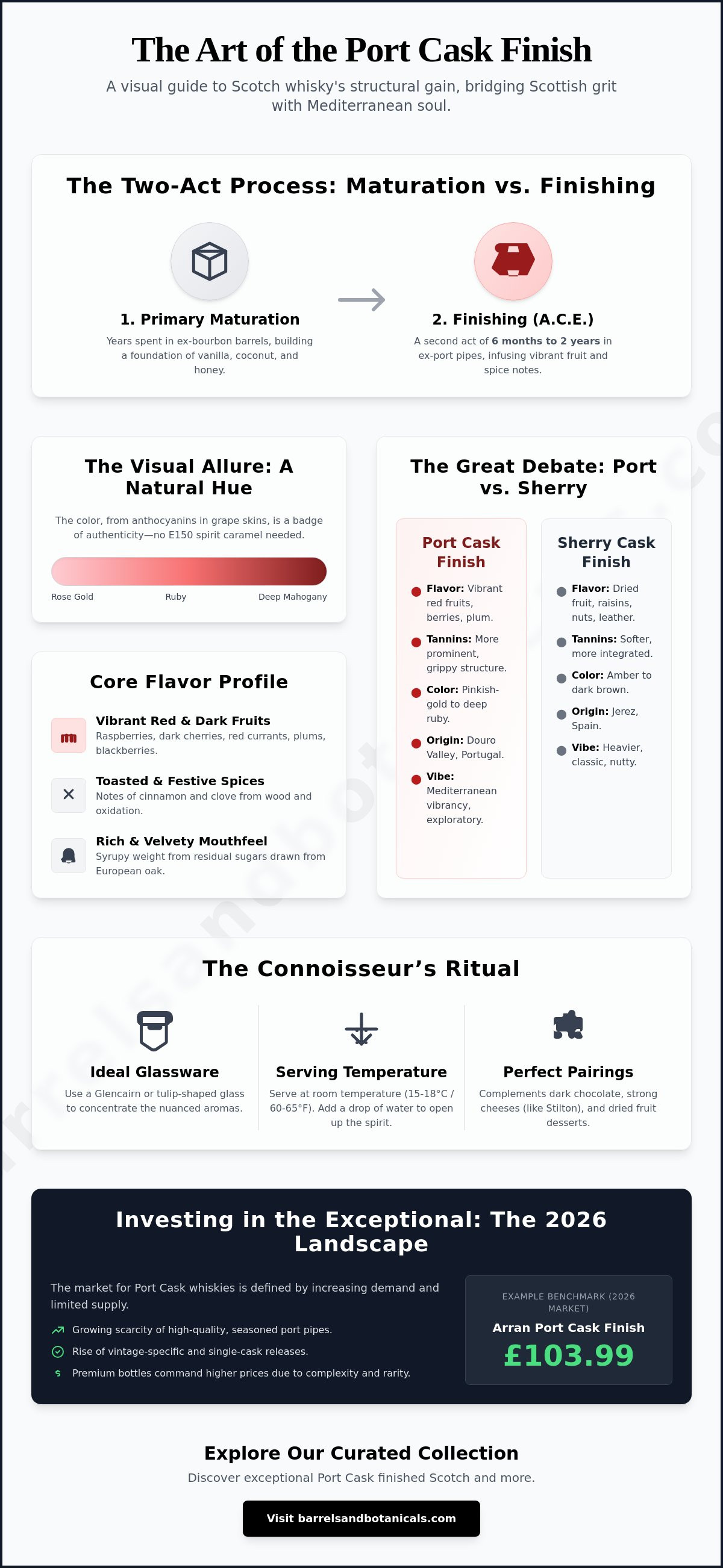
The journey from a rugged Highland distillery to the sun-drenched terraces of Portugal's Douro Valley is a story of layered complexity. When we ask, what is a port cask finish scotch, we are looking at a deliberate marriage of two distinct heritage crafts. It is not a replacement for the years spent in oak; it's a structural gain. The spirit retains its distillery character while absorbing the vibrant, sun-baked essence of fortified wine. This process is often called "ACEing" or Additional Cask Enhancement. It represents a curated choice for quality over mass production. Most enthusiasts simply refer to it as cask finishing. It is the art of layering flavor without erasing the soul of the original malt.
The Douro Valley heritage is vital. These casks, often referred to as "pipes," have held rich, fortified wines for decades. They arrive in Scotland saturated with the essence of plums, blackberries, and festive spices. For a Scottish distillery, these vessels are a treasure trove of botanical and culinary potential. They offer a palette of flavors that traditional American oak simply cannot provide on its own. It is a partnership that respects tradition while embracing a more adventurous, modern palate. The result is a dram that feels both grounded and exploratory.
The Technical Distinction: Maturation vs. Finishing
Standard maturation usually begins in ex-bourbon barrels, providing a foundation of vanilla, coconut, and honey. This is the bedrock of the spirit. Finishing is the second act. This phase typically lasts between 6 months and 2 years, depending on the desired intensity. Timing is critical. Leave the spirit in the port pipe too long, and the wood tannins might overpower the delicate malt; pull it too soon, and the vibrant fruit nuance is lost. Cask finishing is the intentional infusion of residual wine essence into a spirit that has already achieved its legal status as whisky. It is a precision-led transition that requires the constant, sensory attention of a master blender to ensure the balance remains perfect.
The Visual Allure: From Rose Gold to Deep Mahogany
The first encounter with a port-finished dram is always visual. These whiskies often display a stunning spectrum from delicate rose gold to deep, brooding mahogany. This transformation occurs naturally as anthocyanins, the pigments found in grape skins, migrate from the port-soaked staves into the whisky. In a 2026 market where consumers demand transparency, the natural rosy tint of a port finish offers a badge of authenticity. It distinguishes the bottle from those using spirit caramel (E150) to mimic age. This hue sets the stage for the tasting ritual. It signals the dark fruit, chocolate, and spice notes to come, creating an immediate psychological connection between the eye and the palate. The color is the first promise of the complexity within.
The Alchemy of the Wood: How Different Port Styles Shape the Spirit
The wood is the silent architect of flavour. When exploring what is a port cask finish scotch, the choice between European and American oak creates the first fork in the road. European oak is notably more porous. It allows for deeper penetration of the spirit into the wine-soaked staves. This interaction draws out residual sugars that fundamentally alter the mouthfeel, adding a velvety, almost syrupy weight to the palate. Oxidation also plays its part. Because port matures in contact with air, the casks arrive at the distillery with a pre-developed profile of spice and stability. Vibrant botanicals. Nuanced wood. The essence of the craft. This historical oxidation ensures that the wood doesn't just add flavour; it adds a structural maturity that balances the spirit's natural heat.
Ruby Port Casks: The Vibrant Fruit Bomb
Ruby port casks are often the most accessible entry point. These vessels are prized for their youthful, fruit-forward energy. They impart a profile rich with raspberries, dark cherries, and red currants. Because Ruby port is bottled young to preserve its primary fruit characteristics, the resulting Scotch often feels vibrant and "bright." It is a popular choice for beginners seeking an immediate, sensory impact without the heavy tannic grip of older wood. The colour is often a striking pinkish-gold, a visual promise of the berry-laden palate to follow. These casks excel at transforming a standard malt into a summer-ready masterpiece.
Tawny Port Casks: Nutty Complexity and Time
Tawny casks offer a shift toward elegance and patience. As port ages in wood for 10, 20, or 30 years, it undergoes a chemical transformation. The Scotch finished in these casks reflects that journey. For those still asking what is a port cask finish scotch in the context of age, Tawny casks provide the most complex answer. You'll find a transition to dried fruits like sultanas, figs, and sticky dates. The finish is distinctly nutty, echoing notes of toasted almonds and walnuts. Aged Tawny casks impart a softer edge, rounding off the spirit's sharper corners with a sophisticated, oxidative depth. This process creates a "grippy" texture on the tongue, a tactile signature of long-term wood contact.
The Rare White Port Finish: A Delicate Floral Twist
Rare and often overlooked, White port finishes are the hidden gems of the Scotch world. They offer a zesty, floral profile that stands in stark contrast to their red counterparts. Expect notes of honey, apricot, and bright citrus peel. These drams are lighter and more delicate, making them perfect for summer evenings when a heavier, spice-laden malt feels too industrial. If you are looking to expand your collection with something truly unique, explore the curated selections at Barrels & Botanicals Ltd to find spirits that celebrate this artisanal approach. These finishes represent the pinnacle of mindful drinking, where every sip reveals a new layer of botanical complexity and expert blending.
The Great Debate: Port Finish vs. Sherry Finish and Other Wine Casks
Choosing between a port and a sherry finish is the ultimate connoisseur’s dilemma. While sherry remains the traditional titan of the industry, port offers a structural gain that feels more vibrant and contemporary. Many enthusiasts ask, what is a port cask finish scotch compared to a sherry matured one? The answer lies in the fruit spectrum. Sherry typically leans toward the "brown" notes: raisins, walnuts, and occasionally a sulfuric edge. Port, by contrast, brings the "red" notes: fresh berries, plum jam, and a distinct peppery spice. It is a shift from the autumnal to the celebratory. Vibrant. Bold. Nuanced.
There is a persistent myth that port finishes are "sweeter" than others. In reality, the process is about depth, not sugar. The 2026 market demands transparency, and master blenders are clear that the sweetness is a sensory perception driven by esters and fruit-forward aromatics rather than residual glucose. While a Sauternes finish might offer a honeyed, dessert-like profile and Madeira brings a burnt-orange tang, port sits in the middle. It provides a robust, tannic backbone that prevents the spirit from becoming cloying. It is a disciplined sweetness.
Flavor Profiling: Port vs. Sherry
The following table illustrates the primary markers you will encounter when comparing these three dominant wine-cask influences. These distinctions are essential for any collector looking to diversify their cabinet.
| Cask Type | Primary Fruit Markers | Secondary Notes |
|---|---|---|
| Ruby Port | Raspberry, Red Currant | Dark Chocolate, Pink Peppercorn |
| Oloroso Sherry | Dried Fig, Prune | Roasted Walnut, Leather |
| PX Sherry | Sticky Date, Treacle | Molasses, Christmas Cake |
For those who prefer a smoky profile, the Islay connection is particularly fascinating. Peated whiskies often pair better with port than sherry. The medicinal, salty smoke of an Islay malt finds a perfect partner in the jammy red fruits of a port pipe. This combination creates a "barbecue" effect, reminiscent of smoked meats and plum sauce. The palate of a port finish is a delicate balance of berry acidity and robust malt. It ensures the smoke doesn't dominate the entire experience.
Structural Integrity: How the Cask Affects the 'Body'
Port casks do more than just add flavour; they alter the physical viscosity of the Scotch. You will notice a "clinging" effect on the glass, often referred to as "legs." This increased body comes from the interaction between the spirit and the European oak tannins found in most port pipes. These tannins provide a grippier texture on the tongue, a tactile sensation that sherry casks often lack. This structural integrity is what allows for a truly long finish. The natural oils and wine essence coat the palate, ensuring the ritual of the dram lingers well after the final sip. It is a slow, deliberate experience designed for the mindful drinker.
The Connoisseur’s Ritual: Tasting, Serving, and Pairing
The true essence of a spirit is found in the ritual of its consumption. Understanding what is a port cask finish scotch requires more than just reading a label; it demands a dedicated sensory experience. The glassware you choose is the first step in this journey. While the Glencairn remains the industry standard for its ability to concentrate aromas, a Copita glass often serves wine-finished spirits better. Its tulip shape and longer stem allow the delicate port esters to breathe without the heat of your hand interfering with the spirit's temperature. It's about precision. Every curve of the glass is designed to elevate the nose.
Temperature control is equally vital. Never chill a port-finished dram. These whiskies bloom at a steady room temperature, typically around 18 to 20 degrees Celsius. At this heat, the volatile aromatic compounds responsible for those dark cherry and plum notes become active. This is mindful drinking in practice. It's a transition from the haste of daily life into a world of refined taste. By slowing down, you bridge the gap between traditional bar culture and modern wellness. You aren't just drinking; you're engaging in a curated experience of quality and intentionality.
The Ultimate Pairing: Port Cask Scotch and New World Cigars
The earthy, robust profile of a New World cigar finds a perfect counterpart in the vibrant berry notes of a port finish. Specifically, a Maduro wrapper, known for its natural sweetness and dark chocolate undertones, creates a harmonious gain when sipped alongside these malts. The spice of the tobacco cuts through the viscosity of the spirit, while the wine essence softens the cigar's peppery kick. Engaging in the ritual of the cigar as part of your evening allows for a deeper appreciation of both crafts. It's a celebratory moment that rewards the patient palate.
Culinary Harmony: Beyond the Dram
Your exploration shouldn't end at the glass. Port-finished Scotch thrives when paired with rich, intense flavours. A 70% dark chocolate or a pungent blue Stilton provides a sharp contrast to the spirit's red fruit profile. These pairings highlight the botanical overlaps often found in craft spirits. When you understand what is a port cask finish scotch, you begin to see it as a versatile tool for mixology. Consider how these whiskies transform classic cocktails, adding a ruby-tinted depth to a traditional Old Fashioned. Use your nose to identify the subtle scents of apricot or toasted oak. To elevate your own home bar with the finest artisanal selections, browse the collection at Barrels & Botanicals Ltd today.
Investing in the Exceptional: Why Port Cask Whiskies Command Respect in 2026
The 2026 landscape is one of recalibration. While the global whisky market continues its steady climb toward an estimated £91 billion valuation by 2033, the focus has shifted toward disciplined excellence. High-quality ex-port pipes are becoming increasingly scarce. Distilleries are now more selective, using these vessels to enhance rather than mask. Understanding what is a port cask finish scotch in an investment context means recognizing the value of wood provenance. These are not mass-produced containers. They are artisanal tools. They carry the sun-drenched history of Portugal into the rugged heart of Scotland. This is a hallmark of quality that collectors prioritize over volume.
Collecting Rare Scotch: The Port Cask Advantage
Collectors are pivoting. The trend favors "Port Pipes" and single cask bottlings over large-batch releases. A rare single cask bottling, such as those from the Arran distillery, can command prices between £82 and £212 in the current UK market. The appeal lies in the specific chemical interaction. Understanding the value of vintage whisky is vital for the modern investor. A malt finished in a seasoned Tawny pipe represents decades of combined craftsmanship. This is the ultimate gain. Rare single-malt bottles have seen a 107% price increase over the last 13 years; this makes them a formidable alternative asset for the mindful epicurean.
The Connoisseur's Next Step: Selling and Trading
As your collection grows, storage becomes a ritual of its own. Rare wine-finished bottles require stable environments to preserve their vibrant esters and nuanced wood notes. In this 2026 buyer's market, transparency is your greatest asset. When you are ready to trade or refine your portfolio, navigating the private bottle sale service ensures your assets are handled with the respect they deserve. Private brokerage provides a level of discretion that public auctions cannot match. It treats your collection as a curated legacy rather than a mere transaction. Wood provenance and storage history are the pillars of long-term value in this space.
A port cask finish is more than a technical category. It is a legacy in a glass. It represents a commitment to a way of drinking that values the "Ruby Ritual" above all else. Every layer of fruit and toasted spice is a testament to the patience of the master blender. For those seeking the exceptional, these whiskies offer a sensory journey that remains unmatched in its vibrancy. It is an investment in flavor, history, and the artisanal spirit.
Embrace the Ruby Ritual
The transition from a standard malt to a port-finished masterpiece is a journey of disciplined refinement. You now understand that the 6-month to 2-year finishing window isn't just a wait; it's a structural gain. By harnessing the porous nature of European oak and the vibrant esters of the Douro Valley, blenders create a spirit that is both robust and nuanced. Whether you are chasing the raspberry burst of a Ruby pipe or the walnut depth of an aged Tawny, the result is a multi-layered experience. Understanding what is a port cask finish scotch allows you to curate a collection with true intentionality and sensory purpose.
Since 2019, our family-run heritage has focused on bridging traditional excellence with modern, mindful experiences. As specialists in old and rare whiskies, we provide expert private bottle brokerage for those seeking the truly exceptional in a tightening 2026 market. Explore our curated collection of Single Malt Scotch and find your perfect ritual. Let every sip be a celebration of artisanal craft and vibrant complexity. Your next great discovery is waiting to be poured.
Frequently Asked Questions
Is port cask finish whisky sweeter than regular Scotch?
Port cask finish whisky is not chemically sweeter; rather, it offers a heightened sensory perception of sweetness through fruit-forward esters. While standard maturation in ex-bourbon barrels provides vanilla and honey, the port finish adds notes of plum and berry. This creates a more decadent mouthfeel. It's about aromatic depth rather than residual glucose, ensuring the spirit remains balanced and sophisticated for the mindful drinker.
How long is Scotch usually finished in a port cask?
Most distilleries finish Scotch in port casks for a period ranging from 6 months to 2 years. This secondary maturation, often called Additional Cask Enhancement, is a delicate ritual. If the spirit rests too long, the European oak tannins can become overpowering. Master blenders monitor the liquid constantly to ensure the vibrant fruit notes complement the distillery's base character without erasing its soul.
What is the difference between a Ruby Port and a Tawny Port finish?
A Ruby Port finish provides a vibrant fruit bomb of raspberries and cherries, while a Tawny Port finish offers nutty complexity with notes of figs and toasted almonds. Ruby casks are typically younger and more energetic. Tawny casks, often aged for 10 or 20 years before reaching the distillery, impart a softer, oxidative edge. Both styles define what is a port cask finish scotch by layering unique Mediterranean influences.
Can you finish peated (smoky) whisky in port casks?
Yes, peated whiskies are exceptionally well-suited for port cask finishing. The medicinal smoke of an Islay malt finds a perfect partner in the jammy red fruits of the port pipe. This pairing creates a savoury, barbecued profile that many connoisseurs seek for its multi-layered complexity. It's a bold choice that balances the spirit's natural peat with a rich, berry-driven essence, resulting in a celebratory gain for the palate.
Why does port-finished whisky sometimes have a pink or red colour?
The pink or red hue comes naturally from anthocyanins, which are organic pigments found in the skins of the grapes used to make port. These pigments migrate from the wine-saturated staves into the whisky during the finishing phase. In the 2026 market, this natural tint is a hallmark of quality. It proves the spirit's colour is authentic rather than a result of spirit caramel or artificial additives.
What is a 'Port Pipe' in whisky maturation?
A Port Pipe is a specific type of large cask traditionally used in the Douro Valley, typically holding between 550 and 650 litres. Because of their size and the thickness of the staves, they allow for a slower, more deliberate interaction between the wood and the spirit. This vessel is central to understanding what is a port cask finish scotch, as it provides the physical structure for the final, nuanced flavour profile.
Is port-finished Scotch considered a 'flavoured' whisky?
No, port-finished Scotch is not a flavoured whisky; it's a legally defined Single Malt under the Scotch Whisky Regulations 2009. These regulations permit the use of casks that previously held other wines or spirits as long as the final product retains the traditional character of Scotch. It's a natural process of wood interaction and artisanal blending, not an infusion of external flavourings or sugar.
What are the best cigars to pair with a port-finished Single Malt?
New World cigars with a Maduro wrapper are the ideal pairing for port-finished malts. The dark, oily leaf offers chocolate and espresso notes that harmonise with the spirit's dark fruit profile. This combination is a classic evening ritual. The tobacco's earthiness cuts through the whisky's viscosity, while the port essence softens the cigar's spice, creating a sophisticated experience for the patient palate.