
The most exquisite whiskies aren't just liquid; they're captured moments of Scottish peat, oak, and time. In 2026, the traditional auction house is no longer the gold standard for those looking to sell my whisky collection Scotland with dignity. With standard seller commissions often reaching up to 15 percent, your liquid assets deserve a more refined exit strategy. You've curated a library of flavour. A history of the Highlands. A legacy in glass. Seeing it treated as a mere commodity feels like a betrayal of the craft.
It's natural to feel protective of your bottles. You want the security of a seamless, white-glove service and the certainty that your rare Macallan or Ardbeg is heading to a true enthusiast who understands its nuanced palate. We'll show you how to bypass the anxiety of shipping fragile rarities and the confusion of the 2026 market volatility. This guide reveals how to secure a high-valuation return that respects the ritual of the dram. You'll discover the most sophisticated and profitable ways to transition your cherished collection to its next steward with the grace it deserves.
Key Takeaways
- Navigate the shifting 2026 landscape with a precise understanding of 'Market Value' to ensure your liquid gold is priced for the modern, discerning buyer.
- Discover the most profitable ways to sell my whisky collection Scotland by weighing the public theatre of auctions against the quiet elegance of private brokerage.
- Master the ritual of collection audits and professional photography to capture the visual 'nose' and 'finish' of every bottle in your portfolio.
- Protect your investment by identifying hidden auction fees and seller’s premiums that can dilute the final return on your cherished spirits.
- Explore a more personal transition through our family-run brokerage, blending traditional values with a sophisticated, modern e-commerce experience.
The State of the Scottish Whisky Market in 2026
The Scottish secondary market is breathing a different air this year. It's a space defined by maturity, not just in the oak but in the transactions themselves. For collectors looking to sell my whisky collection Scotland, the environment has evolved from the frantic speculation of the early 2020s into a more considered, artisanal exchange. We've moved past the era of the "investment bottle" toward a market that prizes the liquid's soul. The 2026 landscape rewards those who view their bottles as part of a legacy, not just a line on a spreadsheet.
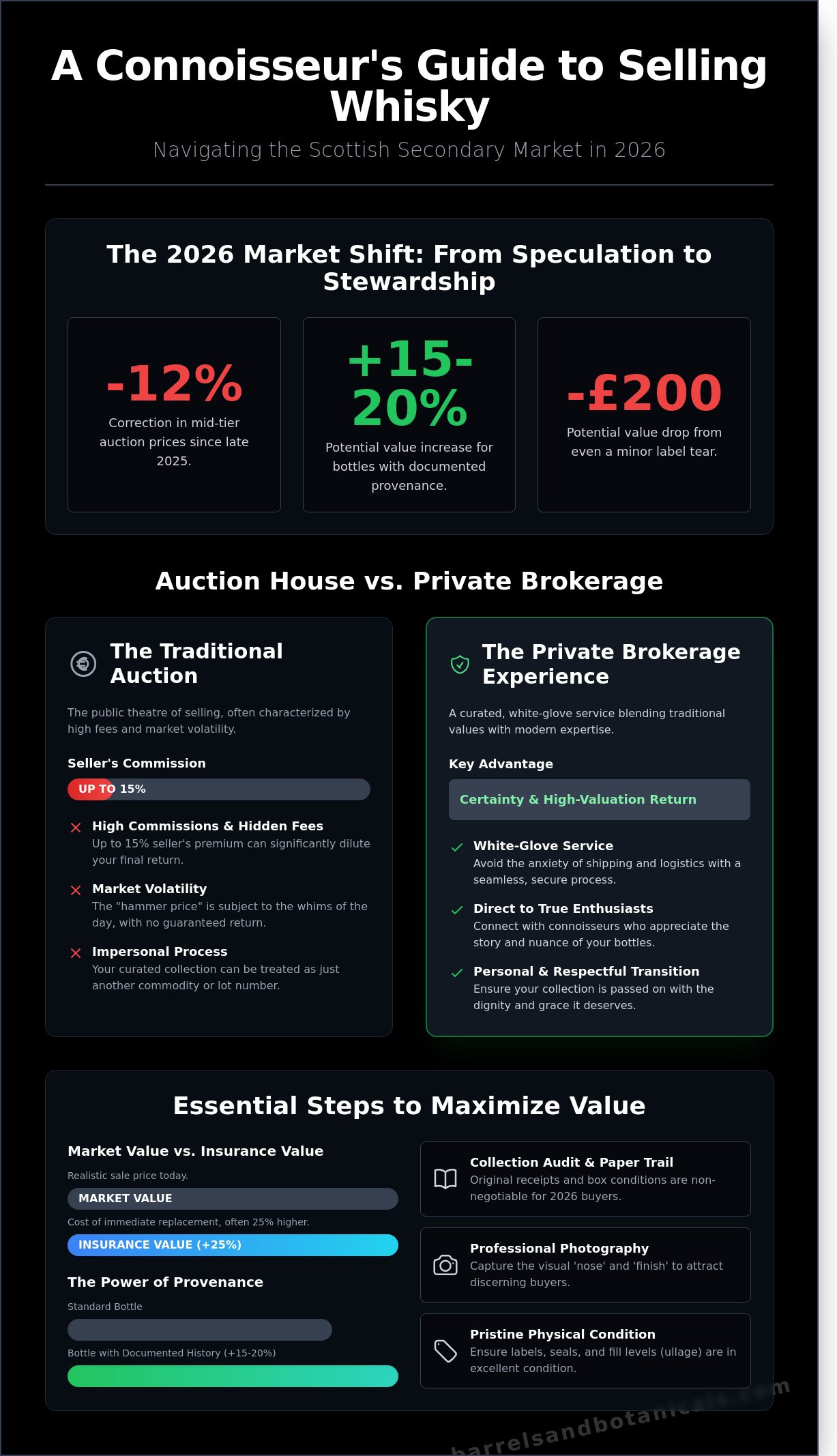
Provenance is the new gold standard. In a market that has seen a 12% correction in mid-tier auction prices since late 2025, buyers are no longer gambling on unverified casks or poorly stored glass. They demand a story. They want to know the cellar conditions, the sunlight exposure, and the hands that held the bottle. This shift is a celebration of Scotch whisky and its centuries of craftsmanship. It's about the gain of clarity. The "mindful collector" has emerged, seeking quality over sheer volume, which means your exit strategy must be as curated as the collection itself.
Navigating the 2026 Price Shift
The current climate requires a steady hand and a sharp eye. Analysing why rare whisky prices tumble is essential for timing your entry into the auction house or private sale rooms. While the "market tumble" of early 2026 shook the foundations of speculative flipping, it also cleared the path for genuine value to shine. Blue-chip distilleries like Springbank and Brora continue to hold their £3,000+ price floors, whereas younger, NAS (No Age Statement) releases have seen a sharper decline in domestic demand. Global economic shifts have tightened UK belts, making the "sell my whisky collection Scotland" search more common, yet the appetite for exceptional, age-stated liquid remains vibrant and resilient.
Stewardship vs. Speculation
Selling your collection in 2026 is an act of stewardship. We're moving away from the cold "flipping" mentality that once cluttered the industry. Today, the story behind your collection adds tangible value to the final hammer price. Did you source that 1970s Macallan from a family-run shop in Speyside? Was it part of a shared tasting ritual? These details matter. Maintaining a ritualistic respect for the liquid during the sale process creates a premium experience for the buyer. It's about the essence of the drink. Consider the following when preparing your bottles:
- The Physical Ritual: Ensure labels are pristine; even a minor tear can drop the value by £200 in this discerning market.
- The Paper Trail: Original receipts and box conditions are non-negotiable for 2026 buyers.
- The Sensory Narrative: Describe the storage environment to evoke a sense of professional care and botanical preservation.
This artisanal approach ensures your collection isn't just sold; it's passed on to the next appreciative palate with the dignity it deserves.
Appraising the Liquid Gold: Valuation and Provenance
Rare spirits are liquid history. To sell my whisky collection Scotland effectively, you must first distinguish between sentiment and solvency. Market value is the realistic hammer price achieved at auction; it's the cold, hard cash a buyer will part with today. Insurance value represents the cost of immediate replacement from a retail specialist, which often includes a 25% premium for convenience. In the 2026 secondary market, these figures diverge sharply. Professional appraisal bridges this gap, ensuring you don't leave thousands of pounds on the table.
Authenticity is the bedrock of value. Compliance with The Scotch Whisky Regulations 2009 ensures that every bottle in your collection meets the strict legal definitions of production and labelling that global connoisseurs demand. Beyond legalities, provenance tracks the bottle’s journey from the distillery gates to your cellar. A bottle with a documented "pedigree" can command a 15% to 20% price increase over an identical bottle with an unknown history. Identifying "hidden gems" requires an eye for nuance. An unassuming independent bottling from a "ghost" distillery like Port Ellen or Brora often outpaces the growth of more famous, mass-market luxury brands.
The Anatomy of a Professional Valuation
The ritual of appraisal begins with the physical state of the bottle. Ullage, or the air gap between the liquid and the cork, is a critical sensory indicator of storage quality. A "high shoulder" fill is ideal. Anything lower suggests evaporation and potential oxidation. Before committing to a sales route, securing an expert whisky valuation is the only way to safeguard your investment. In 2026, the presence of original wooden cases, wax seal integrity, and holograms on certificates of authenticity are not just extras. They're essential components of the asset's essence.
Documenting Your Collection’s History
Modern collectors value transparency. Creating a digital inventory using specialized cellar management tools allows you to present a professional "dossier" to potential buyers. This documentation should include high-resolution photography of the tax strips and base markings. A well-presented collection creates a psychological advantage, signaling to the buyer that the spirits have been treated with reverence. This meticulous approach mirrors the care we take when selecting complex botanical blends for a refined palate. By treating your inventory as a curated gallery rather than a storage shelf, you elevate the perceived value of every drop. Clear records of purchase dates and storage conditions transform a simple bottle into a storied artifact.
Auction vs. Private Brokerage: Selecting Your Sales Channel
Deciding how to sell my whisky collection Scotland is a choice between the high-energy theatre of the auction house and the quiet, refined elegance of a private broker. It is a decision that impacts more than just your bank balance. It defines the final chapter of your collection's story. While auctions offer a sense of public transparency, they often strip away the intimacy of the transaction. Private brokerage feels like a curated conversation. It is a slow, deliberate process designed for those who view their bottles as more than mere glass. They are liquid history. Nuanced. Vibrant. Deserving of a respectful exit.
The Auction Model: High Risk, High Reward?
The "hammer price" is a seductive figure. It glows on the screen during a live bidding war, promising a peak return. However, the reality of the final payout is often more complex. Once you deduct the seller’s commission, which in 2025 typically sits between 10% and 15%, and add the mandatory 20% VAT on those fees, your net gain begins to thin. There is also the distinct risk of "burning" a bottle. If a rare expression fails to meet its reserve in a public forum, its market reputation can suffer. Data from 2024 secondary market trends suggests that a failed public sale can depress a bottle's perceived value by up to 18% in the following six months. The timeline is rarely swift. From the moment of consignment to the final clearing of funds into your account, you can expect a wait of 45 to 60 days.
- Seller’s Commission: Typically 10% to 15% of the hammer price.
- Listing Fees: Often £5 to £10 per bottle regardless of sale.
- Insurance: Usually 1.5% of the reserve price or hammer price.
- Risk: Public failure can lead to "market fatigue" for specific bottles.
The Brokerage Advantage
For those holding investment-grade bottles, a specialist broker offers a more artisanal path. This is not a race. It is a ritual. A broker uses a private, global network to find a buyer who appreciates the specific essence of your collection. Most reputable Scottish brokers work on a fixed-commission agreement, often settled at a flat 10%. This provides price stability. You avoid the volatility of a bad day at the auction house. While immediate cash buy-backs from retailers might seem tempting for their speed, they are frequently the wrong choice for rare assets. These "quick-buy" offers often require you to sacrifice 25% to 30% of the bottle's true market value for the sake of convenience. Rare spirits deserve a better finish. A broker ensures the bottle finds a home where its value is recognised, not just traded.
Discretion is the hallmark of the broker. No public records. No price drops. Just a seamless transition from one connoisseur to another. Pure liquid gold. Expertly placed.
Essential Steps to Prepare Your Collection for Sale
Preparing to part with a curated assembly of spirits is a ritual in itself. It requires the same patience and precision that went into the original distillation. Before you decide to sell my whisky collection Scotland, a final, meticulous audit ensures every bottle reflects its true value. This isn't merely a transaction; it's the transfer of a legacy. Every label tells a story. Every seal holds a secret. Precision is paramount. Refined choices lead to refined returns.
The Pre-Sale Checklist
A thorough audit begins with the right tools. Utilising the my whisky valuation checklist allows you to document the provenance and condition of each piece with professional rigour. Dust and grime are the enemies of a premium sale. Use a dry, microfibre cloth to gently clean bottles, avoiding moisture near labels or tax stamps. Inspect capsules for corrosion or leakage. A compromised cork leads to oxidation, devaluing the spirit immediately. Stand bottles upright in a cool, dark environment.
Capturing the Essence: Photography Tips
Visual presentation is where the sensory experience begins. High-resolution imagery should capture the "nose" and "finish" of the bottle through visual cues. Use soft, natural light to highlight the vibrant amber clarity. Buyers in 2026 demand transparency. Ensure the fill level, or ullage, is clearly visible. For rare vintage bottles, photograph specific markers of authenticity, such as laser etching or unique label textures. These details build a bridge of trust.
Organising your paperwork is the final pillar of a seamless legal transfer. In the UK, maintaining a clear paper trail is vital for high-value transactions. Collect these essentials to ensure a smooth transition:
- Original purchase receipts and invoices from reputable retailers.
- Certificates of authenticity provided by the distillery.
- Detailed condition reports for older, fragile vintages.
- Records of temperature-controlled storage history.
This documentation streamlines the process and provides the buyer with the confidence they require. Once the audit is complete and the gallery is ready, you're prepared to sell my whisky collection Scotland with total confidence. It's about more than the final price; it's about the precision of the presentation. Expertly documented. Elegantly presented.
Ready to elevate your home bar experience while you wait for the perfect buyer? Explore our curated range of premium botanicals to rediscover the art of mindful drinking.
The Barrels & Botanicals Private Brokerage Experience
Choosing to sell my whisky collection Scotland represents a significant transition for any serious collector. It's a move from the quiet curation of the past toward a future of mindful, intentional living. At Barrels & Botanicals, we ensure this transition feels like a gain rather than a loss. Our family-run approach replaces the cold, industrial feel of large auction houses with a personal touch. We treat every bottle with the reverence it deserves, acknowledging the years of patience held within the glass.
Your collection deserves more than a crowded listing. We host your bottles on a sophisticated e-commerce platform designed for the modern epicurean. This digital space prioritises clarity and elegance, ensuring that the nuance of your fine single malts is communicated to the right audience. We don't just wait for buyers; we actively seek out connoisseurs who value complexity and heritage. Our transparent, commission-based fee structure is built for the serious collector. You'll always know exactly where you stand, with no hidden costs or unexpected deductions to cloud the experience.
Our Bespoke Sales Process
The journey begins with a private consultation. We discuss the provenance and the soul of your collection. Because we're a premium Scottish retailer, we leverage our established reputation to secure prices that reflect the true market value of rare editions. We handle the logistics with meticulous care. Security is our priority. From professional transport to climate-controlled storage, we provide total peace of mind. Every step is a ritual. We document the condition, verify the seals, and prepare each bottle for its next chapter with professional precision.
Beyond the Transaction
We view every bottle as a story worth telling. When you sell through our brokerage, you aren't just clearing a shelf; you're passing on a legacy of flavour. This process invites you into a community of health-conscious and flavor-focused individuals who appreciate the finer things in life without the need for excess. It's about quality over quantity. It's about the vibrant essence of the spirit. We invite you to stay connected with us as you explore new ways to celebrate life's moments through refined tastes and botanical wonders.
Ready to begin the next chapter of your collecting journey? Enquire about our private bottle brokerage service today and experience a more sophisticated way to trade.
Securing the Legacy of Your Liquid Gold
The 2026 landscape for rare spirits remains vibrant. With historical data from the Knight Frank Luxury Investment Index highlighting rare whisky's long-term resilience through a 280% ten-year growth rate; your bottles represent more than just liquid. They're a legacy of craft. Navigating the choice between public auctions and private brokerage requires a nuanced eye for provenance. It's about the ritual of the sale. The finish. When you decide it's time to sell my whisky collection Scotland, you aren't just offloading stock; you're passing a torch.
At Barrels & Botanicals, we honour this transition. Our family-run Scottish expertise focuses on the essence of rare and old single malts. We provide a transparent commission-based brokerage that avoids the unpredictable volatility of the auction hammer. We pair your collection with its next rightful steward through a process that's as refined as a 30-year-old Highland malt. Rare spirits. Expert hands. A seamless transition.
Let us find the next steward for your collection; start your brokerage journey
Your collection deserves a final chapter that's as sophisticated and intentional as the liquid itself.
Frequently Asked Questions
How do I sell my whisky collection in Scotland legally?
You must sell your collection through a licensed auction house or a specialist broker to comply with the Licensing (Scotland) Act 2005. These professional intermediaries hold the necessary premises licences to trade alcohol legally. It's the most secure way to ensure your liquid assets reach a global audience. Expertly managed. Completely compliant.
What are the current fees for selling whisky at auction in 2026?
Current 2026 market rates for sellers typically include a commission of 10% to 15% on the final hammer price. You should also budget for a listing fee of approximately £5 per bottle and a 1.5% insurance charge to protect your investment during the ritual of the sale. These costs cover professional photography and cataloguing. Transparent pricing. Premium service.
Is it better to sell my whisky as a complete collection or individual bottles?
Selling individual bottles generally yields a 20% higher return than offering a complete collection as a single lot. Most connoisseurs hunt for specific expressions to fill gaps in their own cellars rather than buying bulk sets. Breaking the collection down allows each nuanced profile to shine. Maximum value. Targeted appeal.
How do I know if my old whisky is still safe to drink and sell?
Whisky is a resilient spirit that doesn't spoil if the seal is intact and the liquid level remains high. Check the ullage, which is the space between the cork and the liquid; a level below the bottle's shoulder suggests oxidation. Inspect the cork for signs of weeping or decay. Vibrant spirits. Timeless quality.
What happens if a bottle is damaged during transit to the broker?
Most reputable Scottish brokers provide transit insurance that covers the full estimated value of your bottles for a fee of roughly 3%. If a breakage occurs, you'll need to submit photographic evidence of the damaged packaging within 24 hours. This ensures your financial interest is protected even when the glass fails. Secure handling. Total peace of mind.
Can I sell my whisky if I no longer have the original box?
You can certainly sell bottles without their original packaging, though the absence of a box can reduce the final price by 15% to 25%. Collectors value the complete sensory ritual, including the tactile experience of the presentation case. Rare liquid remains the primary draw. Naked bottles still command respect.
How long does the brokerage process usually take from listing to sale?
The journey to sell my whisky collection Scotland typically takes six to nine weeks from the initial valuation to the final bank transfer. This period accounts for the careful cataloguing of your bottles and the standard 21 day window for buyer payments to settle. It's a deliberate process. Quality shouldn't be rushed.
Do I need to pay Capital Gains Tax on the sale of my whisky collection?
HMRC generally treats whisky as a wasting asset, meaning most private sellers don't pay Capital Gains Tax on their profits. This exemption usually applies to individual bottles sold for less than £6,000. If you sell my whisky collection Scotland and realize significant gains on high value rarities, it's vital to seek professional tax advice. Clear guidance. Smart transitions.