

Last October, a collector in the Highlands discovered that a slight dip in the shoulder of his 1965 Macallan had erased £1,800 from its valuation in a single afternoon. It's a sobering thought for anyone who treats their cellar as a sanctuary. You've likely felt that same flicker of worry while admiring the amber glow of your finest bottles. You appreciate the craft, the peat, and the slow maturation of a rare dram; yet the responsibility of managing my whisky often brings a quiet anxiety about storage conditions and shifting market values.
The ritual of collection should be as refined as the spirit itself. You don't just own these bottles; you're the guardian of their legacy and their future potential. We'll help you transform that uncertainty into a structured path of professional stewardship and confident storage behaviours. This guide offers a definitive checklist for auditing your inventory, perfecting your environment, and accessing elite private brokerage channels to ensure your collection reaches its full worth when the time is right.
Key Takeaways
- Move beyond memory to a formalised inventory ritual, identifying the sensory heroes that define your collection's unique character.
- Master the nuances of my whisky valuation by understanding how capsule integrity and fill levels impact true market worth.
- Shield your liquid gold from the enemies of light and temperature with storage strategies that balance protection and artisanal display.
- Discover why private brokerage offers a more refined, controlled alternative to the uncertainty of the auction house for UK collectors.
- Access a bespoke strategy to elevate your collection, turning professional management into a seamless, celebratory experience.
The 'My Whisky' Audit: Why Documentation is the First Ritual
To truly own a collection, one must first name it. The shift from a casual shelf to a curated my whisky portfolio begins with the first entry in a ledger. It's a transition from impulse to intention. Relying on memory in a growing collection is a risk; a formalised inventory ensures no rare expression is forgotten in the shadows of a cabinet. This ritual creates a sensory map of your journey, allowing you to identify the "heroes" that define your palate. Whether it's a peat-drenched Islay or a sherry-casked Speyside, documentation elevates the experience from mere consumption to an artisanal study.
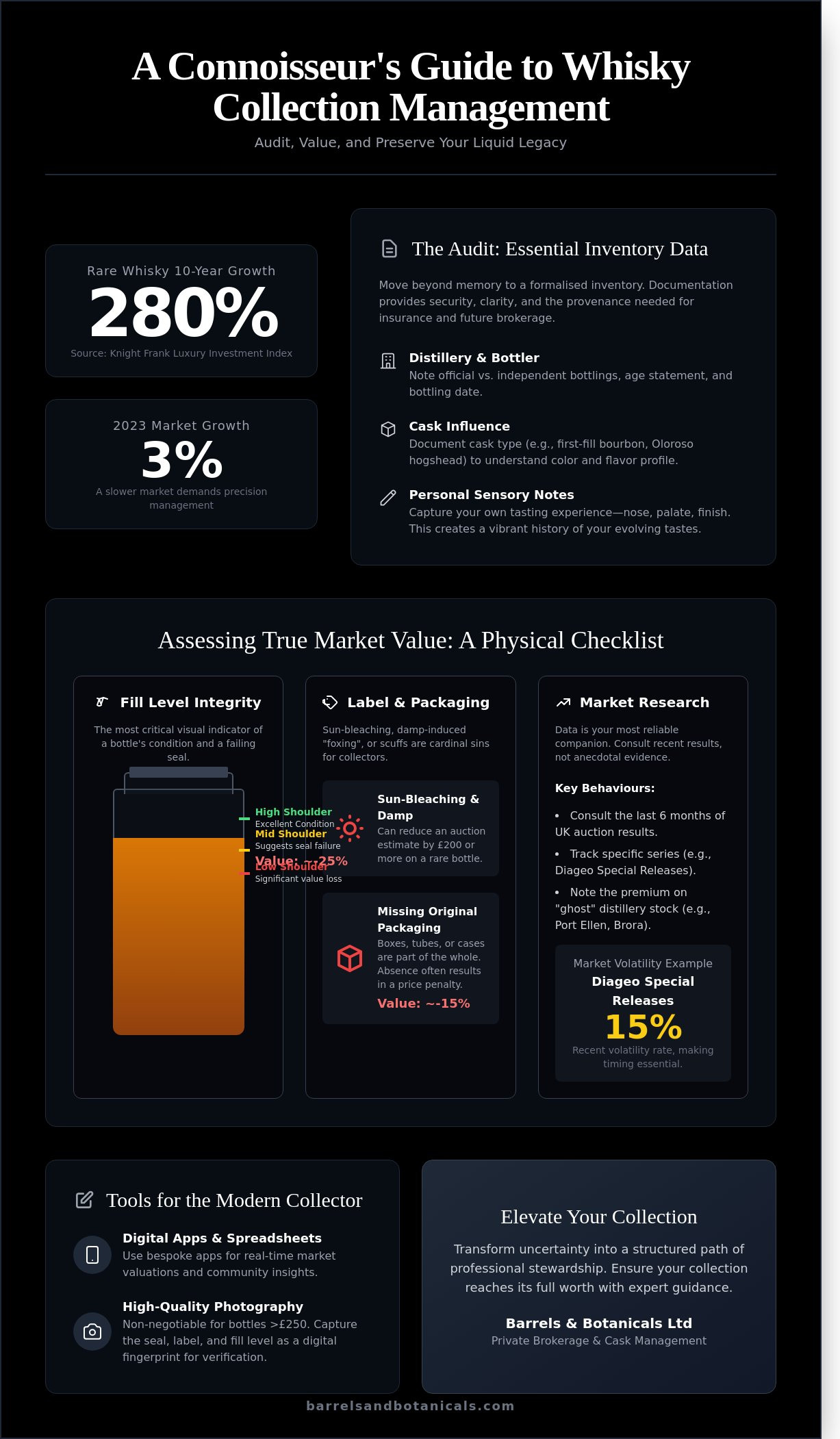
Security is the silent partner of the connoisseur. The Knight Frank Luxury Investment Index recently noted that while rare whisky growth slowed to 3% in 2023, the 10-year trajectory remains a staggering 280%. If you hold a bottle valued at over £500, an insurer will require more than a vague recollection of its purchase. Detailed records provide the provenance needed for future brokerage opportunities or estate planning. Beyond the financial, there's a psychological gain. Organising your collection fosters a sense of clarity. It encourages mindful consumption, where you select a dram based on its documented profile rather than proximity.
Essential Data Points for Your Inventory
Precision is the hallmark of a master blender; your inventory should mirror this rigour. Record the distillery name, the exact age statement, and the specific bottling date to track vintage variations. Note the ABV (Alcohol by Volume) and the cask influence, such as first-fill bourbon or Oloroso hogsheads. Most importantly, capture your personal sensory experience. Describe the nose, the palate, and the finish in your own words. These notes become a vibrant history of your evolving tastes, far more valuable than a generic marketing description.
- Distillery & Bottler: Distinguish between official distillery releases and independent bottlings.
- Cask Type: Documenting the wood history explains the nuanced colour and spice.
- Personal Notes: Record the specific moment and mood of your first tasting.
Tools for Organising Your Collection
The modern collector balances tradition with technology. Digital spreadsheets offer customisation, but bespoke collection management apps provide real-time market valuations and community insights. High-quality photography is non-negotiable for any bottle exceeding £250 in value. Capture the seal, the label condition, and the fill level. These images serve as a digital fingerprint, essential for verifying authenticity in the UK's secondary market. A whisky audit is the essential blueprint that transforms a cluttered cabinet into a documented liquid legacy, ensuring every dram is accounted for in the eyes of insurers and connoisseurs alike.
Assessing the Value: The 'My Whisky' Valuation Checklist
Understanding the true worth of a collection requires a shift from sentiment to strategy. The price tag on a boutique shelf in London isn't the hammer price at a 2026 auction. Market value captures the current pulse of global demand, whereas retail is merely a historical snapshot. For my whisky to hold its status as a liquid asset, I must look beyond the glass. By March 2026, the premium for 'Old and Rare' bottles from the 1970s and 1980s has surged by 12% compared to the previous year. Ghost distilleries like Port Ellen or the original Brora stock continue to command five-figure sums because their story is finite. Every millilitre lost to evaporation is a chapter of history gone forever.
Physical Condition Assessment
The ritual of the pour starts with the integrity of the seal. A damaged capsule invites oxygen, the silent thief of nuance. When auditing my whisky, I look for these specific indicators of decline:
- Fill Levels: Anything below 'high shoulder' suggests a failing cork or 'whisky weep.' A drop to 'mid-shoulder' can slash value by 25%.
- Label Integrity: Sun-bleaching or damp-induced foxing is a cardinal sin. A scuffed label on a rare Springbank can reduce its auction estimate by £200 or more.
- Original Packaging: The box is not just cardboard; it's a component of the artisanal whole. Missing tubes or wooden cases often result in a 15% price penalty.
Protecting these elements ensures the experience remains as the master blender intended. Much like selecting premium botanical blends for a mindful evening, the quality of the vessel defines the quality of the moment.
Market Research Behaviours
Data is the most reliable companion for any collector. I don't rely on anecdotal evidence from five years ago. Instead, I consult the last six months of UK auction results from specialists like Whisky Auctioneer or Sotheby’s. Current 2026 trends show that specific limited edition series, such as the Diageo Special Releases, have experienced a 15% volatility rate. This makes timing essential. If a collection's estimated value exceeds £10,000, I seek a professional valuation from an artisanal expert. They possess the sensory knowledge to identify 'lost' distillery profiles and the market intelligence to spot a bubble before it bursts. Precision matters. Excellence is never accidental.
Liquid Gold: Preserving the Essence of Your Whisky
The soul of a rare single malt is a fragile masterpiece. Once bottled, the chemical maturation stops, but the degradation can begin if the environment isn't curated with precision. Light and heat are the primary antagonists. UV rays can strip the natural colour and mute the delicate esters of a liquid in less than six months of direct exposure. To protect my whisky, I treat the storage space as a sanctuary of stillness and shadow.
A true collection needs a centre that balances aesthetic pride with archival discipline. Avoid the kitchen or any room with a south-facing window. A stable temperature between 15°C and 18°C is the gold standard for long-term cellaring. Fluctuations cause the spirit to expand and contract; this stresses the cork and invites unwanted oxygen into the neck. Unlike wine, whisky belongs in a vertical stance. The high proof, often 46% ABV or higher, will eventually disintegrate a natural cork if left in constant contact. Forget the myth of "turning" your bottles; keep them upright and let the seal remain undisturbed.
The Golden Rules of Whisky Storage
- Consistency is King: Keep your bottles away from radiators and external walls. A 5°C shift in room temperature can alter the internal pressure of the bottle, risking the seal's integrity.
- The Shadow Realm: Dark glass offers some protection, but true preservation requires total darkness. Original cartons or a solid oak cabinet are essential for maintaining the liquid's vibrant hue.
- Vertical Integrity: Ensure every bottle stands tall. A cork failure in a £500 bottle is a tragedy that's easily avoided by rejecting horizontal wine racks.
Managing Open Bottles
Oxygen is the silent thief of a whisky’s finish. When a bottle drops below the halfway mark, the increased surface area accelerates oxidation, dulling the nuanced peat or delicate floral notes. For bottles with less than 250ml remaining, transfer the spirit to a smaller glass decanter to reduce the air-to-liquid ratio. Most collectors aim to finish an opened my whisky selection within 12 months to ensure the palate remains exactly as the master blender intended. It's a ritual of respect for the liquid's decades-long journey from cask to glass. Small investments in inert gas sprays can also extend this window, preserving the essence for those special, rare pours.
Preparing for Sale: A Checklist for Private Bottle Brokerage
Deciding to part with a cherished bottle is a ritual of transition. It requires a discerning eye to determine if your asset belongs in a retail environment or a private brokerage. Standard releases often find their home in retail, yet rare expressions valued above £1,000 demand the nuanced touch of a broker. Private brokerage provides the gain of total price control. It's a sophisticated alternative to the volatility of an auction house, where fees can strip 25% from the hammer price. Choosing a broker protects the integrity of my whisky through targeted placement rather than public bidding wars.
Provenance is the soul of the sale. A bottle with a documented journey commands a premium. Collate your original invoices, storage logs, and any historical anecdotes. A bottle kept in a steady 15°C cellar since its 2012 release carries more weight than one found in a dusty cupboard. The story of my whisky is told through its labels and its journey. Before submitting for a professional listing, perform these final physical checks:
- Seal Integrity: Inspect the wax or foil for any hairline fractures or signs of tampering.
- Ullage Levels: Ensure the liquid remains at the mid-shoulder or neck; low levels suggest evaporation.
- Label Clarity: Check for damp spots, scuffs, or peeling edges that might detract from the aesthetic.
The Brokerage Submission Process
Visual allure is paramount. Capture professional-grade imagery that highlights the bottle's essence, focusing on the golden hues and the crispness of the glass. Draft a description that transcends technical specs. Speak to the liquid's vibrant character. The nose. The palate. The lingering finish. Work with your broker to set a celebratory reserve price. This figure should reflect current market data, such as the 12% growth seen in rare malts during 2023, while remaining attractive to serious connoisseurs.
Legal and Logistics for UK Sellers
Safe transit is a non-negotiable ritual. Use double-walled boxes and specialised inflatable inserts designed for high-value glass. Within the UK, most brokers operate on a commission-based fee, typically ranging from 10% to 15% of the final sale price. Expect payment timelines to settle within 14 to 30 days post-verification. Private brokerage maintains the exclusivity of a rare expression by bypassing the crowded auction floor, ensuring the bottle moves directly from one discerning cellar to another without losing its artisanal prestige. Ready to refine your collection? Discover our bespoke valuation services and elevate your liquid assets today.
Elevate Your Collection with Barrels & Botanicals
A collection is more than a list of assets; it is a narrative of taste and time. When you search for my whisky management solutions, you are seeking a partner who understands the nuance of the spirit. Our family-run expertise transforms a simple inventory into a professional strategy. We believe in the ritual of the pour. We honour the history of the distillery. By focusing on the gain of complex flavours and the clarity of mindful drinking, we help you transition from a casual owner to a dedicated curator of liquid history.
Our Private Sale Expertise
Selling a rare bottle shouldn't feel like a loss. It is a celebration of value. Our artisanal approach to listing your rare and old whiskies ensures every bottle is presented with the reverence it deserves. We don't rely on mass-market auctions where bottles get lost in the noise. Instead, we leverage a national network of 850 sophisticated buyers and connoisseurs across the UK. This targeted approach ensures your 1970s Macallan or limited-edition Ardbeg finds a home that appreciates its heritage. We handle the complexities of valuation and logistics, allowing you to enjoy the financial gain of a successful sale without the stress of the marketplace.
Join the Barrels & Botanicals Community
The journey with us extends beyond the dram. We invite you into a world where Scottish craft gin and premium cigars complement your whisky ritual. Our curated selection focuses on small-batch excellence and vibrant botanicals. We value the physical handshake and the personal connection of a private sale. From the initial valuation to the final transaction, every step is deliberate and transparent. We encourage a slower pace of life where quality always triumphs over quantity. Explore our collection or prepare your own bottles for their next chapter.
- Curated Selection: Hand-picked Single Malts and artisanal Scottish gins.
- Expert Valuation: Precise market data for your private collection.
- Mindful Rituals: A focus on sensory experience and intentional living.
Ready to refine your portfolio? Discover how to sell your whisky with Barrels & Botanicals and experience a service as smooth as a well-aged Speyside. Whether you are looking to liquidate a single bottle or manage an entire cellar, our bespoke UK service provides the expertise you need for a sophisticated result.
Refining Your Liquid Legacy
Curating a world-class collection is a deliberate ritual that demands more than just a passion for the palate. It requires a meticulous audit of every seal and a deep understanding of the current £80 million UK secondary market. By following a structured valuation checklist and prioritising preservation, you protect the nuanced character of every rare bottle. Whether you're documenting the provenance of my whisky or preparing to part with a long-held treasure, your approach should be as refined as a vintage Single Malt.
Since 2019, our family-run team has served as retail experts dedicated to the artistry of the craft. We are specialists in old and rare Single Malt Scotch Whisky, providing a bespoke commission-based private brokerage for national UK collectors. We understand that your collection represents years of intentional choices. We focus on the essence of the liquid. We value the history in the glass. It's time to transform your inventory into a strategic asset with the guidance of specialists who treat your bottles with the respect they command.
Start your private whisky sale journey with Barrels & Botanicals and ensure your liquid gold achieves its true potential today.
Frequently Asked Questions
How do I find out what my whisky is worth in the UK?
You find the current market value of your whisky by cross-referencing recent hammer prices on UK auction platforms like Whisky Hammer or Scotch Whisky Auctions. Professional valuations often reflect a 15% to 25% difference between retail price and auction reality. For a precise figure, a specialist appraisal considers the bottle's fill level and seal integrity. It's the first step in understanding the liquid history you hold.
Can I sell a single bottle of whisky from my collection privately?
You can sell a single bottle privately through a licensed auctioneer or a dedicated brokerage service to ensure legal compliance with the Licensing Act 2003. Private sales between individuals are restricted without a personal licence. Using a broker allows you to reach a global network of collectors who value the provenance of a single, rare expression. It turns one bottle into a liquid asset.
What is the best way to store my whisky to preserve its value?
Store your whisky upright in a cool, dark space with a consistent temperature between 15°C and 18°C to prevent cork degradation. Unlike wine, high-proof spirits damage the cork if left lying down. Sunlight fades labels and can reduce the value by 30% or more. Protecting the my whisky investment requires a stable environment free from humidity fluctuations that cause foxing on the paper.
Does the original box really matter for my whisky's valuation?
The original packaging is essential and can account for 15% to 20% of the total valuation at auction. Collectors seek the complete ritual, from the outer carton to the accompanying booklets. A Macallan 18-year-old without its box often fetches £100 less than a complete set. Keep every piece of ephemera pristine to ensure your bottle commands the highest possible price.
Is my whisky too old to drink or sell?
Whisky doesn't expire or age in the glass, so a sealed bottle from 1970 remains perfectly safe to drink or sell today. As long as the spirit remains above 40% ABV and the seal is intact, the liquid essence is preserved. Check the fill level; if it's dropped below the shoulder, evaporation has occurred. This "angel's share" reduces the value but rarely makes the whisky undrinkable.
How does the private bottle sale service work at Barrels & Botanicals?
Our service begins with a sensory and technical evaluation of your bottle to confirm its authenticity and condition. We then connect your rare finds with our curated network of mindful drinkers and collectors who appreciate artisanal quality. We handle the logistics and secure payments, typically completing transactions within 14 days. It's a seamless bridge between your private cellar and a new home of appreciation.
What should I do if the label on my whisky bottle is damaged?
Leave the label exactly as it is, as DIY repairs or "freshening up" with ink can decrease the value by 50% or lead to forgery suspicions. Transparency is vital for the discerning collector. Note the damage in your records and protect the bottle in a clear poly-sleeve to prevent further peeling. Even a stained label tells a story of the bottle's journey through time.
Can I sell my whisky online if I live outside of Scotland?
You can sell your whisky online from anywhere in the UK, provided you use a courier licensed to carry high-strength alcohol. Royal Mail and most standard carriers have strict limits on liquids over 24% ABV. Professional services often arrange specialist transit to ensure your my whisky collection reaches the buyer safely. This ensures you aren't restricted by geography when seeking the best market price.