
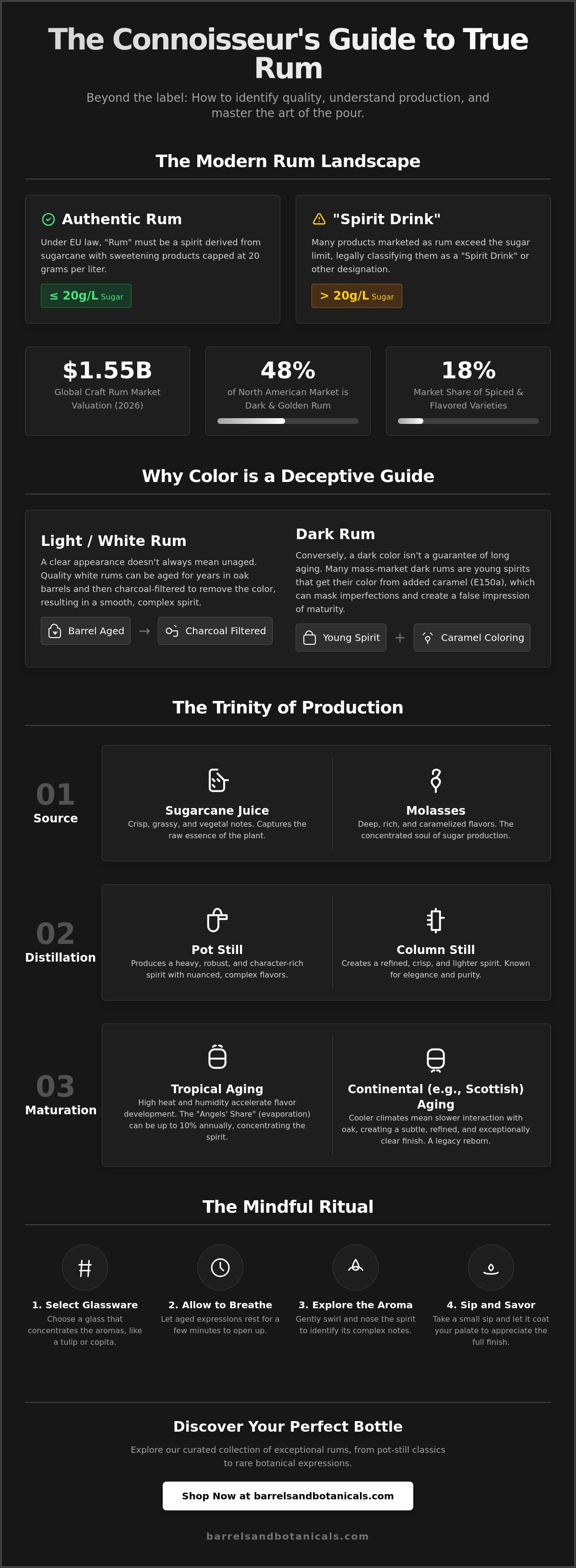
What if the bottle you've been calling rum for years is actually a "spirit drink" in disguise? It's a startling realization for many enthusiasts, especially since European Union regulations now cap sweetening products at 20 grams per liter for any bottle bearing the official name. You've likely felt the frustration of staring at a shelf filled with "dark," "aged," and "spiced" labels, unsure which one hides a cloying, sugar-heavy liquid and which holds a masterpiece of distillation. It's exhausting to search for quality when the industry feels like a maze of marketing jargon.
We're here to help you claim the clarity you deserve. This guide cuts through the noise to help you identify the 48% of the North American market that truly matters; the dark and golden expressions that define modern luxury. You'll discover how to decode labels, explore the historic link between Caribbean casks and Scottish heritage, and master the sensory ritual of the perfect pour. From the vibrant nose of a pot-still classic to the long, oak-driven finish of a 2026 craft release, we'll find the bottle that belongs in your collection. Rare botanicals. Meticulous aging. Exceptional spirit.
Key Takeaways
- Learn why traditional color-based labels are deceptive and how to identify a spirit's true character through its production method rather than its hue.
- Distinguish between the heavy, nuanced character of pot still rum and the refined, crisp elegance of column distillation to perfectly match your personal palate.
- Understand the profound impact of climate on maturation, specifically how tropical aging accelerates flavor development compared to cooler continental methods.
- Discover specific artisanal benchmarks like Diplomatico and Bumbu that exemplify the height of modern craftsmanship and regional heritage.
- Master the sensory ritual of the mindful pour, from selecting the ideal glassware to allowing aged expressions the necessary time to breathe.
The Rum Renaissance: A Connoisseur’s Introduction to the Spirit
The modern epicurean doesn't drink for the sake of consumption. They drink for the ritual. Today's rum is no longer just a sugary additive for a tiki bar. It's a vibrant elixir; a liquid history distilled from the pure essence of sugarcane or the deep, dark soul of molasses. In 2026, the global craft market for this spirit reached a valuation of $1,547.93 million. This isn't a trend. It's a revolution. You aren't losing the high-volume social habits of the past. You're gaining a world of nuanced botanicals and artisanal complexity. It's about the "gain" of flavor. Bold. Intentional. Refined.
From Molasses to Masterpiece: The Essence of Production
Quality begins in the fields. The heartbeat of a premium spirit lies in the fermentation of its base material. Whether it's the crisp, vegetal notes of fresh sugarcane juice or the caramelized depth of high-test molasses, the raw ingredients dictate the final profile. Industrial production often masks these traits with additives. In contrast, 2026's master blenders prioritize transparency. They utilize longer fermentation periods, sometimes lasting several weeks, to cultivate a more vibrant nose and a velvety palate. This slow, deliberate process transforms a humble by-product into a layered masterpiece. It's the difference between mass-produced utility and a curated, small-batch creation. Small stills. Big character.
The Scottish Connection: A Legacy Reborn
History often forgets the northern ports. During the 17th-century sugar boom, cities like Glasgow and Greenock were central hubs for the global trade. While many associate the spirit solely with the sun-drenched Caribbean, Scotland's involvement is foundational. For a comprehensive history of rum, one must look toward these cold-water docks where the first refineries stood. Today, a new wave of Scottish distilleries is reclaiming this heritage. These brands challenge Caribbean dominance by utilizing cooler-climate aging. The result is a spirit that matures with a distinct, nuanced profile. The lower temperatures in Scottish warehouses allow for a slower interaction with the oak. This creates a finish that is subtle, refined, and remarkably clear. It's a legacy reborn for the modern palate. Northern grit meets tropical soul.
Decoding the Spectrum: Navigating Rum Styles and Categories
Color is a liar. In the spirits world, relying on "White, Gold, or Dark" to judge a rum is like judging a book by its dust jacket. Some crystal-clear liquids have spent years in oak only to be charcoal-filtered for clarity. Conversely, some dark spirits are merely young distillates stained with caramel. To find quality, you must look deeper. According to the official U.S. definition of rum, the spirit must be distilled at less than 190 proof to retain its essential sugarcane character. This character is what we celebrate. It's the soul of the drink.
Silver and White expressions are the rawest form of this essence. They are vibrant. Crisp. Botanical. They capture the grassy soul of the cane. As we move into Golden rums, we encounter the transformative power of the barrel. Here, the "Angels' Share", the portion of spirit lost to evaporation, concentrates the flavors. In tropical climates, this loss can reach 10% annually. It’s a high price for excellence. Dark and Navy rums represent the boldest end of the spectrum. These are rich, heavy blends often rooted in historical naval traditions. They offer a palate of molasses, leather, and dark chocolate. Heavy character. Deep history.
The Rise of Premium Spiced and Botanical Rums
The flavored spirit market is evolving. In 2026, flavored and spiced varieties account for 18% of North American sales. But there's a vital distinction. "Spiced" rums from artisanal producers use whole botanicals like Madagascar vanilla, clove, and citrus peel. They avoid the syrupy, artificial additives of mass-market "flavored" drinks. These sophisticated expressions are essential for classic cocktails, where they add a layer of curated complexity to a simple daiquiri or punch. If you seek a mindful experience, look for labels that specify "macerated with whole spices." It's about the gain of real flavor.
Regional Profiles: A Global Map of Taste
Geography is destiny in distillation. Jamaican rums are famous for "funk", a high-ester profile that tastes of overripe banana and pineapple. It’s adventurous. Bold. Spanish-style "Rons" offer a different elegance. They often utilize the Solera method of fractional blending to create a consistent, velvety finish. Then there is Rhum Agricole from the French Caribbean. Distilled directly from sugarcane juice rather than molasses, it offers earthy, grassy notes that feel like a walk through a tropical field. Exploring these regions is an invitation to a global sensory tour. To begin your journey with a curated selection, explore our premium botanical collection. Refined tastes. Global reach.
The Buyer’s Framework: How to Choose Your Next Bottle
Selection is a sensory ritual. To find an exceptional expression, you must look past the marketing and into the mechanics of the distillery. The first choice is the still. Pot stills produce a heavy, oily distillate rich in esters and character. Column stills offer a refined, lighter essence that prioritizes elegance. It's the difference between a bold, textured palate and a clean, vibrant finish. In 2026, the most sought-after bottles often utilize a blend of both, capturing the best of both worlds. Heavy soul. Refined body.
Climate is the silent distiller. Tropical aging matures the spirit rapidly, often maturing 3 times faster than in the cooler climates of Europe. A 10-year-old Caribbean rum can possess the wood-driven complexity of a 30-year-old Scotch. Conversely, continental aging allows for a more delicate, slow interaction with the oak. The History of Rum shows us that geography has always dictated flavor, but modern connoisseurs now use this knowledge to curate their collections with intent. High proof. Pure essence.
Matching Rum to Your Existing Palate
Your current favorites are the best compass for your next purchase. If you love the smoky, leathery depth of Single Malt Scotch, look for long-aged pot still expressions from Barbados or Jamaica. They share a similar structural DNA. For those who prefer the crisp, botanical lift of Scottish Gin, unaged "white" rums or botanical infusions offer a familiar vibrancy. Decide if you seek a "daily sipper" for mindful relaxation or an investment-grade bottle for a growing collection. Every pour should be a curated choice.
Common Pitfalls to Avoid When Buying Online
Digital shelves are crowded with distractions. Don't let a dark hue fool you; caramel coloring is frequently used to make a young spirit appear ancient. Price isn't always an indicator of artisanal quality. In fact, some of the most complex, small-batch spirits are priced lower than mass-produced "luxury" brands that spend more on glass than liquid. Beware of "Solera" age statements. This number often refers to the oldest drop in the blend rather than the average age. True quality lies in transparency. Read the back label. Look for "no added sugar" or "distilled and aged at origin." Clarity is the hallmark of a master blender.
Curated Excellence: Standout Bottles from Our Collection
Theory informs the mind, but the bottle satisfies the spirit. As the premium rum market expands toward its projected $8.45 billion valuation by 2033, the sheer variety of expressions can feel overwhelming. We've curated a selection that moves beyond the mass-produced, focusing instead on the artisanal and the extraordinary. These aren't just drinks. They are bottled narratives of soil, sea, and time. Every choice is a gain in sensory depth.
The journey often begins with Diplomatico Reserva Exclusiva. This Venezuelan icon is a masterclass in balance, utilizing a blend of pot still and column still distillates aged for up to 12 years. It offers a velvety texture that rivals the finest Speyside malts. For those who crave heritage, Bumbu Rum offers a window into the past. Based on the original 16th and 17th-century West Indies recipes, it draws sugarcane from eight different Caribbean countries to create a profile that is naturally rich and complex. If you seek high-impact intensity, Kraken Black Spiced Rum delivers a bold, 94-proof experience that anchors any sophisticated cocktail with its dark, mysterious character. Finally, our 2026 selection wouldn't be complete without the vanguard of independent Scottish bottlers. These limited releases are reclaiming the northern sugar trade history, offering a cooler-climate maturation that provides a crisp, nuanced finish unlike anything from the tropics.
The Sophisticated Sipper's Choice
True connoisseurship often settles on the 12-year-old aged expression. On the nose, you'll find vibrant orange peel and toffee. The palate reveals a nuanced layer of licorice and dark chocolate, finishing with a slow, warming glow. These bottles deserve a place on your shelf alongside rare whiskies and vintage cognacs. They represent the pinnacle of the "mindful pour." Explore these artisanal treasures in our Rum Collection and discover the difference that meticulous sourcing makes.
Gifting and Rarity: The Private Brokerage Perspective
Selecting a gift for a serious collector requires an eye for the "Old and Rare." In the 2026 market, provenance is the primary currency. A bottle with a confirmed distillery origin and a transparent aging statement is a significant asset. For those seeking the truly unobtainable, we offer a private bottle sale service. Whether you're looking to acquire a single-cask release or looking to find a new home for a rare collection, our brokerage connects you with the world's most discerning palates. Rarity is a ritual in itself. To begin your search for an investment-grade spirit, explore our full range of premium expressions. Expert guidance. Exceptional taste.
The Ritual of the Pour: Elevating Your Rum Experience
The ritual of the pour is where the connoisseur’s journey truly culminates. It’s a deliberate pause. A moment of clarity. To appreciate a premium rum, one must first select the proper vessel. While many reach for a simple tumbler, the Glencairn glass, traditionally reserved for single malts, is the superior choice for the mindful sipper. Its tapered neck concentrates the nuanced esters, allowing the vibrant bouquet of vanilla, spice, and tropical fruit to reach the nose with precision. Proper glassware isn't a luxury; it's a tool for discovery. Clear glass. Concentrated essence.
Patience is the secret ingredient of the mindful pour. An aged spirit has been trapped in oak for years, sometimes decades. It needs time to wake up. Letting your pour breathe for at least 5 to 10 minutes allows the more volatile alcohol notes to dissipate, revealing the delicate botanical essence beneath. During this wait, consider your garnish. Move away from neon-colored cherries or heavy syrups. Instead, choose a wheel of dehydrated citrus or a bruised sprig of fresh rosemary. These elements don't mask the spirit; they celebrate its agricultural roots. Every addition should be an intentional gain in flavor.
Pairing is an art form that extends into the wider artisanal lifestyle. A heavy, pot-still expression finds a surprising companion in a crisp, hoppy IPA, where the bitterness cuts through the spirit's natural sweetness. For a more traditional evening, the host’s guide to a refined ritual always includes a selection of fine accompaniments that respect the craft of the blender. It's about creating a sensory "moment" that lingers long after the glass is empty.
The Rum and Cigar Ritual
The natural affinity between sugarcane and tobacco is a historical certainty. The inherent sweetness and caramel notes of a long-aged Venezuelan or Bajan spirit provide a perfect counterpoint to the earthy, leathery profile of premium cigars. When pairing, match intensity with intensity. A dark, full-bodied spirit requires a robust Cuban cigar to ensure neither overpowers the other. It’s a sensory dialogue. A shared heritage of craftsmanship. Smoke and spice in perfect harmony.
Final Selection: Your Journey Starts Here
Your transition from a casual drinker to a true rum connoisseur is marked by a shift in focus. It’s no longer about the volume of the pour, but the quality of the essence. By prioritizing small-batch producers and transparent aging processes, you support a culture of excellence. The 2026 market offers more clarity and choice than ever before, with craft distilleries now valued at over $1.5 billion globally. Whether you're seeking a grassy Rhum Agricole or a velvet-smooth sipping spirit, your next discovery is waiting. Browse our full collection of 60+ premium rums and begin your own ritual today. Refined living. Bold choices.
Your Journey into the Heart of the Cane
The era of settling for mass-produced, sugar-heavy spirits is over. You now possess the framework to distinguish between mere color and true character; whether you're seeking the "funk" of a Jamaican pot still or the refined elegance of a Scottish-aged expression. By mastering the ritual of the pour and selecting glassware that honors the distiller's craft, you transform a simple drink into a curated sensory experience. True connoisseurship is about the gain of these nuanced moments. Don't let your collection be an afterthought.
At Barrels & Botanicals Ltd, we've been family-run specialists in rare and small-batch spirits since 2019. Our expertise is built on a passion for the extraordinary. With over 60 premium expressions in stock, we're dedicated to helping you find the specific bottle of rum that speaks to your unique palate. It's time to elevate your home bar with a spirit that carries the weight of history and the vibrancy of modern craft. Explore our curated Rum Collection and find your next exceptional bottle. Your perfect pour is waiting.
Frequently Asked Questions
What is the difference between rum and rhum agricole?
Traditional rum is distilled from molasses or cane syrup; Rhum Agricole is crafted directly from fresh sugarcane juice. This difference in base material creates a distinct sensory profile. While molasses-based spirits lean toward caramel and spice, Rhum Agricole offers vibrant, grassy, and earthy notes. It's an agricultural expression of the land. It captures the raw, vegetal soul of the cane in every drop.
Is expensive rum always better for sipping neat?
Price is not a guaranteed indicator of sipping quality. Some high-cost bottles reflect heavy marketing or ornate packaging rather than the essence of the liquid. In 2026, many artisanal, small-batch expressions offer superior complexity at a more accessible level than mass-produced luxury brands. Focus on the production method and aging climate instead. Quality is in the craft, not just the price tag.
How should I store my premium rum after opening?
Store your bottle upright in a cool, dark environment away from direct sunlight. Unlike wine, spirits don't age in the bottle, but exposure to light and heat can degrade the delicate botanicals and esters. If the bottle is less than 25% full, consider transferring the liquid to a smaller glass container to reduce oxygen contact. This preserves the vibrant finish and the master blender's intent.
Can I use spiced rum in a classic Old Fashioned?
You certainly can; a premium spiced rum adds a curated layer of complexity to the classic Old Fashioned ritual. Instead of the traditional sugar cube, the natural spice notes of vanilla and clove provide the necessary depth. Use a large, clear ice cube and a dash of orange bitters to elevate the botanical profile. It's a sophisticated twist that celebrates the gain of flavor over traditional mixers.
What does 'overproof' mean in the context of rum?
Overproof refers to spirits bottled at a higher alcohol concentration, typically exceeding 50% ABV or 100 proof. These expressions are prized for their high-impact intensity and concentrated flavor profiles. While bold on the palate, they're exceptional for cocktails where you want the spirit's character to shine through other ingredients. A drop of water can open up their nuanced nose and reveal hidden layers of essence.
Are there any gluten-free or vegan-friendly rums?
Pure distilled spirits are naturally gluten-free as the distillation process removes grain proteins. Most artisanal rums are also vegan-friendly; they rely on yeast and sugarcane without animal-derived fining agents. However, always check the label for specific flavored or honey-finished varieties that might include non-vegan additives. Transparency in 2026 labeling makes this easier for the health-conscious epicurean to navigate without sacrificing the pleasure of a well-made drink.
Why is Scottish rum becoming so popular in 2026?
Scottish distillers are reclaiming their 17th-century heritage with a focus on cooler-climate aging. This slower maturation process allows for a more delicate interaction with the wood, resulting in a refined, crisp profile that contrasts with tropical aging. The rise of independent Scottish bottlers has created a new category for collectors seeking rare, small-batch expressions with a northern soul. It's a bridge between traditional distilling and modern innovation.
How do I know if a rum has added sugar?
European Union regulations now require any spirit labeled as "rum" to contain less than 20 grams of sweetening products per liter. For bottles outside this jurisdiction, look for a "no added sugar" or "pure single rum" designation on the label. Artisanal producers often provide full transparency regarding their additives. If the liquid feels unusually syrupy on the finish, it's likely been altered. Clarity is the hallmark of quality.