
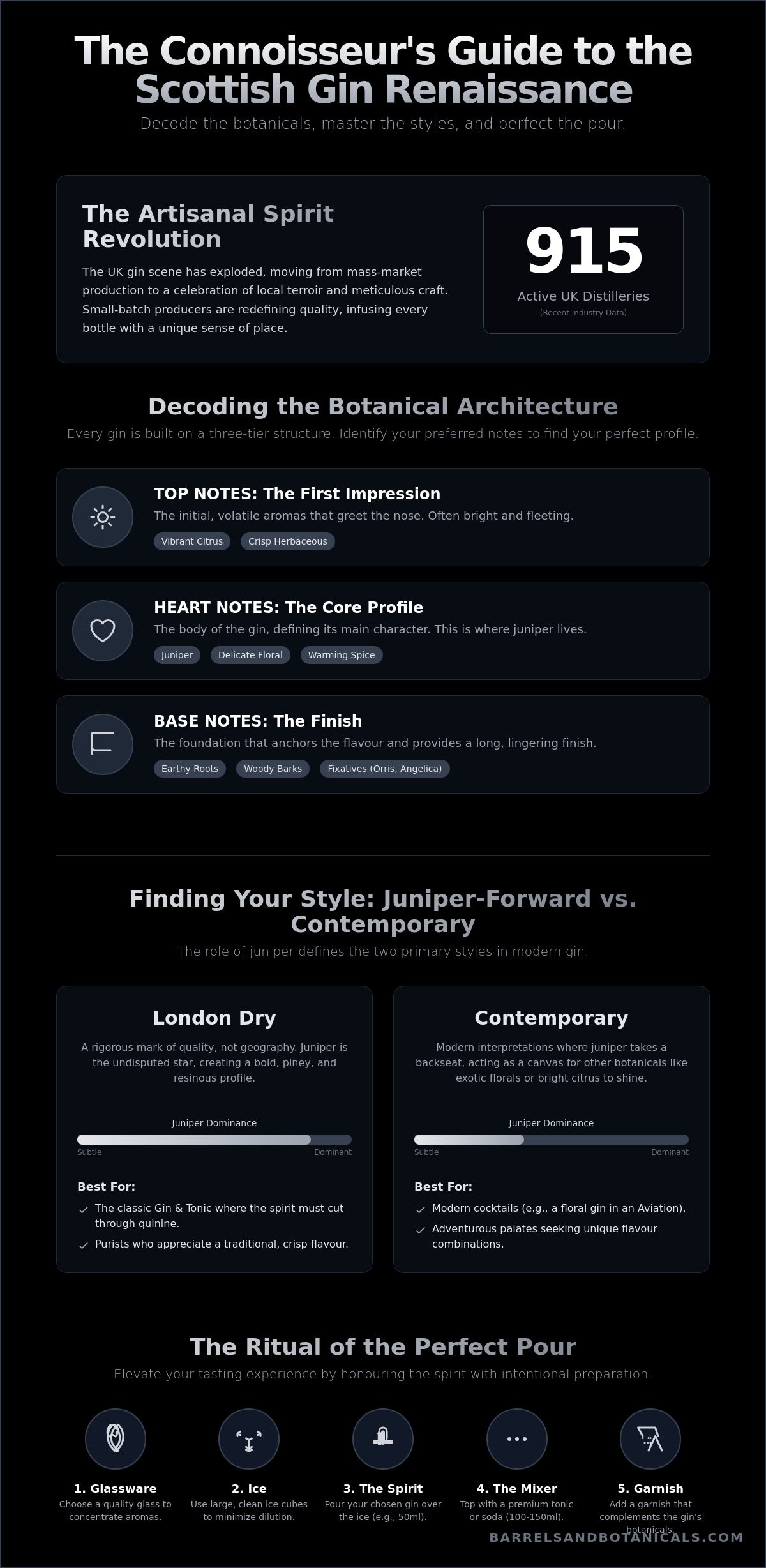
The bottle of gin you select today is a liquid map of a specific landscape, a curated essence far removed from the mass-produced spirits of the past. With the number of active UK distilleries reaching a record 915 according to recent industry data, the sheer volume of artisanal choice has turned a simple purchase into a complex sensory puzzle. Bold botanicals. Meticulous sourcing. Vibrant citrus. It’s natural to feel a sense of hesitation at the shop, wary of spending £40 on a profile that might be too floral for your palate or too aggressive for your preferred tonic.
We agree that the ritual of the pour should begin with certainty rather than guesswork. This guide will help you decode the nuanced differences between a crisp London Dry and the daring Contemporary styles emerging from the Hebrides. You’ll gain the confidence to identify high quality spirits through their nose, palate, and finish. We’ll explore the distinct botanical fingerprints of various Scottish regions and master the intentional serving rituals that honour the master blender’s craft.
Key Takeaways
- Explore the 2026 Scottish botanical renaissance and how master distillers are redefining the standards of artisanal spirit production.
- Master the "Botanical Architecture" framework to identify your signature flavor profile, from vibrant citrus to nuanced herbaceous notes.
- Navigate the nuances of legal classifications and debunk common myths to ensure your next bottle of gin represents true craft quality.
- Discover how to curate a premium collection by focusing on the rich heritage and sensory stories behind each artisanal investment.
- Elevate your tasting experience through the ritual of the perfect pour, where clean ice and mindful preparation unlock the spirit's full essence.
The Scottish Gin Renaissance: Why 2026 is the Year of the Botanical
Scotland’s rugged coastlines and misty glens are no longer solely the domain of aged single malts. In 2026, we are witnessing a true Botanical Renaissance. This movement isn't a passing trend; it's a fundamental shift in how we perceive clear spirits. Small-batch producers are reclaiming the craft from industrial factories, replacing anonymity with soul. They are infusing every drop with the vibrant essence of the land.
Modern gin has evolved into a liquid map of its origin. Distillers are now obsessing over "terroir," a concept once reserved for the vineyards of Bordeaux. By foraging for local ingredients like sugar kelp from the Hebrides or rowan berries from the Cairngorms, they create a distinct sense of place. While the history of gin is rooted in medicinal Dutch genever and London’s crowded backstreets, its future is being written in the wild, untamed Scottish landscape. It's a celebration of geography in a glass.
The Influence of Whisky Heritage on Modern Gin
Whisky giants have brought their century-old expertise to the world of clear spirits. They're repurposing traditional copper pot stills, once used exclusively for malt. These heavy vessels allow for a slower, more deliberate distillation process. The result? A richer nose. A velvet palate. A finish that lingers with intentionality. This marriage of heritage and innovation is why 2026 stands as a pinnacle of production standards. You can explore this bridge between these two prestigious worlds in our guide to Scottish gin.
Small-Batch vs. Mass-Market: The Quality Gap
Mass-produced spirits often rely on neutral grain spirits and synthetic additives to maintain consistency. It's efficient, but it lacks life. Artisanal gin offers the opposite: nuance. Every bottle from a family-run distillery tells a story of a specific harvest or a unique coastal breeze. Supporting these independent makers is a curated choice for quality over volume.
- London Dry: This isn't a geographic location; it's a rigorous mark of purity and production quality.
- Pot Distillation: Using copper stills helps retain essential botanical oils, creating a more viscous mouthfeel.
- Family Heritage: Independent distilleries across the UK focus on sustainable, small-scale runs that preserve the integrity of the ingredients.
Choosing a bottle from a small-batch producer is an act of mindful appreciation. It's about the ritual of the pour. The clarity of the ice. The specific aromatics that bloom when the tonic hits the spirit. In 2026, we don't just drink; we experience the landscape through the lens of meticulous craft.
Decoding the Botanical Palette: A Framework for Selection
Selecting a bottle requires more than a glance at an aesthetic label; it demands an understanding of botanical architecture. Every master distiller builds a spirit using a three-tier structure: the base, the heart, and the top notes. The base provides the foundation, usually consisting of earthy roots that anchor the liquid. The heart provides the core flavour profile, while the top notes offer the first aromatic greeting on the nose. To find your preference, identify whether you lean toward vibrant citrus, warming spice, delicate florals, or crisp herbaceousness.
Juniper remains the undisputed spine of the spirit. It’s the resinous, pine-forward constant that defines the category. However, the intensity of this "spine" varies significantly between brands. In the UK market, and globally, the legal definition of gin requires the juniper flavour to be discernible, yet modern interpretations often treat it as a subtle canvas rather than a lead protagonist. Reading a label for the "finish" involves looking for fixatives like orris or angelica root. These ingredients ensure the flavour lingers on the palate long after the initial sip, providing a dry, sophisticated conclusion to the ritual.
Juniper-Forward vs. Contemporary Styles
The classic London Dry profile is piney, resinous, and unapologetically bold. It’s the essential choice for a traditional G&T where the spirit must cut through the tonic's quinine. Contemporary styles allow juniper to take a backseat to exotic florals or bright citrus. These modern iterations are often better suited for a classic cocktail where nuanced layers of lavender or grapefruit can shine. Choose your style based on the occasion. A bracing London Dry for the afternoon; a soft, contemporary floral for the evening.
Secondary Botanicals: The Secret to Complexity
Secondary botanicals define a gin's unique personality. Citrus peels like lemon, orange, or bergamot provide immediate vibrancy and a bright opening. Earthy roots such as angelica and orris act as the "palate," offering depth and longevity to the experience. We are seeing a rise in regional provenance, particularly with Scottish distillers using local treasures:
- Rowan berry for a tart, wooded sweetness.
- Bog myrtle for a spicy, herbal aroma.
- Sea kelp for a subtle, saline finish that evokes the coast.
These ingredients transform a simple spirit into a complex narrative of place and craft. If you are ready to elevate your home bar, explore our curated collection of botanical spirits designed for the intentional drinker.
Comparing Gin Classifications: Finding Your Perfect Style
Selecting the right bottle requires an understanding of the four distinct pillars that define the modern market. These aren't just labels; they're blueprints for flavour. The botanical landscape of 2026 prioritises transparency, allowing you to choose between the precision of a London Dry or the historical sweetness of an Old Tom. This latter style acts as a vital bridge between the heavy, malt-driven spirits of the past and the juniper-forward clarity of the present. It’s a softer choice for those who find traditional expressions too sharp.
Many enthusiasts overlook Pink Gin, assuming it’s a lower-tier, sugary alternative. This is a misconception that ignores the artistry of premium producers. High-quality pink variants rely on the maceration of real fruit like strawberries or raspberries after distillation. They offer a tart, complex profile rather than a cloying one. It’s about the "gain" of natural essence. Vibrant. Authentic. Sophisticated.
- London Dry: The most regulated category, defined by technical purity.
- Distilled Gin: A creative playground allowing for post-distillation infusions.
- Old Tom: A slightly sweeter, historical style with a rich, viscous mouthfeel.
- Gin Liqueurs: Decadent, lower-ABV options often featuring intense fruit or floral notes.
The Purity of London Dry and Distilled Gin
London Dry is a mark of technical mastery. UK regulations dictate that all botanical flavours must be introduced through distillation. Nothing but water and a minuscule amount of sugar can be added afterward. This results in a crisp, clean finish that defines the classic G&T ritual. Distilled gin, however, permits makers to add flavours after the still. This allows for the use of delicate botanicals that would be destroyed by heat. You'll notice a weightier, more textured mouthfeel in these bottles, often leaning into contemporary citrus or floral notes.
Flavoured Gins and Liqueurs: A Sensory Explosion
The difference between a premium infused spirit and a mass-market product lies in the source of the flavour. Artisanal brands use whole fruits and spices to achieve a nuanced palate. Sloe gin remains the quintessential winter ritual, offering a deep, plummy richness that pairs perfectly with a cold evening. Be wary of bottles containing excessive sugar. Some mass-market brands use high glucose levels to mask a poorly distilled base spirit. True gin liqueurs usually sit between 20% and 30% ABV, providing a lush, concentrated experience without the heat of a full-strength spirit. They turn a simple glass of prosecco into a curated masterpiece.
Standout Selections: Curated Bottles for Your 2026 Collection
Curating a home bar in 2026 is an exercise in storytelling. The modern gin enthusiast looks beyond the base spirit to find bottles that capture a specific time and place. Our current selection prioritizes these artisanal narratives, offering a range of price points that reflect the meticulous labor behind every drop. You can explore our full range of curated spirits by visiting our gin collection link to find your next centerpiece.
Maritime and Coastal Gins: A Breath of Fresh Air
Coastal distilleries have mastered the art of bottling the sea. These spirits often feature a distinct saline quality that cuts through traditional tonics. Isle of Harris Gin remains a benchmark in this category. Distilled in the Outer Hebrides, it uses hand-harvested Sugar Kelp to create a deep, maritime flavor profile. The finish is vibrant and crisp. It’s the perfect companion for a platter of fresh oysters or a quiet summer evening on the terrace. For those seeking a slightly different coastal profile, Rock Rose Gin from the far north of Scotland offers a delicate balance of sea buckthorn and traditional berries. These bottles typically range from £37 to £45, representing a solid investment in craft quality.
Highland and Forest Blends: Earthy Sophistication
For drinkers who usually gravitate toward the complexity of whisky, forest-forward blends offer a familiar depth. These gins capture the essence of ancient woodlands. They rely on pine needles, silver birch, and earthy roots to create a grounded, nuanced palate. The resinous notes provide a structural backbone that holds up beautifully in a Negroni or a slow-sipped Old Fashioned ritual. This isn't just a spirit; it's a sensory walk through a damp Highland forest. The heavy botanical load ensures the flavor persists even when diluted. Look for labels that emphasize wild-foraged ingredients, as these often provide the most authentic earthy profiles. These selections sit at the higher end of the premium tier, with some limited small-batch releases priced at £55 or more.
Every bottle in our cellar is chosen for its ability to transform a simple pour into a mindful experience. Whether you prefer the sharp spray of the Atlantic or the quiet hush of the woods, your glass should tell a story. We focus on producers who respect the land and the harvest, ensuring that every sip is as ethical as it is delicious.
The Ritual of the Perfect Pour: Serving Your Selection
The true gain of a premium spirit isn't found in the bottle alone. It's realized in the ritual of the pour. A masterfully distilled gin is a complex tapestry of flavors that requires a specific environment to unravel. If you've invested in a bottle crafted with 2026’s finest botanicals, the serve must match that ambition. High-quality ice is the foundation of this experience. Forget the cloudy, hollow cubes from a domestic tray. You need "clean" ice. Large, crystal-clear cubes provide the necessary thermal mass to chill the liquid without immediate dilution. Fill your glass to the brim. More ice actually means less melt, preserving the integrity of the spirit from the first sip to the last.
Glassware selection changes the sensory narrative. The Copa de Balon, with its generous, balloon-shaped bowl, is designed to trap and concentrate aromatics. It's the choice for those who want to breathe in the botanical heart of the drink. Conversely, the classic highball offers a focused, effervescent experience, perfect for a crisp afternoon serve. Regardless of the vessel, the Golden Ratio remains the industry benchmark for balance: one part spirit to three parts premium tonic. This 1:3 ratio ensures the nuances of the distillation aren't buried under a mountain of carbonation.
The Art of the Garnish: Enhancing the Essence
A garnish shouldn't be an afterthought. It's a bridge to the liquid's soul. Match your choice to the leading botanical of your gin. If the profile is citrus-heavy, use a twist of lemon or grapefruit. Don't just drop it in. Express the oils first. Twist the peel over the glass to release a fine mist of essence, then rub the zest along the rim. This elevates the "nose" of the drink instantly. For savory or earthy profiles, a sprig of fresh rosemary or thyme adds a woody, aromatic layer that complements the juniper’s piney bite.
Choosing the Right Tonic Water
The tonic makes up three-quarters of your drink. It's a mistake to pair a £40 artisanal bottle with a budget supermarket "diet" tonic. Artificial sweeteners and aggressive carbonation will mask the delicate layers you've paid for. Choose your mixer with intent. Indian tonic water, with its firm quinine bitterness, suits traditional, juniper-forward styles. Mediterranean tonics are softer and more floral, ideal for citrus or herb-led spirits. Aromatic tonics, often infused with angostura bark, provide a spicy depth for more robust blends. Ready to elevate your home bar? Explore our full range of over 90 artisanal gins here and begin your own ritual.
Master Your 2026 Botanical Collection
The 2026 spirits landscape offers a profound journey through landscape and legacy. You've explored the vibrant Scottish renaissance and decoded the nuanced frameworks that define modern classifications. From the first scent of hand-foraged botanicals to the final, lingering finish of a perfectly served glass, your selection reflects a commitment to quality. It's a sensory ritual. A moment of clarity. A celebration of intentional living.
At Barrels and Botanicals, we act as your guide through this artisanal era. Our family-run shop focuses on expert curation, specializing in small-batch and rare bottles that define the current gin market. With national UK delivery on our entire range of artisanal spirits, the finest craft creations are always within reach. Every bottle represents a story of meticulous sourcing and master blending. Quality without compromise.
Browse our curated collection of 98+ Scottish and Craft Gins and find the bottle that speaks to your palate. Your next great discovery is waiting to be poured.
Frequently Asked Questions
What is the difference between London Dry and regular gin?
London Dry is a strict legal designation requiring all botanical flavours to be introduced through distillation. According to UK retained EU Regulation 2019/787, producers cannot add artificial ingredients or more than 0.1 grams of sugar per litre after the spirit leaves the still. Regular or "Contemporary" gins offer more flexibility, allowing distillers to infuse flavours or colours post-distillation to create modern, experimental profiles.
Is Scottish gin actually better than other gins?
Scottish gin isn't inherently superior, but it benefits from a rich heritage and exceptional natural resources. Scotland currently produces 70% of the gin consumed in the UK, leveraging the same soft water sources used in world-class whisky. The quality often stems from the use of indigenous botanicals like rowan berries and sea kelp, which create a distinct sense of place in every sip.
How long does a bottle of gin stay fresh after opening?
A bottle of gin remains at its sensory peak for approximately 12 months after you break the seal. While the high alcohol content, usually at least 37.5% ABV in the UK, prevents the liquid from spoiling, oxygen exposure gradually dulls the vibrant botanical oils. If your bottle is more than half empty, the increased air-to-liquid ratio accelerates this oxidation, muting the delicate nose and palate.
Do I really need a specific glass for different types of gin?
The right glassware is essential for the ritual of appreciation and the physics of flavour. Use a wide-bowled Copa de Balon for a classic G&T to trap the aromatic essence of the botanicals while leaving room for plenty of ice. For a neat pour or a martini, a chilled glass with a narrow rim focuses the spirit's bouquet, ensuring the nuanced scents reach your senses before the first sip.
Why are some gins much more expensive than others?
Price reflects the meticulous sourcing of ingredients and the precision of the distillation cut. While entry-level bottles might cost around £16, premium artisanal spirits often range from £35 to £50. This higher investment pays for "hearts-only" distillation, where the producer discards a larger percentage of the run to ensure only the cleanest, most vibrant botanical flavours remain in the final bottle.
Can I use gin as a substitute for whisky in classic cocktails?
You can certainly swap spirits to create sophisticated riffs on traditional recipes. A barrel-aged gin works beautifully as a substitute in an Old Fashioned, providing woody depth alongside its herbal core. The botanical complexity of a London Dry also transforms a sour-style drink, offering a bright, crisp finish that contrasts with the heavier malt profile of a standard Scotch.
What is the best way to store my gin collection at home?
Store your bottles upright in a cool, dark environment to protect the integrity of the spirit. Direct sunlight is the enemy of botanical oils, with UV exposure capable of altering the flavour profile in less than 72 hours. Maintain a consistent temperature below 20°C and ensure the stopper is tightly sealed to prevent the evaporation of the delicate essences that define your favourite labels.