
That beautifully textured label on your latest £40 purchase might suggest a rustic copper pot, but the reality is often a mass-produced neutral spirit dressed in artisanal clothing. With the Wine and Spirit Trade Association reporting over 900 distillery sites across the UK as of late 2024, the sheer volume of choice has made craft-washing a genuine hurdle for the discerning drinker. You've likely felt the frustration of a cluttered cabinet filled with bottles that lack a distinct soul or a clear botanical narrative. It's a common struggle to separate true innovation from clever marketing when your goal is simply a superior glass of small batch gin.
You deserve a drinking experience that rewards your curiosity rather than taxing your wallet. This guide serves as your sensory compass, detailing the technical precision of heart-cut distillation and the vibrant essence of hand-selected aromatics. We promise to transform your understanding of what makes a spirit truly exceptional, moving beyond the label to the liquid itself. We'll explore the artisanal merits of copper-pot production, provide a framework for identifying complex flavour profiles, and master the refined ritual of the perfect serve for your 2026 home bar.
Key Takeaways
- Master the 1,000-litre benchmark that separates mass production from true artisanal craft. Meticulous oversight. Liquid masterpieces.
- Identify premium small batch gin through its botanical blueprint, where locally foraged ingredients and copper pot stills create a vibrant, substantial finish.
- Refine your palate through sensory analysis, navigating the intricate layers of the nose and the velvety mouthfeel of superior spirits.
- Curate a bespoke collection tailored to your unique taste, from the juniper-forward intensity of a London Dry to the saline whispers of coastal botanicals.
- Elevate the ritual of the serve by selecting the ideal glassware and mastering temperature control to preserve the spirit’s most nuanced essence.
Defining Small Batch Gin: Beyond the 1,000-Litre Benchmark
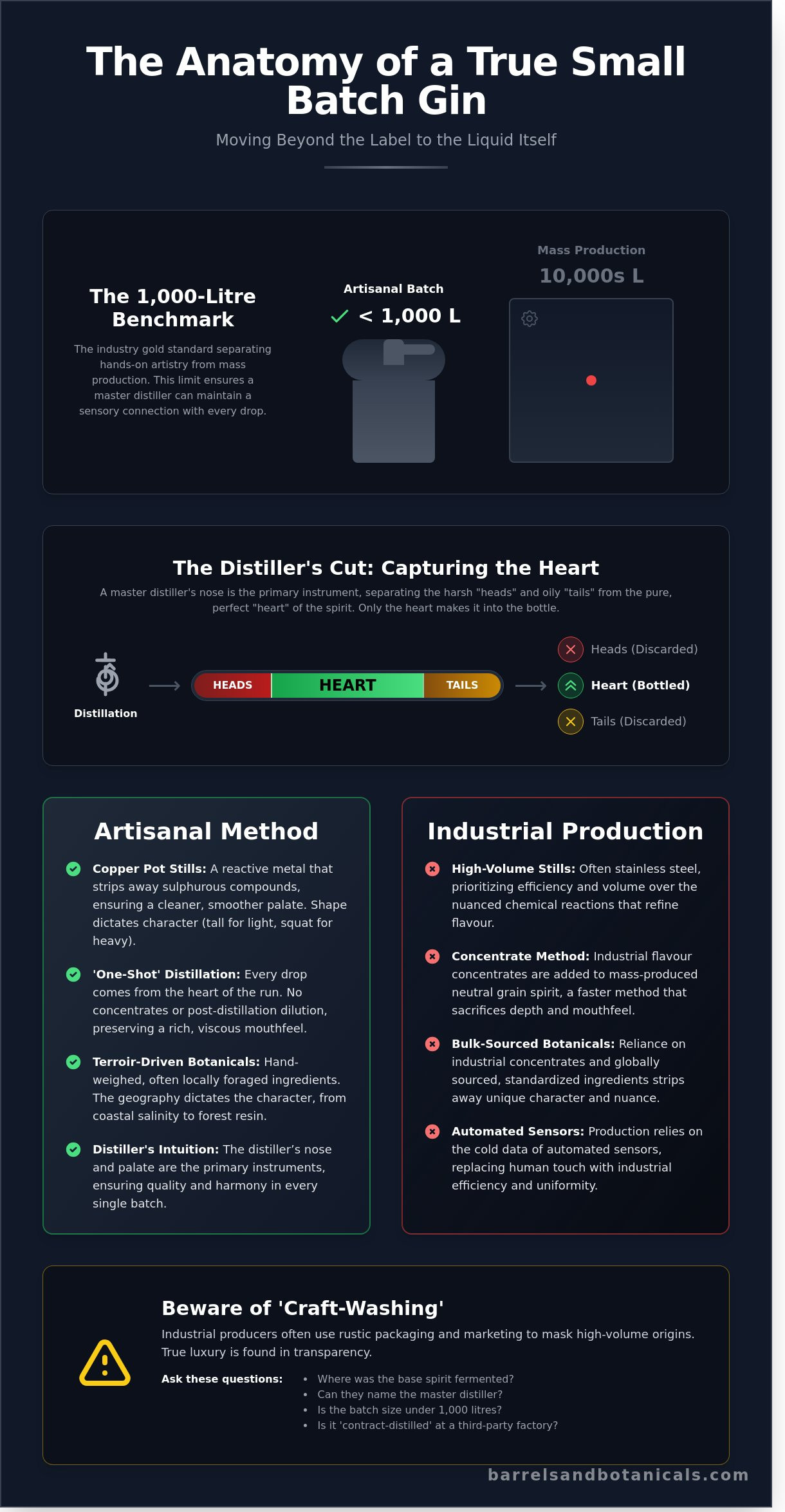
To understand the essence of small batch gin, one must look past the aesthetics of the bottle and into the heart of the copper still. In the United Kingdom, the 1,000-litre limit is the industry gold standard. It marks the threshold where manual artistry meets physical capacity. This volume isn't an arbitrary number; it represents the maximum limit where a master distiller can maintain a sensory connection with the liquid. When production scales into the tens of thousands of litres, the "soul" of the botanicals often evaporates. Mass-produced spirits rely on high-volume processing that strips away the delicate, volatile oils of rare herbs and citrus peels, replacing nuance with a uniform, industrial efficiency.
The history of gin reveals a transition from crude medicinal tonics to the sophisticated, botanical-forward spirits we admire in 2026. Modern connoisseurs now distinguish between "contract-distilled" brands, which outsource production to third-party factories, and true independent houses. A genuine small batch gin is born from a single site. It is a product of place, patience, and precise sourcing. Every botanical is weighed by hand. Every temperature fluctuation is noted. It is the difference between a printed photograph and a textured oil painting.
The Distiller’s Signature
In a small batch environment, individual intuition replaces the cold data of automated sensors. The distiller’s nose is the primary instrument. They are searching for "the cut," that fleeting moment of perfection between the harsh, solvent-like "heads" and the heavy, oily "tails." Only the "heart" makes it into the bottle. This process requires constant vigilance; the distiller monitors every second of the run. A handwritten batch number on a label is more than a rustic touch. It is a promise. It signifies that a human being verified the quality of that specific liquid, ensuring the juniper’s bite and the floral top notes are in perfect harmony.
Marketing vs. Reality: Avoiding 'Craft-Washing'
The rise of artisanal culture has led to "craft-washing," where industrial producers use rustic packaging to mask high-volume origins. Discerning drinkers look for provenance. They ask where the base spirit was fermented and where the botanicals were gathered. Transparency in production volume is the hallmark of a premium brand. If a distillery cannot name its still or its master blender, it's likely a mass-market product in disguise. In 2026, true luxury is found in the specific. It's found in the knowledge that your bottle of small batch gin is one of only a few hundred, each possessing a unique fingerprint of flavour that can never be replicated by a machine.
The Botanical Blueprint: Sourcing and Distillation Rituals
The soul of a premium small batch gin lives in its purity. While mass-produced spirits often rely on industrial concentrates and post-distillation dilution, the artisanal approach honours the 'One-Shot' method. This means every drop of the final spirit comes directly from the heart of the run. No neutral grain spirit is added after the heat fades. This commitment preserves the delicate essential oils that provide a rich, viscous mouthfeel. While the legal definition of gin sets the baseline for juniper-forward spirits, the craft movement in the UK has pushed these boundaries through the lens of terroir. Geography dictates character. The salinity of a coastal juniper berry differs vastly from the resinous heat of those grown in inland forests. It's a celebration of place.
Copper Pot Stills: The Alchemist’s Tool
Copper is not merely a material; it is a catalyst. During distillation, the metal reacts chemically with the vapour to strip away unwanted sulphurous compounds that would otherwise cloud the palate. The shape of the still, such as the iconic 'Delilah' at Sipsmith or the bespoke vessels found in micro-distilleries across the Cotswolds, dictates the spirit's final weight. Tall necks produce lighter, floral notes. Squat pots create heavy, oily textures. This slow distillation ritual allows heat to gently coax out the nuanced essence of each plant. Precision meets patience. The result is a vibrant finish that feels alive on the tongue.
Foraged vs. Exotic: The Hero Botanicals
Modern distillers are looking to the British coastline for inspiration. Ingredients once forgotten, like scurvy grass, ground ivy, and bladderwrack, provide a sharp, mineral complexity that mimics the sea air. These foraged treasures are often balanced against contemporary 'New World' imports like yuzu or pink pepper to create a multi-dimensional profile. Botanical maceration is the process of steeping ingredients to achieve deep flavour integration. This steeping allows the spirit to absorb the full spectrum of the plant's profile before the fires are even lit. It is a slow, intentional preparation that ensures the final pour is a curated sensory experience rather than just a drink.
- Coastal Herbs: Scurvy grass and sea kale for a saline edge.
- Citrus Innovation: Fresh pomelo and yuzu replacing dried peels.
- Spice Layers: Grains of paradise and cubeb for a lingering, warm finish.
Small batch gin thrives on this meticulous sourcing. By moving away from generic dried ingredients, distillers capture a snapshot of a season or a landscape. It's a mindful approach to spirits. Every bottle tells a story of the soil, the copper, and the craft.
Evaluating the Spirit: A Guide to Sensory Analysis
Appreciating a small batch gin requires more than a casual sip. It demands a pause. It is a slow, deliberate exploration of a master distiller's intent. To truly evaluate the spirit, you must engage the senses in a specific sequence, beginning with the nose. In a complex gin, the aroma unfolds in layers. You first encounter the primary notes, usually the sharp, resinous pine of juniper. Secondary aromas follow, often citrus peels or cracked black pepper. Finally, the tertiary notes emerge; these are the subtle hints of orris root, liquorice, or local foraged herbs that linger at the edges of your perception.
The mouthfeel of these spirits is a hallmark of quality. Unlike mass-produced alternatives, artisanal gins often possess an oily, substantial texture. This viscosity is the result of a high concentration of essential oils extracted during slow distillation in copper pot stills. It coats the palate, allowing the flavours to bloom across the tongue rather than evaporating instantly. This leads to the finish. A high-quality spirit offers a long, evolving tail. It lacks the harsh, industrial burn of cheap ethanol, providing instead a gentle warmth that fades into a clean, botanical memory.
ABV plays a crucial role in this sensory delivery. Most premium distillers bottle their small batch gin between 42% and 46% ABV. Data from the 2024 Craft Distilling Report indicates that this range is the "sweet spot" for flavour retention. At these higher strengths, the alcohol holds the delicate botanical terpenes in solution. When the ABV drops below 40%, many of these complex oils can become muted, leading to a thinner, less expressive spirit.
The Anatomy of a Tasting
The ritual begins with a clean glass. Always taste a new gin neat and at room temperature, ideally between 18 and 20 degrees Celsius. Chilling the spirit with ice masks the very nuances you seek to discover. Look for the juniper backbone; it should be the sturdy foundation upon which all other flavours rest. If the citrus or floral notes overwhelm the juniper entirely, the spirit loses its identity as gin. Add a single drop of room-temperature water. This small addition can "open up" the spirit, breaking the surface tension and releasing hidden layers of aromatics that were previously trapped by the alcohol.
Consistency vs. Character
In the world of artisanal spirits, variation is a virtue. While industrial brands prize identical flavour profiles across millions of litres, the boutique distiller embraces the subtle shifts between batches. These variations are signs of authenticity. A 2025 survey of UK craft distilleries found that 68% of producers use seasonal or foraged ingredients, which naturally change based on rainfall and soil conditions. Every bottle becomes a unique time capsule of a specific harvest. This is the gain of complexity. You move away from one-dimensional, predictable spirits toward a layered experience that rewards curiosity and rewards the palate with every new batch.
Curating Your Collection: Small Batch Gins for Every Palate
Building a home collection is an exercise in sensory storytelling. Each bottle represents a different landscape, from the rugged Scottish Highlands to the sun-drenched meadows of the south coast. To master the art of the small batch gin, you must curate with intention. You aren't merely stocking a shelf; you're preparing a palette for every possible mood and occasion.
- The Classicist: This profile is for those who worship at the altar of the juniper berry. It's piney, resinous, and crisp. A traditional London Dry style provides the structural integrity required for a sharp Martini.
- The Coastal Explorer: Inspired by the British shoreline, these gins use botanicals like samphire, sea kelp, and gorse. They offer a distinct saline quality that mimics a bracing sea breeze.
- The Floral Romantic: These expressions are soft and ethereal. Distillers use rose petals, lavender, and elderflower to create a fragrant, garden-like experience that feels delicate on the tongue.
- The Spice Seeker: Bold and warming. Expect a heavy influence of cardamom, grains of paradise, and ginger. These gins provide a lingering heat that stands up beautifully in complex serves.
The Essential Small Batch Roundup
Caorunn remains a benchmark for Celtic botanical influence. It's handcrafted in the Scottish Highlands using five locally foraged botanicals, including rowan berry and bog myrtle. The result is a remarkably clean, crisp finish that feels both ancient and modern. For those who crave intensity, 'Storm Strength' or Navy Strength gins are essential. Bottled at exactly 57% ABV, these spirits carry a higher concentration of essential oils. They ensure the botanical profile isn't lost when mixed. Even within the fruit-infused category, quality is paramount. A premium raspberry or rhubarb gin must maintain a robust small batch gin base at its core. If the juniper isn't present, the spirit loses its soul. Real fruit maceration, rather than synthetic flavouring, defines the artisanal standard in 2026.
Building a Balanced Home Bar
To truly master the classic cocktails ritual, you need variety. A balanced bar requires at least three distinct styles: a heavy London Dry, a contemporary floral, and a high-proof Navy Strength. This trio allows you to pivot between a refreshing G&T and a complex Negroni with ease. Selection doesn't end with the spirit. You must pair your gin with the correct tonic and garnish to unlock its full potential. A citrus-led gin sings with a Mediterranean tonic and a sprig of rosemary. A spicy gin requires the bite of a premium Indian tonic and a slice of dehydrated ginger. Remember that botanical vibrancy is fragile. Store your bottles in a cool, dark cupboard away from direct sunlight to preserve those delicate distilled oils for as long as possible.
Explore our curated selection of artisanal spirits and elevate your evening ritual at Barrels and Botanicals.
Elevating the Ritual: The Perfect Serve and Beyond
To pour a premium small batch gin is to respect the hours of distillation and the precision of the botanical blend. It is more than a simple drink. It is a curated experience. When we move away from mindless consumption toward a mindful ritual, the spirit reveals its true character. Every choice, from the curve of the glass to the clarity of the ice, serves to amplify the distiller's intent.
Glassware acts as your primary sensory tool. The Copa de Balon, with its generous, balloon-like bowl, is designed to trap the volatile aromatic compounds of the spirit. It allows you to nose the gin properly, much like a fine wine. In contrast, the classic highball glass focuses on the vertical movement of carbonation. It offers a crisp, direct delivery of flavour that suits citrus-forward serves. Both have their place, but the Copa remains the connoisseur's choice for botanical depth.
Temperature control is the silent partner in mixology. Large, clear ice blocks are essential for a sophisticated serve. Standard domestic ice is often cloudy and filled with air, causing it to melt rapidly and dilute the complex layers of a small batch gin. A single, dense block or a 5cm sphere provides the thermal mass needed to keep the liquid chilled without drowning the botanicals in excess water. Clarity in ice isn't just about aesthetics; it’s about structural integrity.
The 'Ritual of the Garnish' should be an exercise in restraint. We choose elements that amplify, rather than mask, the existing profile. A sprig of scorched thyme, a single star anise, or a slice of dehydrated grapefruit can pull a hidden note to the foreground. It isn't a decoration. It is a functional component of the palate.
The Masterclass G&T
Creating the perfect serve requires a technical eye. Following the ultimate gin and tonic recipe ensures every element remains in balance. The ratio of gin to tonic must shift based on the spirit's ABV. A bold 46% ABV gin demands a different dilution than a delicate floral blend. Finish the ritual by expressing citrus oils over the glass. Twist the peel. Release the essence. The olfactory impact is immediate and transformative.
Beyond the Tonic: Alternative Serves
The Martini remains the ultimate exposure of spirit quality. With only a whisper of dry vermouth for company, the gin has nowhere to hide. It is the most honest way to experience a craft spirit. For those who prefer depth and bitterness, the Negroni is the answer. You must select a gin with a spicy, juniper-heavy backbone that can stand its ground against the weight of Italian bitters. Finally, consider sipping your gin neat. It is the purest test of a distiller’s craft and the absolute purity of the spirit. Slow down. Savour the finish.
Embrace the Evolution of the Craft Ritual
The landscape of 2026 distillation proves that true quality resides in the smallest details. By prioritising the 1,000-litre benchmark, artisanal producers protect the integrity of every botanical essence. You've explored the sensory guide to the nose and palate; you've understood the meticulous sourcing behind the spirit's blueprint. It's no longer just about the drink. It's about the intention. Vibrant notes. Nuanced finishes. A celebration of the maker's art.
At Barrels and Botanicals, we honour this dedication through our family-run expertise. We've spent years identifying the most exceptional spirits for the discerning collector. Our collection features rare labels that define the modern small batch gin movement, each selected for its unique story and superior profile. Whether you're seeking a bold juniper lead or a delicate floral heart, our curated range is available for national UK delivery to your doorstep.
Explore our curated selection of small batch Scottish gins and discover a new standard for your collection. Here's to a more mindful, sophisticated way to sip.
Frequently Asked Questions
What is the legal definition of small batch gin in the UK?
There's no legal definition for small batch gin under current UK spirit drinks regulations. While the British Distillers Alliance notes that the term implies limited production, no specific volume threshold exists in law. Most craft distillers consider a run of 50 to 1,000 litres as a small batch. It remains a self-regulated industry descriptor rather than a statutory requirement enforced by HMRC.
Is small batch gin always better than mass-produced gin?
Quality is a matter of artisanal intent rather than production scale alone. Small batch gin offers a depth of character and complexity that mass-produced spirits often lack because the master distiller monitors every cut of the distillation personally. This hands-on approach ensures a nuanced profile. While consistency is higher in industrial brands, craft spirits celebrate the vibrant variations of each unique, distilled run.
How long does a bottle of small batch gin stay fresh after opening?
A bottle of small batch gin remains at its sensory peak for approximately 12 to 24 months after opening. Oxygen eventually begins to degrade the delicate botanical oils and aromatic compounds that define the spirit’s nose. To preserve the essence of the liquid, store it in a cool, dark place. Once the liquid level drops below half, the increased surface area accelerates oxidation; drink it within a year.
Can I use any tonic water with a premium small batch gin?
You should choose a tonic that complements rather than masks the intricate profile of a premium spirit. Standard supermarket tonics often contain high sugar levels and artificial sweeteners that dull the palate. A high-quality small batch gin deserves a mixer with natural quinine and subtle carbonation. Look for light or botanical mixers that allow the gin’s distilled essence to shine through clearly during your evening ritual.
Why is small batch gin usually more expensive than supermarket brands?
Higher costs stem from the meticulous sourcing of rare botanicals and the absence of economies of scale. While a mass-market gin might cost £16, a craft bottle often retails between £35 and £45. Distillers pay significant costs for manual labour and bespoke packaging. You aren't just paying for the liquid; you're funding the artistry and the premium, sustainably sourced ingredients that define the craft movement.
What are 'Celtic botanicals' and why are they popular in Scottish gins?
Celtic botanicals are native plants sourced from the Scottish Highlands and islands, such as bog myrtle, rowan berries, and heather. These ingredients give Scottish gins a distinct sense of terroir. In 2023, reports indicated that over 70% of local craft distillers now use foraged ingredients. They offer a wild, earthy finish that connects the drinker to the rugged landscape with every intentional sip.
Does 'small batch' mean the gin is limited edition?
No, small batch refers to the production method rather than a finite total quantity. A distiller might produce a core range of gin in small batches continuously throughout the year. Each bottle is often numbered to highlight its provenance and artisanal nature. While some releases are limited to a single run, most small batch labels represent a commitment to quality over quantity rather than a one-off product.
How can I tell if a gin is truly small batch by looking at the label?
Look for a hand-written batch number, a bottle number, or the signature of the master distiller on the label. Truly artisanal spirits often list the specific still used or the date of distillation. Transparency is the hallmark of the craft. If a label mentions "distilled in copper pots" and provides a specific batch code, it’s likely a genuine product of a boutique distillery rather than a mass-rebranded spirit.