

Imagine sitting in a deep leather armchair in a quiet, distinguished club, the scent of cedar and aged tobacco hanging in the air. You hold a hand-rolled Churchill, but the fear of a clumsy cut or an accidental inhale keeps the lighter in your pocket. A premium cigar is an investment in time, often costing upwards of £35 for a single vitola in the UK market, yet many enthusiasts never move past the anxiety of social etiquette. Learning how to smoke a cigar isn't about mere consumption. It's a slow, deliberate ritual. A celebration of craft. Earthy essence. Vibrant history. Pure sensory indulgence.
You likely feel that a cigar should be more than just smoke; it should be a meditative pause in a busy world. We agree that the true value lies in the quiet details of the process. This guide promises to transform your experience, teaching you to master every stage from the precision of the initial cut to the evolving notes of the final third. We'll explore the essential tools, the social graces of the lounge, and the secrets to identifying nuanced flavour profiles on your palate.
Key Takeaways
- Transform preparation into an art form by mastering the precision cut and light, ensuring every draw is as smooth as the master blender intended.
- Discover how to smoke a cigar with the "puff a minute" rule, a deliberate technique designed to preserve the integrity of the aged tobacco.
- Navigate the palate’s journey through three distinct phases, from the vibrant initial notes to the bold, nuanced finish of a premium leaf.
- Master the grace of cigar etiquette, including the subtle timing of band removal and the respectful "dignified death" of a finished smoke.
- Elevate your ritual by pairing artisanal blends with sophisticated spirits, unlocking hidden botanicals and enhancing the sensory gain of the experience.
The Ritual of the Leaf: Understanding the Cigar Experience
To understand how to smoke a cigar is to embrace a slow, deliberate cadence. It isn't a habit; it's a sensory exploration of aged tobacco and artisanal craftsmanship. Each stick represents years of cultivation, fermenting, and rolling. When you pick up a premium cigar, you're holding the culmination of hundreds of manual touches. This is about the gain of the experience. You gain clarity. You gain a moment of profound relaxation. You gain an appreciation for complex botanicals that shift and evolve as the cherry burns. It's a curated choice for quality over haste.
The ritual requires dedicated time and space. Unlike the frantic pace of modern life, a cigar demands 45 to 90 minutes of your undivided attention. It's an invitation to slow down. In the United Kingdom, where the heritage of the smoking room still lingers in spirit, the act remains a symbol of refined taste. The history and culture of tobacco reveals a long tradition of social elegance and mindful consumption that we continue today. Whether you're in a London lounge or a private garden, the environment is as vital as the tobacco itself.
Distinguishing between a premium handmade cigar and a machine-rolled alternative is essential for any epicurean. Machine-made options often use chopped scrap tobacco and chemical binders. They lack soul. A premium cigar is a natural product, containing only high quality leaf and water. Knowing how to smoke a cigar properly starts with respecting this artisanal difference. Pure botanicals. Hand-rolled precision. No shortcuts.
The Anatomy of a Premium Cigar
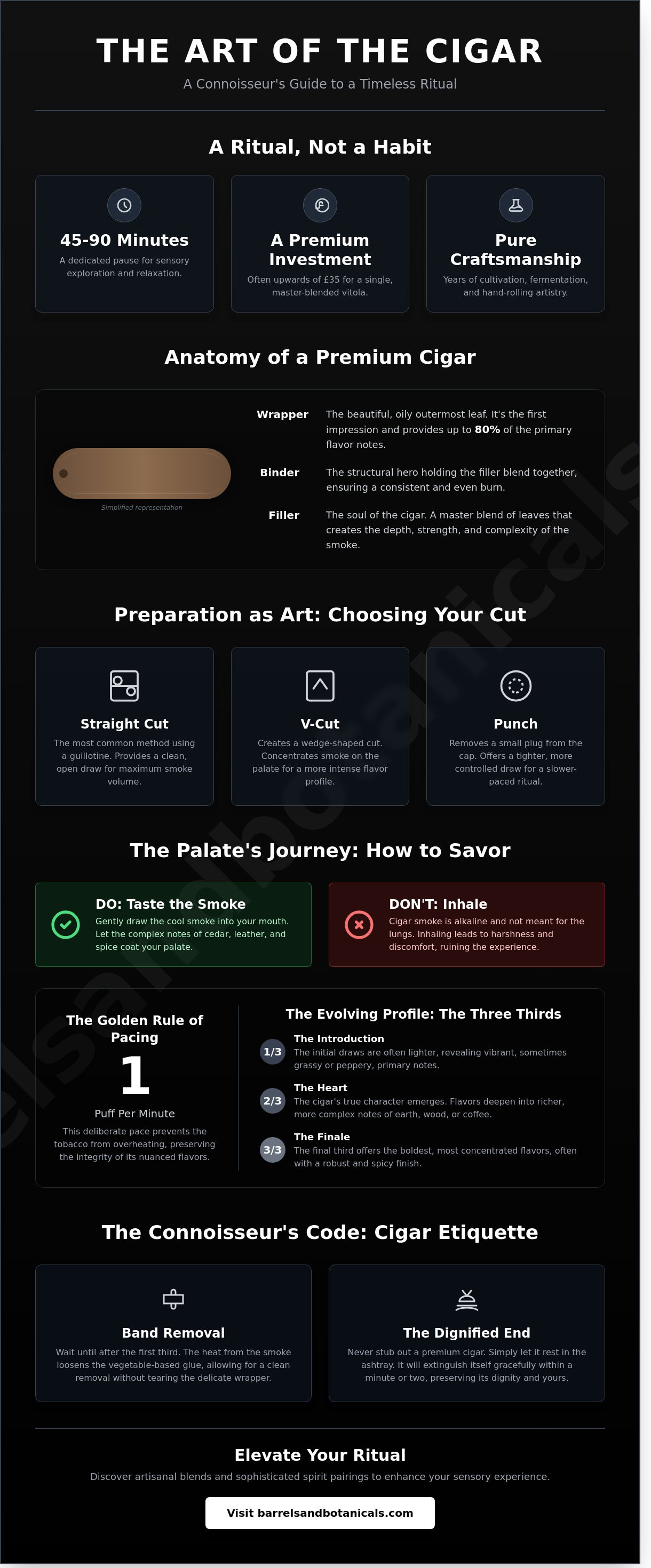
- The Wrapper: This is the outermost leaf, chosen for its beauty and oil content. It provides the initial aesthetic and up to 80 percent of the primary flavour notes.
- The Binder: The structural leaf that sits just beneath the wrapper. It's the unseen hero, holding the complex filler blend together to ensure a consistent burn.
- The Filler: This is the soul of the cigar. It consists of a specific blend of leaves where the master blender’s craft resides, creating the depth and strength of the smoke.
Why We Never Inhale
Cigar smoke is alkaline, making it fundamentally different from the acidic smoke of cigarettes. Your palate is a sophisticated tool designed to absorb nuanced flavours; your lungs are not. Inhaling ruins the essence of the tobacco, leading to harshness and physical discomfort rather than pleasure. The goal is to taste the smoke, not process it internally. By keeping the smoke in your mouth, you allow the vibrant notes of cedar, leather, or spice to dance across your taste buds.
The draw is a gentle pull of smoke into the mouth only.
Preparation as Art: The Precision of the Cut and Light
Preparation isn't a chore. It's a prelude. To understand how to smoke a cigar with true sophistication, you must first respect the craftsmanship of the roll. The transition from a dormant object to a vibrant, aromatic experience requires more than a simple flame; it demands a ritualised precision. A rushed start often leads to an uneven burn or a bitter palate, ruining a stick that may have aged for years in a humidor. Every movement should be deliberate, focusing on the gain of flavour through patience.
The tools you choose act as the bridge between the raw leaf and the refined smoke. A sharp blade is non-negotiable. Whether you are holding a £15 robusto or a limited-edition Churchill, a dull cutter will crush the delicate filler leaves rather than slicing them. This creates a jagged edge that disrupts the draw and can cause the wrapper to unravel. High-quality steel ensures the integrity of the botanical profile remains intact from the very first moment.
Choosing Your Cut: Straight, V, or Punch
The architecture of your cut dictates the intensity of the experience. Just as you might select a premium alcohol-free spirit to pair with your evening, your choice of cut defines the texture and weight of the smoke. Consider these three classic methods:
- The Straight Cut: The most common method. Use a double-guillotine to remove the very top of the cap. It provides a clean, open draw and maximum smoke volume.
- The V-Cut: This creates a deep wedge, or "cat's eye," in the cap. It concentrates the smoke onto the centre of the tongue, offering a more vibrant and intense flavour profile.
- The Punch: A circular blade removes a small plug from the cap. This preserves the structural integrity of the cigar, providing a tighter, more controlled ritual for those who prefer a slower pace.
Lighting the Foot: A Gentle Introduction
Lighting a cigar is an exercise in restraint. Never use a petrol lighter or a standard candle; the naphtha or wax fumes will taint the tobacco's essence with a chemical tang. Instead, opt for odourless butane or a cedar spill. The goal is to toast the tobacco, not char it. Follow this three-step process for a perfect start:
Step 1: Hold the cigar at a 45-degree angle. Position the foot just above the flame without letting the leaf touch the fire. Rotate the cigar slowly to toast the entire circumference until a black ring appears and the foot begins to smoulder.
Step 2: Place the cigar in your mouth. Continue to rotate the cigar while taking short, gentle puffs. The flame will naturally draw toward the tobacco, igniting the foot evenly across its surface.
Step 3: Remove the cigar and blow softly on the foot. A complete, glowing cherry indicates an even burn. If dark spots remain, a quick touch-up with the flame will ensure the combustion is uniform.
Mastering how to smoke a cigar starts with this mindful preparation. By treating the cut and the light as an artisanal process, you honour the master blenders who crafted the stick. Slow down. Savour the ritual. The complexity of the finish depends entirely on the grace of the start.
The Palate’s Journey: How to Savour the Smoke
To master the art of how to smoke a cigar, you must first embrace the silence. This is not a hurried act. It is a slow, rhythmic meditation. A primary rule for any enthusiast is the "puff a minute" guideline. Drawing too frequently causes the cherry to burn at temperatures exceeding 500 degrees Celsius, which scorches the delicate oils and leaves a bitter, acrid taste. By waiting sixty seconds between draws, you allow the tobacco to stay cool, preserving the integrity of the master blender's work.
The experience evolves in three distinct acts. The start is often vibrant and bright, waking up the senses. As you reach the middle, the flavours settle into a nuanced harmony where the construction is most stable. The final third provides a bold finish. It is concentrated and intense. Stop when the heat begins to overwhelm the flavour, usually with about two inches remaining.
For those seeking a deeper connection to the leaf, the "retrohale" is the ultimate technique. This involves exhaling a small portion of the smoke through the nose rather than the mouth. Since the human nose can detect over 1 trillion distinct scents according to a 2014 study published in Science, this method unlocks 80 percent of the cigar's hidden profile. It is the only way to truly detect the subtle botanical layers tucked within the smoke.
The Mechanics of the Draw
Never inhale cigar smoke into your lungs. Instead, draw it into your mouth as if you are sipping through a straw. Let the smoke swirl. Let your palate read the textures. A cool smoke is essential; once a cigar overheats, the essence of the tobacco is lost to carbon and ash. The finish is defined as the lingering botanical notes left after exhaling, providing a ghostly echo of the leaf's character on the tongue.
Detecting Nuance: From Cedar to Spice
Identifying flavours requires a bit of botanical detective work. Cuban cigars often lean towards earthy, floral, and hay-like profiles. In contrast, New World cigars from regions like Estelí, Nicaragua, frequently boast notes of dark chocolate, espresso, and black pepper. You can use this types of cigars guide to help categorise what you are sensing.
The nose plays a vital role here. Aromatic qualities like aged cedar, toasted almonds, or sweet baking spices are often found in the "room note" or the retrohale rather than on the tongue. When you learn how to smoke a cigar with intention, you stop merely smoking and start tasting. It becomes a curated choice for quality. Bold botanicals. Patient execution. This is the ritual of the true epicurean.
Cigar Etiquette: The Graceful Arc of a Slow Burn
True mastery of the ritual isn't just about the initial spark. It's about how you carry yourself through the hour that follows. Mastering how to smoke a cigar requires a blend of patience and sensory awareness. You aren't just consuming a product; you're participating in a centuries-old tradition that demands respect for the leaf and the room. This phase is where the "gain" of the experience truly manifests through mindful observation and steady breath.
The Ash and the Band
Beginners often feel an immediate urge to tear away the paper band. Resist this. Tearing the band too early risks damaging the delicate wrapper leaf, which is held together by a thin application of vegetable adhesive. Wait until you've enjoyed the first 10 to 12 minutes of the smoke. The heat moving through the body of the cigar naturally softens the glue. This allows the band to slide off with a gentle touch, preserving the integrity of the construction. Nuanced flavours remain undisturbed. Elegant. Seamless.
- The 2.5cm Rule: Aim to maintain at least an inch of ash. This isn't just for aesthetics. A solid column of ash acts as a thermal regulator, shielding the burning "cherry" from excess oxygen. This keeps the temperature lower, preventing the smoke from becoming acrid or bitter on the palate.
- No Flicking: Avoid the aggressive cigarette flick. When the ash is ready to fall, gently rest the cigar against the side of the ashtray. A slight roll will cause the weight of the ash to do the work for you. A long, sturdy ash is the hallmark of a well-constructed premium cigar.
Ending the Ritual
There comes a moment where the palate signals the end. For many, this happens when about three inches remain, or when the heat begins to overwhelm the subtle botanical notes of the tobacco. This is the "halfway" rule in spirit, if not in literal measurement. When you reach this point, don't mash the cigar into the crystal. Stubbing out a cigar releases trapped ammonia and heavy oils, creating a pungent, unpleasant aroma that lingers in the air. It's a breach of social decorum that ruins the shared atmosphere of a lounge.
Instead, let the cigar rest in the groove of the ashtray. It'll extinguish itself within two or three minutes. This is the "dignified death." It preserves the environment and respects the craft of the torcedor who rolled it. Once the heat has vanished, dispose of the remnant quickly to keep the air fresh. If you want to elevate your next evening, consider how a complex, alcohol-free spirit can mirror the depth of your smoke without the morning-after fog. How to smoke a cigar is, at its heart, about the quality of the moment, not the quantity of the consumption.
Elevating the Moment: Pairings and the Connoisseur’s Path
Mastering the technicalities of how to smoke a cigar is only the first chapter of a much larger sensory story. The true magic happens when the rich, fermented oils of premium tobacco meet the complex profiles of artisanal spirits. This synergy isn't just about consumption; it's a deliberate celebration of craft. A thoughtful pairing acts as a catalyst, pulling hidden botanicals and nuanced spice notes from the leaf that might otherwise remain dormant on the palate. Whether it's the creaminess of a Connecticut shade or the dark, earthy depths of a Maduro, every stick has a voice that speaks louder when accompanied by the right partner.
The integrity of this ritual depends entirely on the condition of your collection. A dry cigar burns hot and bitter, while one that's too damp will struggle to stay lit, ruining the carefully balanced flavours you've worked to uncover. Understanding how to store cigars is essential for any enthusiast who values the artisan’s work. Proper humidification at a steady 65% to 70% relative humidity ensures that every draw is smooth, cool, and expressive of its origin.
The Perfect Pairing
Creating a harmonious match requires a balance of intensity. You don't want the drink to drown the cigar, nor the smoke to overwhelm the glass. Consider these pairings to elevate your next session:
- Bold and Peated: Match a full-bodied Nicaraguan cigar with a heavily peated Islay malt. The smoke from the glass and the smoke from the leaf dance together in a powerful, earthy embrace.
- Floral and Light: A mild, floral cigar finds its perfect companion in a botanical-forward gin or a crisp, alcohol-free spirit. The citrus notes in the glass brighten the cedar tones of the tobacco.
- The Non-Alcoholic Ritual: For a mindful experience, pair your cigar with a double espresso or high-quality dark chocolate. The bitterness of the bean and the richness of the cacao mirror the roasted notes found in many Cuban blends.
To explore these connections further, our guide to whisky and cigar pairing offers a deeper dive into the chemistry of flavor. It's about finding that specific "third taste" that only exists when the two elements collide.
Building Your Collection
Every palate is unique, and your journey of discovery should be personal. Don't feel pressured to commit to a full box immediately. Start with a curated sampler to explore the differences between New World spice and the classic elegance of Cuban tobacco. This allows you to refine your preferences and understand how to smoke a cigar from different regions with varying ring gauges.
For enthusiasts in the UK, sourcing is everything. You need a partner that understands the nuances of provenance and the importance of climate-controlled shipping. When you choose to buy cigars online uk through a trusted specialist, you ensure that every stick arrives in peak condition, ready for the flame. Visit our online shop today to browse our hand-selected collection of premium cigars and begin your own connoisseur's path. Your next great ritual is waiting.
Mastering Your Timeless Ritual
The transition from a novice to a connoisseur is found in the details. You've explored the precision of the cut and the gentle patience required for a perfect light. Knowing how to smoke a cigar is an exercise in mindfulness, where the focus shifts to the evolving notes on the palate and the rhythmic grace of a slow burn. This isn't a hobby of haste. It's a curated experience that rewards the patient epicurean with a complex finish and a vibrant aroma. By treating every leaf with the respect its craftsmanship deserves, you turn a quiet evening into a sensory celebration.
Our family-run team acts as your guide to this elevated world, offering expertise in both premium spirits and artisanal cigars. Every product in our humidor is stored in climate-controlled conditions at a precise 70 percent humidity to ensure the tobacco remains supple and flavorful. We offer nationwide UK delivery on our entire range, ensuring your next selection arrives in pristine condition. Explore our curated selection of premium cigars and begin your ritual today.
Savor the smoke and find your clarity in the clouds.
Frequently Asked Questions
Should I inhale the smoke from a cigar?
You shouldn't inhale cigar smoke into your lungs; instead, draw it into your mouth to savour the complex notes on your palate. The ritual focuses on taste and aroma rather than nicotine absorption through the respiratory system. Exhale slowly to appreciate every nuance. Learning how to smoke a cigar requires patience and a focus on the sensory experience where the smoke lingers briefly before release.
How much of the cigar should I cut off?
Cut approximately 2 to 3 millimetres from the cap to ensure a smooth draw without unravelling the wrapper. Aim for the shoulder where the curved end meets the straight body of the cigar. A precise, quick snip is essential for success. Use a sharp double-guillotine cutter for a clean finish. This preserves the integrity of the hand-rolled leaves and maintains the artisanal structure of the blend.
What is the best way to light a cigar without ruining the flavour?
The best way to light a cigar is to toast the foot with a butane lighter or cedar spill without letting the flame touch the tobacco. Hold the cigar at a 45 degree angle. Rotate it slowly until the entire edge glows orange. This indirect heat prevents charring the delicate oils. Once toasted, take gentle puffs to draw the heat inward. Pure heat. No contact. Perfect combustion.
How long does it take to smoke a standard-sized cigar?
A standard 5 inch Robusto cigar typically takes between 45 and 60 minutes to enjoy fully. Larger formats like a 7 inch Churchill require a commitment of at least 90 minutes. This is a slow ritual. It's an invitation to pause. According to the Cigar Association of Great Britain, premium cigars are designed for slow consumption to prevent the tobacco from overheating and becoming bitter on the tongue.
Why is my cigar burning unevenly and how can I fix it?
Fix an uneven burn by placing the slower-burning side at the bottom or using a lighter to carefully touch up the lagging edge. This common issue, often called canoeing, happens due to wind or improper lighting. Rotate the cigar 180 degrees every few minutes. This ensures even heat distribution across the filler. Consistent combustion leads to a more vibrant and balanced flavour profile from start to finish.
Is it okay to relight a cigar if it goes out?
It's perfectly acceptable to relight a cigar if it goes out, provided you do so within 30 minutes. First, gently tap away any loose ash. Blow through the cigar to purge stale smoke before reapplying heat to the foot. This prevents bitter flavours from tainting the experience. Beyond an hour, the oils settle and cold smoke can alter the essence of the blend. Knowledge of how to smoke a cigar includes knowing when to restart or move on.
What should I do if the wrapper starts to unravel?
Use a small amount of cigar glue or tasteless fruit pectin to secure a wrapper that has started to unravel. Avoid using saliva, as it's ineffective and ruins the presentation. A 10ml bottle of cigar repair glue is a wise investment for any serious enthusiast. Apply it with a toothpick to the loose edge. Press firmly for 10 seconds. The structural integrity is restored and the ritual continues.
How do I know when I have finished smoking the cigar?
You've finished your cigar when the flavour becomes overly hot or bitter, usually when about 2 inches of the nub remains. There's no need to stub it out like a cigarette. Simply place it in the ashtray and let it extinguish itself with dignity. This final act of the ritual respects the craft of the blender. It's a graceful conclusion to a mindful, sensory experience.