
What if the forty-five minutes you spend with a hand-rolled Churchill isn't just a pause in your day, but a carefully orchestrated symphony of soil, sun, and craftsmanship? For many, the humidor remains a place of intimidation where technical jargon like vitolas and ring gauges masks the true sensory potential of the leaf. You've likely felt the frustration of selecting a premium stick, perhaps spending £30 or more at a reputable merchant, only to find the profile doesn't suit your palate. It's a common hurdle for the mindful epicurean seeking quality over quantity.
We believe every draw should be a curated gain, not a gamble. By understanding the distinct types of cigars, you can transform a simple habit into a refined ritual of flavour. This guide provides the fluency you need to choose with confidence, moving beyond the Cuban versus New World debate to focus on the essence of construction. We’ll demystify how wrapper shades and binder origins dictate your experience. You’ll learn how the 200-year-old traditions of rolling affect every note, allowing you to master the art of the slow, intentional burn.
Key Takeaways
- Discover the artisanal architecture of a premium hand-rolled cigar and how this knowledge elevates a simple moment into a sophisticated sensory ritual.
- Master the nuances of vitolas to understand how different types of cigars dictate the duration and temperature of your sensory experience.
- Uncover the secrets of the wrapper’s colour spectrum to accurately predict flavour notes and challenge misconceptions about leaf darkness and strength.
- Gain insight into the essence of terroir, distinguishing between the traditional prestige of Cuban tobacco and the bold, innovative profiles emerging from New World soils.
- Refine your curation skills by learning to select the perfect cigar to complement your palate, company, and the specific ambience of your environment.
The Anatomy of a Premium Cigar: Understanding Construction and Ritual
To hold a premium cigar is to hold a centuries-old heritage, distilled into a single, tactile object. It isn't merely tobacco; it's a three-layer symphony of agricultural precision. The Cigar is a vessel for patience, demanding a psychological shift from mindless consumption to a deliberate, sensory ritual. When you understand the architecture beneath the leaf, the experience transforms. You aren't just smoking; you're engaging with a masterpiece of organic engineering. The Parejo shape serves as the foundational standard of cigar geometry, defined by its straight sides and classic cylindrical form.
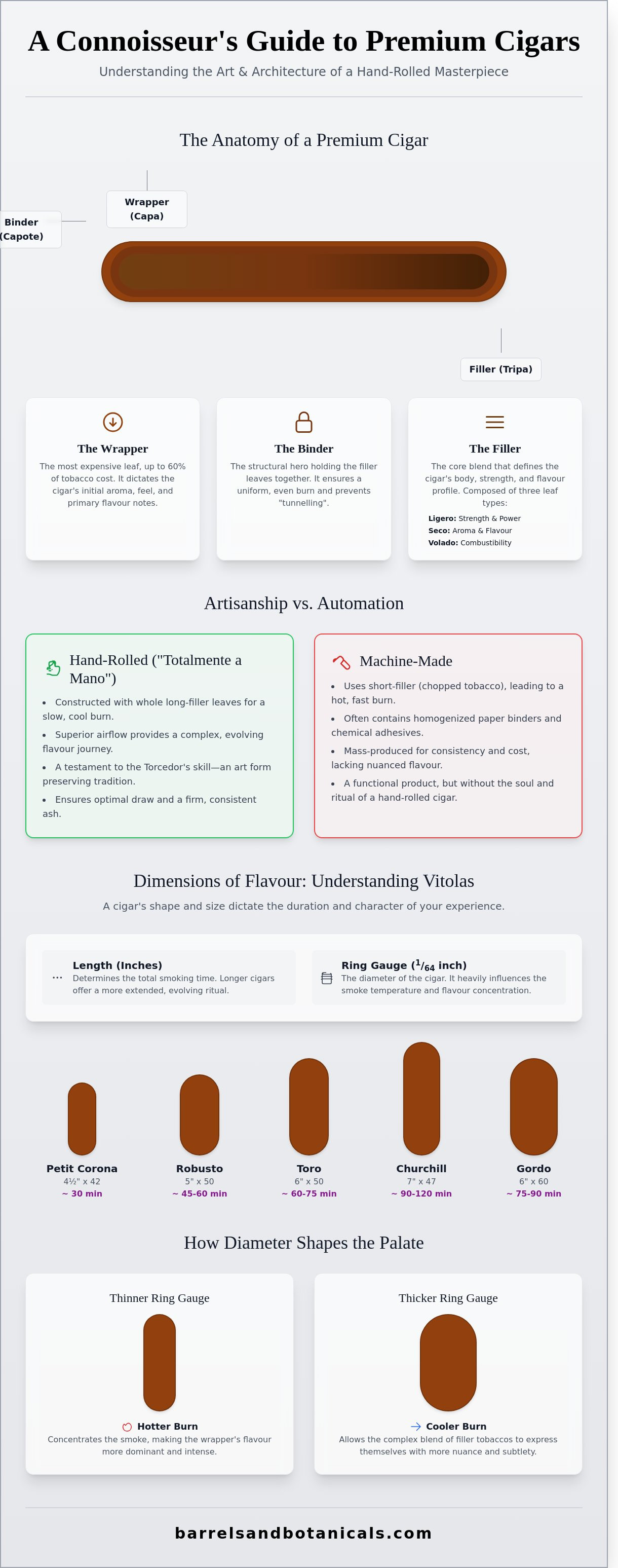
The soul of the smoke lives in the filler. Master blenders distinguish between tripa larga (long-filler) and tripa corta (short-filler) to dictate the burn quality. Long-filler cigars use whole tobacco leaves that run the entire length of the body, allowing for a slow, cool, and evolving burn. Short-filler options utilise chopped scraps. While these are more accessible, they often burn hotter and lack the nuanced transitions of their premium counterparts. In a high-end vitola, the construction ensures the draw is effortless and the ash remains firm, often holding for an inch or more before falling.
The Three Essential Layers: Wrapper, Binder, and Filler
- The Wrapper (Capa): This is the most expensive component, often accounting for up to 60 percent of the total tobacco cost. It dictates the initial aroma, the silky texture against the lips, and the visual elegance of the stick.
- The Binder (Capote): The structural hero. This leaf sits hidden beneath the wrapper, gripped tight to hold the filler in place. It ensures the internal leaves burn at a uniform rate, preventing the "tunnelling" that ruins a session.
- The Filler (Tripa): A curated blend of ligero for strength, seco for aroma, and volado for combustibility. This core defines the specific types of cigars and their unique flavour profiles.
Hand-Rolled vs Machine-Made: Why Artisanship Matters
The distinction of a "Totalmente a Mano" cigar is absolute. Machine-made varieties are mass-produced, often using homogenised binders and chemical adhesives. They're functional but soulless. In contrast, hand-rolling allows for superior airflow. A human touch identifies the exact tension needed to ensure the palate experiences a sophisticated, multi-stage journey.
The Torcedor, or master roller, acts as an artist preserving a dying craft. A skilled professional can produce between 60 and 150 cigars a day, depending on the complexity of the shape. This manual precision is why different types of cigars offer such vibrant, varied finishes. It’s a commitment to quality that machine-made sticks simply can't replicate. Every draw is a tribute to the roller's expertise and the leaf's natural essence.
Dimensions of Flavour: Navigating Cigar Shapes and Sizes (Vitolas)
Choosing between different types of cigars is an exercise in time management and sensory intent. A cigar's "vitola" refers to its specific physical dimensions. Length is measured in inches, while the ring gauge represents the diameter in 64ths of an inch. These measurements dictate how long your ritual lasts. A slender petit corona might offer a 30 minute escape. A substantial Churchill demands a dedicated two hour window for contemplation. The choice is never merely about size. It's about the duration of the experience you wish to curate.
The diameter directly influences the temperature of the smoke. Thinner cigars burn hotter because the air has less space to cool as it travels to the palate. This results in a concentrated profile where the oils of the wrapper leaf are the primary focus. Conversely, thicker gauges burn cooler. This allows the complex blend of filler tobaccos to express themselves with nuanced layers. Mastering cigar terminology helps you understand how these physical attributes shape the palate across various types of cigars. A clean, precise cut is vital for structural integrity. It ensures the draw remains effortless across any shape, protecting the delicate construction of the cap.
Parejos: The Classic Straight-Sided Vitolas
Parejos are the standard cylinders most enthusiasts recognise. The Robusto, typically five inches with a 50 ring gauge, provides a concentrated burst of flavour in under an hour. It's a modern favourite for its efficiency and punch. The Corona is the gold standard of proportions. It balances wrapper and filler perfectly, offering the most traditional expression of a blender's intent. For longer, more reflective sessions, the Churchill and Double Corona offer an elegant, slow burn. These long formats require patience. They reward the smoker with a steady, cooling evolution of taste that can last up to 120 minutes.
Figurados: The Art of the Irregular Shape
Figurados depart from the straight line, showcasing the roller's highest level of craftsmanship. The Torpedo and Belicoso feature tapered heads that focus the smoke onto a specific point on the tongue. This design allows you to control the intensity of the draw by the depth of your cut. The Perfecto is tapered at both ends. It creates a complex journey where the flavour profile shifts dramatically as the ring gauge expands and then contracts again. The Culebra is perhaps the most unique. It consists of three twisted cigars braided together. It remains a rare conversational piece of history often found in specialist UK humidors.
Whether you prefer the steady reliability of a Parejo or the artistic flair of a Figurado, the choice should reflect your current mood. Much like selecting a complex botanical blend for your evening glass, finding your preferred vitola is a deeply personal part of a mindful, sensory experience. Quality is found in the details.
The Palette of the Wrapper: From Claro to Oscuro
The wrapper is a cigar's first impression. It is the visual promise of what lies within. While specialists recognise over 50 distinct leaf shades, most enthusiasts categorise these types of cigars by seven primary colours. This spectrum is a deliberate craft. It results from precise fermentation periods and controlled sunlight exposure. A leaf fermented for 45 days looks and tastes vastly different from one aged for a full year. The heat of the fermentation pile and the directness of the sun determine the leaf's final character.
A common misconception suggests that a dark, oily leaf equates to a powerful, nicotine-heavy smoke. This is false. Strength is primarily dictated by the filler leaves tucked inside the binder. The wrapper acts as the aromatic finishing touch. It contributes roughly 60 percent of the flavour profile but rarely defines the physical intensity. A dark Maduro can be as gentle as a morning breeze; a pale Claro might hide a potent, spicy kick. The wrapper provides the melody, but the filler provides the volume.
Before the flame meets the tobacco, the ritual begins with the nose. Inhale the wrapper's scent. You might detect the sharp zest of cedar, the richness of dark cocoa, or the delicate essence of floral botanicals. This pre-light aroma is the cigar's raw personality. As a definitive rule for the palate, lighter wrappers typically offer a crisp, dry spice and a clean finish. Darker leaves lean towards a rich, syrupy sweetness that lingers on the tongue.
Light to Medium Shades: Candela, Claro, and Colorado
These leaves represent the brighter side of the humidor. Candela leaves are cured quickly to lock in chlorophyll, resulting in a vibrant green hue. They offer grassy, herbal notes and a mild finish. The Claro, often grown under cheesecloth to prevent sun damage, is golden and silky. It delivers a creamy, mellow experience. The Colorado leaf is matured longer. Its reddish-brown skin introduces nutty, toasted nuances and a balanced, medium body that suits an afternoon break.
Dark and Intense Shades: Maduro and Oscuro
Maduro means "ripe" in Spanish. These leaves undergo high-heat fermentation for several months to convert starches into natural sugars. This creates notes of dark chocolate and molasses. Oscuro is fermented even longer until it reaches a near-black shade. It is deep, peppery, and intensely sweet. The growing environment is key. Shade-grown leaves are thin and elegant. Sun-grown tobacco develops a thicker, oilier skin to survive the heat, adding a rugged, earthy complexity to these types of cigars.
Terroir and Origin: The Influence of Tobacco Growing Regions
The essence of a premium smoke begins deep within the earth. Terroir, a term borrowed from the world of fine wine, describes how the specific environment of a plantation shapes the chemical composition of the leaf. It is a delicate alchemy of nitrogen-rich soil, median temperatures of 23 degrees Celsius, and the precise humidity of the tropical air. These factors dictate the oils, sugars, and nicotine levels within different types of cigars, ensuring that a seed planted in the valleys of Nicaragua tastes nothing like its sibling grown in the shade of a Dominican canopy.
This geographic DNA is vital for the modern epicurean. When you understand the botanical origin of your tobacco, you can elevate the entire experience. This knowledge is the foundation for a successful whisky and cigar pairing; where the smoky peat of an Islay malt might find its match in a volcanic Nicaraguan leaf, or the delicate botanicals of a premium spirit might complement a floral Dominican blend.
The Legendary Profile of Cuban Cigars
The Vuelta Abajo region in the Pinar del Río province remains the gold standard of the industry. This small crescent of land possesses a unique microclimate and mineral balance that produces leaves of unparalleled elasticity and flavour. Cuban puros are celebrated for their "tang," a specific sensory profile characterised by notes of sourdough, sun-dried hay, and rich leather. The Habanos S.A. regulatory body enforces strict D.O.P. (Denominación de Origen Protegida) standards, ensuring that every stick maintains the heritage of this historic terroir. It's a profile of timeless elegance. Refined. Earthy. Unmistakable.
New World Innovations: Nicaragua, Dominican Republic, and Honduras
While Cuba holds the history, the New World regions represent the avant-garde of the tobacco world. These regions have moved beyond imitation to create bold, distinct identities that challenge the old guard. Manufacturers here often experiment with hybrid seeds and diverse fermentation lengths to push the boundaries of flavour.
- Nicaragua: The volcanic soils of Estelí and the Jalapa Valley produce tobaccos with a vibrant, spicy character. Expect bold notes of black pepper, dark chocolate, and roasted coffee.
- Dominican Republic: Centred in the Cibao Valley, this region is famous for its versatility. It produces everything from the mellow, creamy, and floral notes found in traditional blends to the complex, aged powerhouses of modern boutique brands.
- Honduras: Known for its heavy, robust leaves, often providing a woody and herbal backbone to a blend.
Modern master blenders now treat these regions like a spice rack. By combining a Nicaraguan filler for strength with a Dominican binder for aroma and a Connecticut shade wrapper for smoothness, they create multi-country blends of immense complexity. This artisanal approach allows for a curated smoking ritual that suits any palate or occasion. Explore the nuances of your next ritual by discovering more about refined flavour profiles and pairings.
Curating Your Experience: Choosing the Right Cigar for Your Ritual
The ritual of the cigar is an exercise in mindfulness. It's a deliberate pause. Selecting from the many types of cigars available requires more than just picking a label; it demands an understanding of your own palate and the environment you inhabit. Whether you're standing on a crisp terrace in London or reclining in a quiet study, the cigar should be the protagonist of your sensory journey. The right choice elevates the moment from a simple smoke to a curated experience.
Quality is revealed in the final moments. A premium cigar leaves a clean, lingering finish on the palate, free from acrid bitterness. The ash should be firm, holding its shape with a salt and pepper or snowy white complexion. This structural integrity is a testament to the roller's skill and the quality of the long-filler tobacco. Before you strike a match, remember that preservation is paramount. Learning how to store cigars correctly ensures the oils and essences remain vibrant; it protects the delicate profile the master blender intended for your enjoyment.
Strength vs Body: A Critical Distinction
Many novices conflate strength with body, yet they're distinct sensory markers. Strength refers to the physiological impact of the nicotine. It's the punch that can leave a beginner feeling lightheaded if they choose a heavy Ligero leaf too early. Body, conversely, is the weight of the smoke. It's the richness, the texture, and the way the flavour coats your mouth. Think of it as the difference between a delicate herbal tea and a thick, velvety hot chocolate.
For those starting their journey, the ideal entry point is a medium-bodied, mild-strength cigar. This combination offers a wealth of nuanced flavour without the overwhelming nicotine hit. It allows you to appreciate the craft and the botanical notes without physical strain. Clarity over intensity.
The Final Selection: Occasion and Timing
The "Evening Ritual" demands something more robust. As the sun sets, a dark Maduro or a spicy, full-bodied Nicaraguan provides the necessary depth to stand up to a rare Single Malt or a complex, alcohol-free dark spirit. The heavier oils in these types of cigars provide a slow, contemplative burn that matches the pace of the evening. When you're ready to curate your own collection, you can buy cigars online UK to begin building a humidor that reflects your evolving taste and commitment to quality.
Mastering the Art of the Slow Burn
Our family-run team at Barrels & Botanicals Ltd brings years of expertise to our curated humidor, specialising in rare, small-batch Scottish products for the discerning UK enthusiast. We manage every order with the meticulous care of a master blender, ensuring that each cigar reaches your door in peak condition. We provide national delivery across the United Kingdom, bringing artisanal excellence to your home. Quality isn't a sacrifice; it's a curated choice for those who value the finish. Explore our curated collection of premium cigars and find the perfect companion for your evening. Savour the craft. Honour the moment.
Frequently Asked Questions
Is a darker cigar always stronger than a light-coloured one?
No, the shade of a wrapper doesn't dictate its nicotine potency. While a dark Maduro leaf often suggests rich, chocolatey sweetness from extended fermentation, the actual strength comes from the filler blend inside. A light Connecticut Shade cigar can occasionally pack more of a punch than a dark leaf if the internal blend uses high-priming Ligero tobacco. It's a common misconception that limits many enthusiasts' palates.
What is the difference between a Robusto and a Churchill cigar?
The primary difference lies in the physical dimensions and the duration of the smoking ritual. A Robusto typically measures 127mm (5 inches) by a 50 ring gauge, offering a concentrated burst of flavour for 45 minutes. In contrast, a Churchill is a stately 178mm (7 inches) with a 47 to 50 ring gauge. This larger format requires a commitment of 90 minutes or more, allowing the tobacco's complexity to evolve slowly.
Can I smoke a premium cigar without owning a humidor?
You can certainly enjoy a premium cigar without a humidor if you plan to smoke it within 48 to 72 hours of purchase. To preserve the essential oils and moisture, keep the cigar in its original cellophane or a sealed zip-lock bag in a cool, dark place. For longer storage, even a basic "tupperdor" with a 69% Boveda pack ensures your investment doesn't dry out and lose its nuanced character.
What does "New World" mean in the context of cigar types?
"New World" refers to cigars produced outside of Cuba, primarily in regions like Nicaragua, the Dominican Republic, and Honduras. Since the 1960s, these regions have pioneered innovative blending techniques and diverse types of cigars that rival or exceed traditional Habanos. These sticks often feature experimental seeds and bold, vibrant profiles that cater to a modern, adventurous palate seeking something beyond the classic Cuban profile.
How long does it take to smoke different types of cigars?
Smoking times vary significantly based on the vitola you choose for your afternoon ritual. A petite Corona might last 30 minutes, whereas a chunky Toro or a slender Panatela often requires 60 to 75 minutes of your time. Larger formats like the Double Corona can easily span 120 minutes. It's a slow, deliberate experience designed for patience. Never rush the leaf, as overheating ruins the delicate botanical notes.
What is a vitola and why does it matter for the flavour?
A vitola is the specific shape and size of a cigar, encompassing its length and ring gauge. This matters because the ratio of the wrapper leaf to the internal filler tobacco changes with the diameter. Thinner types of cigars, such as a Lancero, highlight the nuanced flavours of the wrapper. Thicker cigars provide a cooler smoke and a more complex interplay of multiple filler leaves, altering the sensory finish.
Why are some cigars more expensive than others of the same size?
Price is often a reflection of the rarity and age of the tobacco used in the blend. A cigar featuring leaves aged for 10 years carries a higher price tag than one using 2-year-old tobacco due to the storage costs and inventory loss. Skilled torcedores, or master rollers, also command higher wages for their artisanal craft. Some limited releases might retail for £40 or more per stick based on these premium factors.
What is the best type of cigar for a beginner to try first?
A mild-bodied Robusto with a Connecticut Shade wrapper is the ideal introduction for a curious beginner. This combination offers a creamy, approachable profile with notes of cedar and nuts without overwhelming the senses. Brands like Macanudo or Davidoff provide consistent quality for those starting their journey. It's about finding a gentle entry point into the ritual, allowing your palate to adjust to the smoke's sophisticated texture.