
The most sophisticated note in your next premium spirit isn't smoke or oak; it's the chemical ghost of a tropical forest. While many associate the mango with simple, sugary sweets, master blenders are increasingly using its complex aromatic profile to redefine the palate of high-end whiskies and gins. You've likely grown weary of generic, one-dimensional fruit flavors. It's a common frustration for the discerning drinker. We believe that the absence of alcohol shouldn't mean a sacrifice in depth. Bold botanicals. Zero proof.
You deserve a drink that offers a genuine gain in flavor without the cloying weight of artificial additives. In this guide, you'll discover how the vibrant essence of mango elevates artisanal spirits through the science of tropical esters. We'll explore why 2026 is becoming the year of the stone fruit revival in the UK craft scene, according to recent trend reports. You'll learn to pair these notes with precision and master a sophisticated cocktail ritual. From the initial nose to the lingering finish, we're moving beyond the glass to curate a moment of pure, sensory indulgence.
Key Takeaways
- Explore the sophisticated botanical profile of the fruit, identifying hidden notes of pine, citrus, and floral undertones that define the modern epicurean’s palate.
- Understand how meticulous maturation in ex-bourbon and rum casks coaxes tropical esters and nuanced depth from premium single malt whiskies.
- Learn the artisanal secrets of distilling small-batch gins where the vibrant essence of mango harmonises perfectly with bold, traditional botanicals.
- Elevate your mixology ritual by mastering layered, complex serves that focus on high-quality ice, elegant glassware, and artisanal garnishes.
- Discover how to curate a refined tropical collection by selecting spirits that embody the expertise and passion of independent, family-run producers.
The Essence of Mango: A Botanical Profile for the Modern Epicurean
Mango is no longer just a sun-drenched snack or a tropical garnish. In the sophisticated world of 2026 craft spirits, it has transitioned into a structural botanical of immense depth. Distillers now treat this fruit with the same reverence once reserved for rare barks or exotic seeds. It provides a foundational architecture for complex beverages, offering a bridge between sharp citrus and deep, resinous herbs. This evolution reflects a broader shift in the UK spirits market, where the focus has moved from simple sweetness to the intricate chemistry of the plant itself.
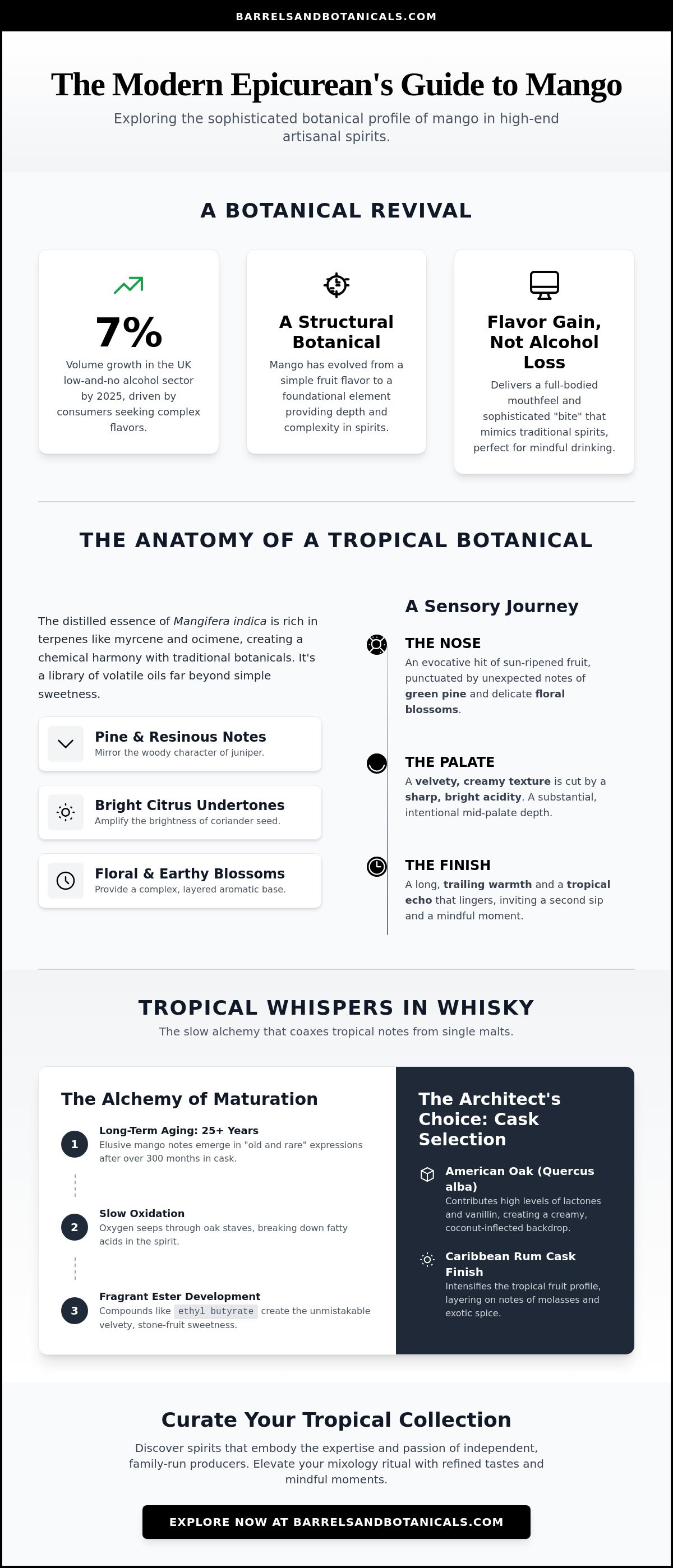
The rise of the mindful drinking movement has accelerated this botanical exploration. As of 2025, the UK low-and-no sector saw a 7 per cent volume growth, driven by consumers seeking the "gain" of flavour rather than the "loss" of alcohol. Mango fits this niche perfectly. It delivers a full-bodied mouthfeel and a sophisticated "bite" that mimics the weight of traditional spirits. It's a curated choice for those who value clarity and craft. Bold botanicals. Vibrant essence. Zero compromise.
The Anatomy of a Tropical Botanical
Mangifera indica serves as a remarkably complex source of aromatic compounds, offering distillers a library of volatile oils that extend far beyond simple sweetness. While the fresh pulp provides the sugars we recognise in culinary applications, the distilled essence captures the fruit's soul. This essence is rich in terpenes like myrcene and ocimene. These compounds create a fascinating synergy with traditional gin botanicals. The resinous, pine-like qualities of The Mango perfectly mirror the woody notes of juniper, while its citrus undertones amplify the brightness of coriander seed. It's a chemical harmony that creates a more cohesive, layered spirit.
A Sensory Journey: From Nose to Finish
The experience begins with the nose. It's an immediate, evocative hit of sun-ripened fruit punctuated by unexpected notes of green pine and delicate floral blossoms. This isn't a singular scent; it's a rhythmic list of aromas that shift as the glass breathes. The complexity is staggering. One moment it's bright and zesty, the next it's deep and earthbound.
On the palate, the mango reveals its true artisanal value. The texture is velvety, almost creamy, coating the tongue before a sharp, bright acidity cuts through the weight. It's a balanced dance of opposites. You'll find a mid-palate depth that feels substantial and intentional. The finish is where the botanical truly lingers. It leaves a trailing warmth, a tropical echo that stays with you long after the glass is empty. This lingering heat invites a second sip, encouraging the drinker to slow down and savour the ritual of the craft cocktail. Refined tastes. Mindful moments. A masterpiece in a glass.
Tropical Whispers: Mango Notes in Single Malt Scotch Whisky
In the cool, damp silence of a Scottish dunnage warehouse, a slow alchemy transforms clear spirit into liquid gold. This isn't a hurried process. It's a decades-long conversation between the distillate and the wood. While young whiskies often lean toward crisp green apples or citrus, it's the "old and rare" expressions, typically those aged for 25 years or more, that reveal the elusive mango profile. This tropical transformation is the result of long-term oxidation. As oxygen seeps through the oak staves over 300 months, it breaks down fatty acids into fragrant esters. Specifically, the development of ethyl butyrate and ethyl hexanoate creates that unmistakable, velvety stone-fruit sweetness that connoisseurs crave.
The science is as captivating as the flavor. During maturation, the spirit undergoes a series of complex chemical rearrangements. The harshness of the new-make spirit fades, replaced by a nuanced, sun-drenched complexity. It's a sensory gain born of patience. These vintage malts don't just taste like fruit; they embody the essence of a tropical grove, concentrated by time and the steady rhythm of the Highlands seasons. Every sip is a curated choice for quality, reflecting a meticulous journey from copper pot still to glass.
The Role of Cask Selection
The choice of wood acts as the primary architect for these vibrant notes. American Oak, or Quercus alba, is the traditional hero here. It contributes high levels of lactones and vanillin, which provide the creamy, coconut-inflected backdrop necessary for tropical fruit flavors to shine. When a distiller chooses to finish a malt in a Caribbean Rum cask, the results are even more celebratory. The residual sugars and spicy botanicals from the rum amplify the mango notes, turning a standard dram into a vibrant, exotic experience. For those looking to explore these complex profiles, it's essential to buy rare scotch online UK through specialist curators who understand the provenance of the cask.
Famous Distilleries and the Mango Palate
Certain distilleries in the Speyside and Highland regions are legendary for this specific profile. When scanning a label, look for mentions of "ex-bourbon maturation" or "tropical fruit finish." These whiskies often bypass the heavy peat smoke of the islands, allowing the delicate esters of the Mango plant and fruit to take center stage. The ritual of tasting such a spirit should be deliberate. Use a tulip-shaped Glencairn glass to concentrate the aromas. Observe the legs on the glass, a sign of the oils that carry these heavy fruit notes.
- The Nose: Look for overripe fruit, honey, and a hint of beeswax.
- The Palate: A thick, syrupy mouthfeel with bursts of dried fruit.
- The Finish: Long, warming, and reminiscent of a tropical sunset.
Finding these bottles requires a keen eye for detail and an appreciation for the artisanal nature of craft distilling. If you're ready to elevate your home bar with intentionality, consider exploring the curated collections at Barrels and Botanicals to discover your next favorite ritual.
Beyond the Fruit: Crafting Mango-Infused Gins and Premium Rums
The era of saccharine, neon-coloured spirits is fading. In its place, a new movement of artisanal distillation has emerged. Master blenders now treat the mango not as a sugary additive, but as a complex botanical component. This shift requires a meticulous approach to sourcing. High-quality fruit, often harvested at peak ripeness, provides the essential oils necessary for a clean finish. Distillers in 2026 are prioritising botanical integrity. They ensure every drop reflects the true essence of the fruit without the cloying weight of artificial syrups. It's a pursuit of purity. Refined tastes. Intentional craft.
The Botanical Renaissance in Gin
Small-batch producers have reimagined the juniper-led spirit. By using sundried mango skins or dehydrated fruit slices in the vapor infusion basket, they capture the bright, resinous top notes of the fruit. This technique avoids the heavy sugars that mask the piney bite of juniper. Instead, the mango provides a lush, velvety mouthfeel. It pairs beautifully with the earthy profiles found in the scottish gin scene, where coastal botanicals meet tropical warmth. Bold botanicals. Zero compromise. The result is a spirit that feels both traditional and daringly modern.
- The Glassware: Use a chilled copa glass to trap the aromatic esters.
- The Mixer: Pair with a crisp, low-sugar Mediterranean tonic to let the fruit breathe.
- The Garnish: A single sprig of scorched rosemary or a thin slice of fresh Alphonso mango.
Premium Rum: A Tropical Evolution
Rum is shedding its reputation for being overly syrupy. The modern connoisseur seeks a refined experience where the natural molasses of aged rum interacts with the vibrant acidity of the mango. High-end, botanical-infused rums often rest in charred oak barrels. This allows the stone fruit notes to weave through layers of vanilla and toasted spice. It's a sophisticated dialogue between wood and fruit. In the UK, the demand for these "botanical rums" grew by 18% in 2025 as drinkers moved toward mindful, quality-focused options. This is drinking with intention.
The Sensory Profile:
- Nose: Sun-drenched fruit, toasted oak, and a hint of sea salt.
- Palate: Ripe mango, cracked black pepper, and dark honey.
- Finish: Long, dry, and elegantly tropical.
Serve this elevated spirit neat or over a single large ice sphere. This slow-melting ritual allows the nuanced layers to reveal themselves over time. It transforms a simple drink into a curated experience of flavor and clarity. No haste. Just the essence of the craft.
The Mixology Ritual: Elevating Mango in Sophisticated Cocktails
The era of the neon-coloured, frozen daiquiri has passed. In its place, we find a new standard for the tropical pour. We're moving toward complexity. Layered profiles. Sophistication. The mango is no longer just a sweetener; it's a structural botanical that demands respect. Mastering this fruit requires a shift in mindset from simple blending to intentional construction. It's about the weight on the tongue and the clarity of the finish.
Ritual defines the experience. A premium home pour should mirror the precision of a high-end London atelier. Start with the foundation. Use 5cm clear ice blocks to ensure a slow melt that preserves the spirit’s integrity. Choose heavy-bottomed glassware that feels substantial in the hand. The environment should be sensory-heavy. Low lighting. The scent of fresh herbs. This isn't just a drink; it's a curated moment of indulgence.
A Modern Twist on the Classics
Classic recipes provide the necessary skeleton for innovation. The Mango Negroni is a standout example of this evolution. By introducing the fruit's velvet sweetness, you create a bridge between the aggressive bitterness of Italian aperitifs and the botanical dryness of the spirit. It's a balanced, crimson masterpiece. For those who prefer the warmth of the hearth, the Tropical Old Fashioned offers a celebratory ritual. Use a whisky with stone-fruit undertones to complement the mango notes. Stir with a long-handled bar spoon for exactly thirty seconds. This patience yields a drink that is rich, nuanced, and timeless. Discover more ways to refine your technique in our guide to classic cocktails.
The Art of the Garnish
The visual presentation is the first sip. It sets the stage for the palate. Move beyond the basic wedge and embrace artisanal techniques that enhance the drink's "nose."
- Dehydrated Slices: A thin, oven-dried slice offers a concentrated aromatic punch. It releases oils slowly as it interacts with the condensation.
- Botanical Pairings: Fresh basil or mint provides a sharp, peppery contrast to the fruit’s density. It highlights the botanical depth of the craft spirit.
- Glassware Selection: Use a wide-rimmed coupe or a tapered Glencairn. This geometry directs the tropical bouquet straight to the senses.
Every element serves a purpose. The garnish isn't decoration; it's an ingredient. When you pair a dehydrated mango wheel with a sprig of scorched rosemary, you're creating a fragrance profile that lingers long after the glass is empty. This is the essence of mindful drinking. Quality over quantity. Essence over excess.
Elevate your home bar with our curated collection of botanical spirits. Shop the Barrels and Botanicals range today.
Curating Your Tropical Collection with Barrels & Botanicals
Finding the perfect spirit requires more than a casual glance at a label. It demands an appreciation for the mango as a complex botanical, one that offers both succulent sweetness and a structured, resinous finish. In our online store, we've simplified this discovery. You can filter our collection by specific flavour profiles, focusing on "Tropical" or "Stone Fruit" to reveal spirits where the fruit's essence is captured through meticulous distillation rather than synthetic additives. We look for the sun-drenched brightness of the Alphonso and the tart, green edge of unripened fruit to ensure a balanced palate.
We operate as a family-run boutique, bringing decades of collective expertise to every bottle we stock. This personal touch ensures that our artisanal selection reflects a genuine passion for craft. We don't just sell bottles. We curate experiences. Our commitment to mindful drinking focuses on the gain of flavour and the depth of the sensory journey. It's about choosing quality over volume, ensuring each sip offers a vibrant, layered narrative. Whether you are seeking a bold botanical gin or a rare malt, our selection is a testament to intentional living.
- Hand-selected small-batch gins from independent UK distilleries.
- Rare whiskies with unexpected tropical cask finishes.
- Expertly distilled non-alcoholic spirits that prioritises botanical complexity.
- Limited release expressions sourced from master blenders.
Expert Guidance for the Adventurous Palate
Our selection process avoids mass-produced liquids that lack soul. Instead, we focus on the ritual of the pour and the true essence of the ingredients. For those seeking something truly unique, our private bottle sale service assists collectors in sourcing or selling rare malts with distinct tropical notes. This bespoke service connects you with the most elusive expressions in the spirits world, often held in private collections. We invite you to join our community of sophisticated drinkers, where we share insights into the latest botanical trends and exclusive releases. Clarity and wellness. Refined taste. No sacrifices.
The Barrels & Botanicals Promise
Choosing a spirit from our collection means embracing the gain of a refined palate. We believe that a well-crafted drink should be a celebration of nature's finest offerings. Every bottle in our range is hand-selected to ensure it meets our rigorous standards for complexity and character. Elevate your home ritual with spirits that tell a story of sun-ripened mango, toasted oak, and delicate spice. The glassware matters. The garnish matters. The moment matters. Visit our collection today to find your next favourite pour and transform your evening ritual into an artisanal event.
Explore our full collection of premium spirits and rare botanicals at Barrels & Botanicals.
Savour the Future of Tropical Craft Spirits
The landscape of craft spirits in 2026 is defined by a shift toward vibrant, botanical complexity. The succulent profile of mango transforms traditional spirits, from the nuanced fruit notes in rare single malts to the sun-drenched layers of artisanal gins. This isn't just about fruit. It's a sophisticated ritual that values the essence of every ingredient. Since 2019, our family-run team has sourced the finest small-batch Scottish gins and rare malts to ensure your palate is always met with quality. Whether you're refining a signature cocktail or seeking a standout bottle for your shelf, the journey into tropical botanicals offers a rich, sensory reward. We handle the logistics with sophisticated national UK delivery, bringing the world's most evocative flavours directly to your door.
It's time to elevate your next pour with a touch of the extraordinary.
Frequently Asked Questions
How do mango notes naturally occur in whisky without adding fruit?
Mango notes in whisky arise primarily from esters created during fermentation. Specifically, ethyl butyrate mimics the scent of ripe tropical fruit. Long fermentation times, often exceeding 72 hours, allow these compounds to develop. Distilleries like Glenmorangie or those using specific Caribbean cask finishes enhance these vibrant, stone-fruit profiles naturally. It's a chemistry of oak and time. Pure essence. No additives required.
Is mango-infused gin sweet or does it maintain a dry profile?
A premium mango gin usually maintains a dry profile if the fruit is distilled as a botanical. This process extracts essential oils without the sugars. While mass-market liqueur styles often contain over 100g of sugar per litre, artisanal craft gins focus on the aromatic essence. You get the lush aroma on the nose while the palate remains crisp and juniper-forward. It's a refined choice for a sophisticated G&T.
What is the best way to garnish a mango-based premium cocktail?
Elevate your ritual with a slice of dehydrated mango or a fresh cheek scored into a hedgehog pattern. Adding a sprig of Thai basil or a pinch of Tajín seasoning provides a savoury counterpoint to the fruit's richness. In 2024, London's top mixologists increasingly use flash-frozen fruit spheres to chill the drink without dilution. This ensures the first sip is as potent as the last. Sensory excellence in every glass.
Can I pair a mango-noted spirit with a cigar?
You can certainly pair these spirits with a lighter, creamy cigar like a Hoyo de Monterrey Epicure No. 2. The stone-fruit sweetness of the mango notes cuts through the cedar and hay of the tobacco. Avoid heavy, peaty cigars that might overwhelm the delicate tropical botanicals. A medium-bodied smoke provides the ideal balance for a sophisticated evening. It's an intentional choice for the modern epicurean.
What are tropical esters and why do they matter in spirits?
Tropical esters are organic compounds formed when alcohol reacts with acids during fermentation. They are the flavour molecules responsible for the pineapple, banana, and mango aromas in high-ester rums or whiskies. In Jamaican dunder pits, ester levels can exceed 1,500 grams per hectolitre of pure alcohol. These molecules transform a simple spirit into a complex, layered masterpiece. They define the soul of the distillate.
How should I store a bottle of mango-infused artisanal rum?
Store your bottle upright in a cool, dark place away from direct sunlight. UV rays can degrade the delicate botanical oils within 3 to 6 months if left exposed. Once opened, keep the seal tight to prevent oxidation. While spirits don't expire like wine, consuming an artisanal infusion within 12 months ensures the vibrant tropical profile remains at its peak. Quality deserves protection. Your collection is an investment in flavour.
Is mango a common botanical in traditional Scottish gin making?
Mango isn't a traditional botanical in the 300-year history of Scottish gin. Traditional recipes focus on juniper, coriander, and angelica root. However, since the craft gin boom of 2010, modern Scottish distillers have embraced global flavours. Approximately 15% of new UK gin releases in 2025 featured tropical or exotic fruit profiles. This shift reflects a move toward more adventurous, mindful drinking experiences. It's a celebration of botanical diversity.
What glassware best enhances the tropical nose of a mango-forward spirit?
A tulip-shaped glass or a traditional Glencairn is the superior choice for concentrating tropical aromas. The tapered rim captures the volatile esters, directing the lush scent toward your nose. For a long drink, a high-quality crystal highball maintains carbonation while showcasing the spirit's clarity. The ritual of the pour is just as important as the liquid itself. Choose glass that honours the craft and enhances the sensory journey.