
What if the most expensive element of your evening isn't the tobacco itself, but the lost potential of a poorly lit Habano? For the discerning smoker in the UK, the allure of authentic Cuban Cigars remains the pinnacle of sensory indulgence. You understand that a cigar is more than a smoke; it's a slow, deliberate conversation between leaf and palate. Yet, with counterfeit trade estimated to impact nearly 10% of the global luxury market according to industry reports, the fear of a fraudulent stick often clouds the experience.
We're here to transform that uncertainty into absolute mastery. You'll learn to identify the distinct English Market Selection (EMS) hologram that guarantees quality in British humidors; this ensures every pound spent is an investment in genuine craftsmanship. From the structural elegance of a Pirámide to the robust spice of a Partagás, we'll decode the complexities of vitolas and strengths. This guide provides the definitive blueprint for the 2026 connoisseur. We'll explore the sophisticated ritual of the cut, the patience of the light, and the art of pairing these vibrant earth notes with artisanal, alcohol-free botanicals to elevate your mindful lifestyle.
Key Takeaways
- Uncover the secrets of the Vuelta Abajo terroir and learn to identify authentic Habanos via the prestigious English Market Selection (EMS) gold stamp.
- Navigate the sensory profiles of iconic brands like Cohiba and Montecristo, distinguishing between the delicate 'claro' and the rich, complex 'maduro.'
- Master the intentional ritual of the precision cut and light to preserve the nuanced essence of your Cuban Cigars.
- Optimise your collection’s longevity by maintaining the 65-70% humidity 'sweet spot' and respecting the essential 'sick period' for young tobacco.
- Transform your experience from a simple habit into a curated sensory journey through sophisticated pairing and mindful appreciation.
The Allure of the Habanos: Understanding the Cuban Terroir
To hold a Habano is to cradle a piece of geological history. Not every stick from the island earns this prestigious title. It is a protected designation of origin, reserved for the absolute elite of the crop. Only those crafted from specific leaves grown in registered regions qualify for the seal. The heart of this excellence lies in the Vuelta Abajo. This region in Pinar del Río possesses a microclimate found nowhere else on Earth. The soil here is uniquely rich in nitrates, providing the leaf with its signature elasticity and deep, complex profile. By exploring the history of Cuban cigars, one understands that this isn't just agriculture. It is alchemy.
The 2026 luxury market in the United Kingdom reflects a profound shift toward heritage and provenance. Discerning collectors in London and beyond are looking past the smoke; they seek the story. The Torcedor, or master roller, remains the guardian of this legacy. Their hands translate raw leaf into a sensory ritual. It is a craft that defies automation. Every movement is deliberate. Every vein in the leaf is considered. This artisanal dedication ensures that Cuban Cigars remain the undisputed benchmark for global luxury.
The Five Pillars of a Cuban Masterpiece
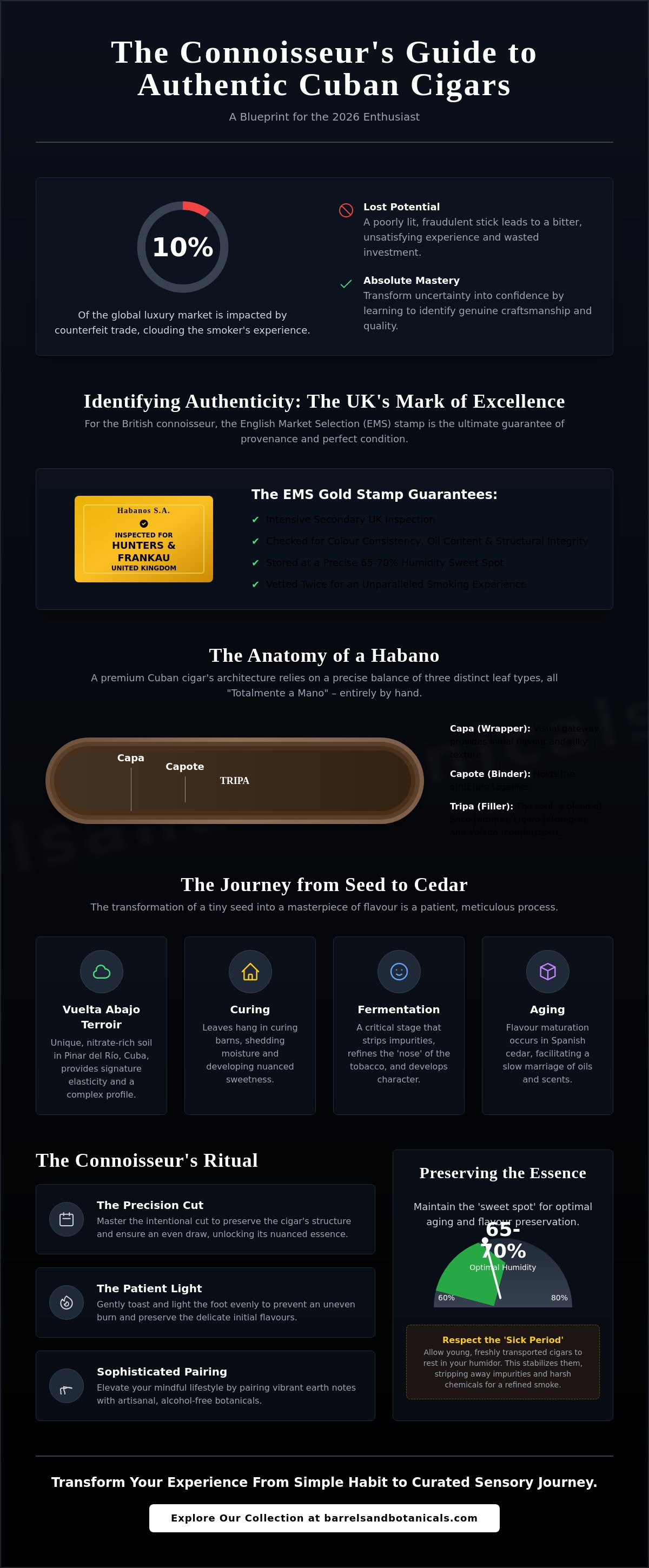
A masterpiece is defined by its architecture. The construction of a premium cigar relies on a precise balance of three distinct elements. The Capa, or wrapper, serves as the visual gateway. It provides the initial flavour and the silky, oily texture that defines the first draw. Beneath this lies the Capote, the binder that holds the structure together. The soul of the smoke is the Tripa, or filler. This is a curated blend of seco, ligero, and volado leaves. Each type contributes strength, aroma, or combustion. The hallmark of quality is the "Totalmente a Mano" distinction. This means "entirely by hand." In an era of mass production, this human touch remains the gold standard for the British connoisseur.
From Seed to Cedar: The Journey of a Cigar
The transformation begins in the curing barns. Leaves hang in the heat, shedding moisture while developing a nuanced sweetness. Fermentation follows as the critical stage. This process strips away impurities and harsh chemicals, refining the "nose" of the tobacco. It is where the character is born. Finally, the ageing process takes place. Spanish cedar-lined environments are non-negotiable for flavour maturation. The cedar interacts with the natural tobacco oils, facilitating a slow marriage of scents. It is a patient wait for perfection. This journey from a tiny seed to a cedar-lined humidor is what makes Cuban Cigars a ritual of mindfulness and quality.
Identifying Authenticity: The EMS Stamp and Habanos S.A. Standards
To hold a genuine Cuban cigar is to touch a piece of history. It's a tactile connection to the mineral-rich soils of the Vuelta Abajo. Authenticity remains the bedrock of the sensory ritual. Without it, the nuanced complexity of the tobacco is lost. In Cuba, the state-owned entity Habanos S.A. governs every export with meticulous care. They maintain the Habanos S.A. standards that define global quality; ensuring that every box leaving Havana meets rigorous criteria for construction and leaf quality.
For the British enthusiast, this journey involves an additional layer of scrutiny. The UK market is unique. It demands a level of excellence that transcends standard global distribution. This is where the English Market Selection (EMS) stamp becomes vital. It isn't just a sticker; it's a promise of provenance and perfect condition.
The EMS Stamp: A Mark of British Excellence
The EMS gold stamp is a hallmark of quality introduced by Hunters & Frankau over 25 years ago. It signifies that the box has passed a secondary, intensive UK inspection. Every single box is opened by experts. Every vitola is checked for colour consistency, oil content, and structural integrity. This stamp guarantees the cigars were stored at a precise 65 to 70 percent humidity before reaching your collection. It's the difference between a dry, bitter smoke and a nuanced, vibrant masterpiece. When you see that gold foil, you're looking at a product that has been vetted twice for your pleasure.
Spotting the Counterfeit: A Connoisseur’s Checklist
Authenticity lives in the fine details of the craft. Counterfeiters often miss the subtle markers that master rollers achieve through decades of tradition. Use this checklist to verify your Cuban Cigars before the first light.
- The Triple Cap: Look at the head of the cigar. A genuine Cuban features three distinct, overlapping layers of leaf applied with surgical precision.
- The Band: High-end bands use expensive embossing and vibrant, metallic golds. If the ink rubs off or the lines are blurry, it's a red flag.
- The Foot: Examine the bunching of the leaves. It should be even and dense. No large gaps or hard stems should be visible.
- Factory Codes: Check the bottom of the box for the factory code and date stamp. These are usually applied in a specific blue or black ink that doesn't bleed into the wood.
Avoid the "beach cigars" offered by street vendors or unverified online outlets. These often contain floor sweepings or non-tobacco scrap. Investing £40 or £400 in a premium smoke requires the certainty that only a reputable UK merchant can provide. A counterfeit isn't just a financial loss; it's a disruption of the mindful experience you've curated.
As you refine your palate for Cuban Cigars, remember that the environment matters as much as the tobacco. Just as a fine vitola requires the right humidity, a premium lifestyle deserves a mindful setting. Discover how to elevate your evening with the sophisticated blends at Barrels and Botanicals, where quality and craft are the only standards we recognize.
A Sensory Journey: Exploring the Profiles of Iconic Cuban Brands
Visual cues provide the first hint of a cigar’s soul. The wrapper leaf acts as a silent conductor for the symphony of flavours to follow. A 'claro' wrapper, light and tea-coloured, suggests a gentle, hay-like delicacy. Conversely, the dark, oil-rich 'maduro' leaf points toward a fermented intensity. Strength in Cuban Cigars is a deliberate choice. It is a curated experience of earth, spice, and botanical essence.
The Powerhouse Brands and Their Palates
Four pillars define the Habanos landscape, each offering a distinct aromatic signature. These brands represent the pinnacle of soil chemistry and artisanal rolling.
- Cohiba: Originally created for internal government use in 1966. It is the 'Selection of Selections'. Expect vibrant notes of fresh grass, vanilla bean, and white pepper. It’s sophisticated. It’s precise.
- Montecristo: The quintessential Cuban profile. Earthy. Bitter cocoa. Roasted coffee beans. It provides a medium-to-full-bodied narrative that remains the global benchmark for quality.
- Romeo y Julieta: An aromatic masterpiece. Think of dried rose petals and aged cedar. It offers a medium-bodied elegance perfect for those who value fragrance over raw power.
- Partagás: Deeply robust. This brand is famous for its heavy, earthy character and intense spice. It’s a bold choice for the seasoned palate.
Specialists often look beyond these giants to find nuanced treasures. Hoyo de Monterrey appeals to those seeking a creamy, light-bodied smoke. Trinidad, once a private gift for foreign dignitaries, offers a unique nutty profile with a buttery finish. While British collectors enjoy a direct relationship with Habanos S.A. distributors, global travel requires caution. Understanding the U.S. Treasury regulations on Cuban cigars is essential for those moving between London and American ports, as these rules strictly govern the legal movement of Cuban goods.
Choosing the Right Vitola for the Moment
Time dictates the choice of shape. The vitola, or size, isn't merely an aesthetic preference; it controls the combustion temperature and flavour concentration. A thicker ring gauge allows for a cooler, more voluminous draw.
Consider the Robusto. At 124mm with a 50 ring gauge, it’s a 45-minute journey of concentrated power. It’s punchy and immediate. For a more contemplative afternoon, the Churchill stands at 178mm. It’s a marathon of evolution. The flavours shift and deepen as the smoke progresses. When time is a luxury you can't afford, the Petit Corona is your companion. With a 129mm length and a 42 ring gauge, it provides a 30-minute respite of sophisticated intensity. Every vitola serves a specific ritual. Select the one that matches your pulse.
The Connoisseur’s Ritual: The Art of Cutting, Lighting, and Pairing
Haste is the ultimate enemy of the Habano. To rush the preparation of Cuban Cigars is to disrespect the years of cultivation and the hundred sets of hands that brought the leaf to your humidor. This isn't a mere habit; it’s a meditative transition from the noise of the day into a space of refined focus. Every movement should be deliberate. Every tool should be sharp. The ritual is where the gain begins.
Precision begins at the cap. A clean cut ensures an effortless draw and prevents the delicate wrapper from unravelling. You have three primary paths to choose from. The straight cut, performed with a double-blade guillotine, offers the most expansive surface area for a full, cool draw. The V-cut, or wedge, creates a deep channel that concentrates the smoke on the palate, intensifying the flavour profile. Finally, the punch cutter preserves the structural integrity of the cap, providing a tighter, more resistant draw for those who prefer a slower, more concentrated experience.
The Art of the Ignition
True ignition is a slow dance between heat and leaf. You must never let a petrol lighter touch your cigar; the naphtha fumes will permanently taint the delicate oils of the tobacco. Only odourless butane or traditional cedar spills are acceptable Heat sources. The "Toast and Blow" technique is the gold standard for an even burn. Hold the foot of the cigar at a 45-degree angle just above the flame, rotating it slowly until the entire circumference is blackened and glowing.
Gently blow on the foot to ensure the cherry is uniform before taking your first puff. Don't inhale. The complexity of Cuban Cigars is designed for the palate and the nose, not the lungs. Savouring the draw means letting the smoke swirl around the mouth, identifying the nuances of earth, leather, or toasted spice before releasing it into the air. It’s a sensory conversation, not a race.
Curated Pairings: Whisky, Rum, and Botanicals
Pairing is the final movement in the connoisseur’s symphony. The goal is balance, ensuring neither the spirit nor the smoke overwhelms the other. A full-bodied Bolivar requires a partner with equal weight, while a lighter Hoyo de Monterrey thrives alongside more delicate notes.
- The Whisky Connection: Match your cigar’s intensity with a Single Malt Scotch Whisky. A 12-year-old Speyside offers honeyed fruit notes that soften a spicy wrapper, while a peated Islay creates a bold, smoky dialogue with a darker Maduro.
- The Rum Soul: Cuban rum and tobacco share the same terroir. Brands like Havana Club or Santiago de Cuba provide a molasses-driven sweetness that cuts through the natural saltiness of the leaf.
- Mindful Alternatives: You don't need alcohol to elevate the experience. Sophisticated classic cocktails reimagined with zero-proof botanicals offer a crisp, clean finish. A smoked rosemary infusion or a high-tannin herbal tea provides the necessary structure to stand up to a robust smoke.
The perfect pairing isn't just about flavour; it's about the clarity of the moment. Whether you choose a vintage spirit or a botanical blend, the focus remains on the quality of the craft. Explore our collection of artisanal spirits and mixers to perfect your evening ritual.
Preserving the Essence: Storage and Sourcing Your Collection
A Cuban cigar is a living, breathing entity. Its character evolves from the moment it leaves the torcedor’s bench in Havana until the match is finally struck. To honour this journey, storage isn't just a utility; it's a preservation of art. Most connoisseurs aim for a humidity range between 65% and 70%. This specific window ensures the delicate oils within the leaf remain vibrant without risking the dampness that leads to mould. If the environment is too dry, the tobacco becomes brittle, burning hot and losing its nuanced profile. Precision is the difference between a ruined stick and a transcendent experience.
Patience defines the true collector. Many young sticks undergo what is known as the "sick period," where they emit a faint ammonia scent as they continue their secondary fermentation. This phase usually lasts between six and eighteen months. Allowing your collection to rest ensures that these sharp, vegetal notes dissipate, revealing the smooth, creamy textures characteristic of premium Cuban Cigars. A balanced humidor should hold a mix of these resting treasures alongside reliable "daily smokes" for immediate enjoyment. It's a curation of time.
The Science of Humidity and Temperature
Your humidor should be lined with Spanish Cedar. This wood is prized for its ability to regulate moisture and its distinct aroma that deters tobacco beetles. Temperature is equally vital. Aim for a steady 18 to 21 degrees Celsius. High temperatures combined with high humidity create a breeding ground for pests that can ruin an entire collection in days. While analogue gauges offer a vintage aesthetic, digital hygrometers provide the accuracy required to monitor fluctuations within 1%. If you discover a dry cigar, don't rush the recovery. Introduce it to humidity gradually over several weeks to prevent the wrapper from cracking under the stress of rapid expansion.
Buying Cigars Online in the UK
Sourcing your collection requires a discerning eye for authenticity and care. In the UK, always look for the English Market Selection (EMS) stamp. This gold decal is a hallmark of quality, signifying that the sticks have been inspected and stored in optimal conditions by official importers. Packaging must be robust to withstand the post. Shipping should be swift. We believe every purchase is an investment in a future moment of clarity.
The Barrels & Botanicals promise is rooted in artisanal integrity. We prioritise sticks that reflect the true essence of their terroir. Every selection is curated for its sensory impact and structural perfection. Our approach mirrors the mindful selection of a fine botanical spirit. We value the ritual over the rush. Bold. Nuanced. Vibrant. We invite you to discover a collection where quality is never a sacrifice.
Mastering the Modern Ritual
The journey into the heart of the Vuelta Abajo is one of patience and precision. Mastering this sensory ritual requires more than just a flame; it demands an understanding of the EMS stamp. This hallmark of excellence has defined the UK's premium tobacco standards since 1993, ensuring every stick meets rigorous Habanos S.A. quality controls. You've explored the nuances of the Cuban terroir and the delicate balance of a perfect pairing. Now, it's time to refine your own humidor. Authentic Cuban Cigars offer a sensory depth that evolves with every draw. From the initial cold draw to the final lingering notes on the palate, each moment is a curated choice for quality. Vibrant aromas. Sophisticated finishes. Total immersion.
We bring family-run expertise and a passion for artisanal excellence to your collection. As specialists in rare spirit and cigar pairings, we provide EMS-graded authenticity guaranteed with every order. Our national UK delivery ensures your selection arrives in peak condition, ready for the cut. Discover our hand-selected range of authentic Cuban Cigars and elevate your evening. Embrace the smoke. Savour the clarity. Your next great sensory discovery is just a ritual away.
Frequently Asked Questions
Are Cuban cigars legal to buy and own in the UK?
Cuban cigars are entirely legal to purchase and possess within the United Kingdom. Unlike the United States, the UK has never imposed a trade embargo on Cuban tobacco products. You can buy them freely from specialist tobacconists if you're over 18 years old. If you're returning from abroad, the UK government allows a personal duty-free allowance of 50 cigars. Any amount exceeding this requires a formal declaration and payment of UK tobacco duty.
What is the best Cuban cigar for a beginner?
The Hoyo de Monterrey Epicure No. 2 is the quintessential choice for a refined start. Light. Creamy. Sophisticated. It offers a gentle introduction to the ritual without overwhelming the palate. Another excellent entry point is the Montecristo No. 4, which remains the world's best-selling cigar. It provides consistent notes of cocoa and mild spice. These selections allow a novice to appreciate the craft without the intensity of fuller-bodied blends.
How long does a Cuban cigar last in a humidor?
A cigar can last indefinitely, often improving for 15 years or more, if you maintain a constant environment of 65% to 70% relative humidity. Many connoisseurs believe these sticks reach their sensory peak after 5 to 10 years of careful aging. This patience allows the oils to marry and the flavours to mellow. Without proper storage, a cigar will dry out and lose its essential oils within 72 hours in the typical UK climate.
Why are Cuban cigars considered better than Dominican or Nicaraguan cigars?
The prestige of Cuban Cigars is rooted in the unique terroir of the Vuelta Abajo region. This specific soil contains a mineral composition and nitrate levels found nowhere else on earth. It creates a distinct "twang" and a complex, evolving flavour profile that defines the gold standard. While Nicaragua and the Dominican Republic produce exceptional tobacco, the 500 year heritage of Cuban cultivation offers a depth of flavour that remains the industry benchmark.
What should I do if my cigar has a white powder on it (Plume vs Mold)?
Identify the substance immediately to save your collection. If the powder is white, crystalline, and wipes away without leaving a mark, it might be plume, though a 2017 study by industry experts suggests most "plume" is actually white mold. If the spots are fuzzy, colourful, or leave a stain on the wrapper, it's definitely mold. Discard any cigar where mold has reached the foot. This usually happens when humidity levels exceed 75% for prolonged periods.
Can I smoke a Cuban cigar immediately after buying it online?
You shouldn't light up the moment your package arrives. Shipping involves fluctuations in temperature and pressure that stress the delicate tobacco leaves. Place your new arrivals in a calibrated humidor for at least 14 to 30 days to stabilise. This resting period ensures the moisture levels are uniform from the wrapper to the core. A stabilised cigar burns more evenly and delivers a much cleaner, more nuanced finish on the palate.
How do I know if a Cuban cigar is fake?
Authenticity is verified through the Habanos S.A. warranty seal, which has featured a unique barcode and holographic elements since 2009. You can verify this specific code on the official Habanos website. Look for high-quality printing on the band; genuine bands use embossed gold leaf and sharp, precise details. Fakes often have blurry images or lack the proper micro-perforations. If the price for a premium box is 50% lower than the UK market average, it's a counterfeit.
What is the difference between a 'Hand-Made' and 'Machine-Made' Cuban cigar?
"Totalmente a Mano" indicates the cigar is entirely handmade using long-filler tobacco leaves, providing a complex and evolving smoking ritual. These are the premium Cuban Cigars sought by enthusiasts for their superior draw and structural integrity. Machine-made versions, often labelled "Mecanizado," use short-filler chopped tobacco and offer a more linear, simple experience. Since 2002, the most prestigious Cuban brands have focused almost exclusively on handmade production to ensure artisanal quality.