
The finest peated whisky doesn't taste like an industrial chimney; it tastes like a slow sunset over a mossy Scottish glen. While the Scotch Whisky Association reported a record 1.35 billion bottles exported in 2023, many enthusiasts still hesitate at the mention of smoke. It's natural to feel wary. You've likely heard descriptions of medicinal notes or ashtray finishes that sound more like a dare than a luxury. This peated whisky for beginners guide exists to bridge the gap between hesitation and heritage. We understand the fear of investing £60 in a bottle that feels too aggressive for your palate.
You deserve to experience the sophisticated warmth that only a master blender can achieve. We'll show you how to identify the subtle honey and citrus notes tucked behind the embers. You'll gain the confidence to order from any spirits menu with poise. This guide explores the ancient science of the peat bog, highlights three approachable entry-level drams for 2026, and reveals the sensory ritual required to unlock a whisky's true essence. Prepare to transform your evening glass into a curated moment of mindful discovery. Quality over quantity. Smoke over fire.
Key Takeaways
- Uncover the alchemy of the bog as we decode how phenols and traditional kilning transform ancient Scottish landscapes into a symphony of liquid smoke.
- Journey beyond Islay to explore the diverse Highland and Island profiles, discovering a nuanced spectrum of earth, salt, and vegetation.
- Master the ritual of the "Mindful Nose" with our comprehensive peated whisky for beginners guide, ensuring you savour every subtle note without overwhelming the senses.
- Learn why specific glassware, such as the Glencairn or copita, is a non-negotiable tool for capturing the vibrant essence and complex finish of a smoky dram.
- Curate a sophisticated 2026 collection by starting with accessible "gateway" malts that offer a gentle, refined introduction to the world of peated Scotch.
The Allure of the Ember: What Is Peated Whisky?
Peated whisky is a celebration of ancient Scottish landscapes and the enduring power of traditional craftsmanship. It's an invitation to taste the wilder side of the spirits world, where the elements of earth and fire converge. For many, the initial encounter with smoke can feel daunting, but this peated whisky for beginners guide reframes that experience as an exploration of depth. Peat isn't a single, monolithic flavour. Instead, it's a complex spectrum of damp earth, crystalline sea salt, and charred vegetation. It's the scent of a highland moor after a storm, captured in a crystal glass.
Newcomers often approach the "smoke" with hesitation, fearing it might overwhelm the palate. To understand its appeal, compare it to the sophisticated char of a fine cigar or the rich, umami sear on a gourmet dish. These are flavours we seek out for their intensity and character. In the world of high-end spirits, we call this "The Gain." This term refers to the incredible layers of complexity added by phenols during the kilning process. These chemical compounds provide a structural backbone and a sensory resonance that oak casks alone cannot provide. It's about what's added to the spirit, not what's lost to the flame.
The Botanical Origins of Peat
Peat begins as a living tapestry of sphagnum moss, purple heather, and wild grasses. Over thousands of years, this organic matter partially decomposes in waterlogged bogs, creating a dense, carbon-rich fuel. The composition of this fuel changes based on its surroundings. Coastal bogs, such as those used for Islay single malts, are saturated with sea spray and ancient marine life, resulting in medicinal, ozonic notes. Inland deposits often yield a softer, woodier smoke reminiscent of a crackling autumn bonfire. Peat is compressed time that infuses the barley with its essence.
Why Peat Is a Choice, Not a Byproduct
Centuries ago, burning peat was a necessity for distillers in treeless regions of Scotland. They used it to heat kilns and stop the germination of malted barley because it was the only fuel available. Today, it's a mark of artisanal intention. The modern maltster in 2026 views the kilning process as a sacred ritual. By controlling the "reek," or the density of the peat smoke, they dictate the spirit's final personality. This isn't an accidental byproduct. It's a precise calculation of Phenol Parts Per Million (PPM), ensuring that every bottle offers a curated experience of fire and earth. It represents a mindful decision to prioritize character over convenience, resulting in a spirit that feels both ancient and contemporary.
From Bog to Bottle: The Science of Smoke and Phenols
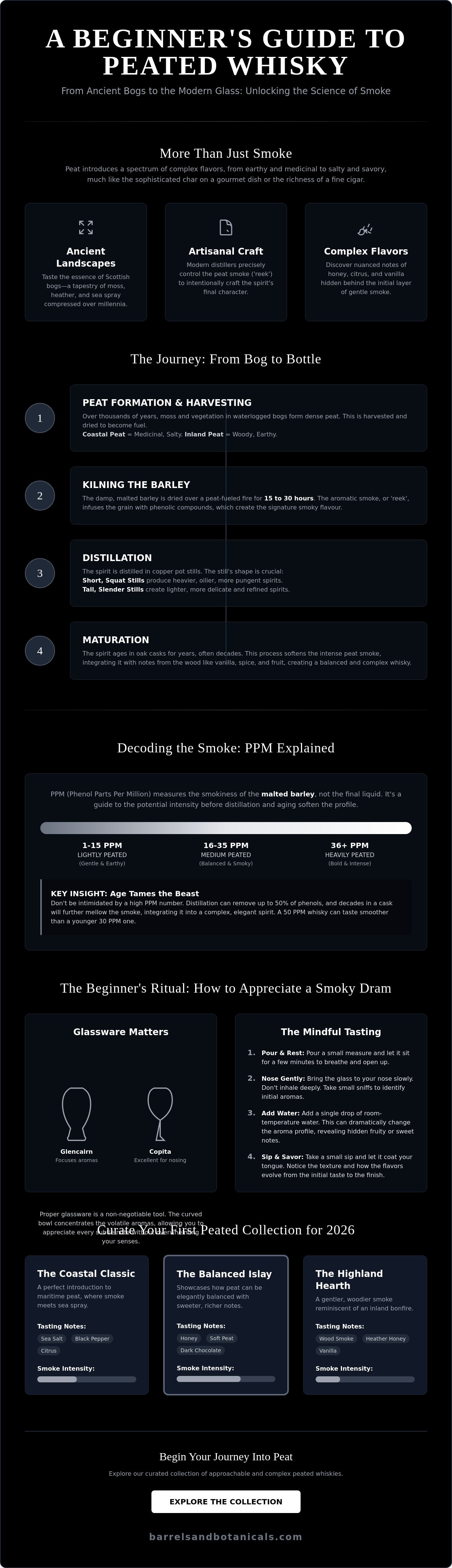
The journey of a peated dram begins in the damp, ancient bogs of Scotland. Peat is a dense accumulation of partially decayed vegetation, formed over thousands of years in waterlogged conditions. When harvested and dried, it becomes a potent fuel source. In the distillery, this earth is burned in a kiln to dry germinating barley. This specific stage, known as kilning, is where the magic happens. As the peat burns, it releases a thick, aromatic smoke known as 'reek.' The moist malted barley acts like a sponge, absorbing the chemical compounds within that smoke. This 15 to 30 hour window of exposure defines the spirit's future character. It's a transformative ritual. Raw grain meets ancient earth. Fire creates flavour.
The intensity of this experience is often dictated by the shape of the copper stills. Short, squat stills allow heavier, oilier molecules to pass into the final spirit, resulting in a viscous and pungent liquid. Conversely, tall stills act as a filter; only the lightest, most delicate vapours reach the top. To truly master the nuances, many enthusiasts explore The Science of Peat in Whisky to see how different mosses and temperatures alter the final profile. This peated whisky for beginners guide highlights that the equipment is just as vital as the fuel itself.
Decoding PPM: Is Higher Always Heavier?
PPM, or Parts Per Million, measures the concentration of phenols in the malted barley. A light touch might sit at 10 PPM, while a heavy hitter like Ardbeg typically starts around 55 PPM. However, this number is measured at the kiln, not the glass. Distillation can strip away up to 50% of these phenols. Decades of maturation in oak casks further mellow the intensity, softening a 50 PPM spirit into something elegant and integrated. Don't let a high number intimidate you; age often tames the beast.
The Chemistry of Flavour: Guaiacol and Syringol
Two primary phenols act as the architects of your experience. Guaiacol brings the classic "smoky" and "wood-fire" aromas that define a campfire night. Syringol introduces a sophisticated "sweet" and "spicy" element, often reminiscent of vanilla or dried fruit. In coastal regions like Islay, the peat contains decomposed marine life and salt spray. This unique composition ensures that coastal peat smells of iodine and seaweed, creating a medicinal tang that sets it apart from the earthy, heather-honey smoke of Highland peat. For those seeking to refine their palate further, exploring the artisanal selections at Barrels and Botanicals offers a gateway to these complex, botanical layers. Understanding these chemical variables is the next step in our peated whisky for beginners guide, allowing you to choose a bottle that matches your sensory preference.
The Spectrum of Smoke: Navigating Regional Profiles
To understand this liquid fire, one must map the landscape. Smoke isn't a single note; it's a symphony that changes with the soil and the sea. This peated whisky for beginners guide invites you to look beyond the obvious. While one region claims the crown, the map of peat has expanded significantly. Every bog offers a different thumbprint of flavor. The ritual of the dram begins with knowing where your bottle was born.
Islay: The Powerhouse of Brine and Iodine
Islay remains the undisputed spiritual home of the ember. Here, the Atlantic Ocean breathes life into the spirit. The profile is uncompromising and visceral. Expect medicinal notes, iodine, and heavy seaweed. Distilleries like Laphroaig and Ardbeg define this category. Their peat is rich in decomposed marine life. This creates a profile reminiscent of a driftwood bonfire on a rain-slicked shore. It's bold. It's unapologetic. For many, it represents the ultimate destination. The salt air is literally distilled into the glass, creating a finish that lingers like a coastal fog.
Highland and Island: Heather, Honey, and Gentle Reek
Highland and Island malts offer a softer introduction for the curious palate. These spirits swap heavy brine for botanical sweetness. Highland peat often contains more wood and heather. This results in a "gentle reek" rather than an industrial smoke bomb. Highland Park on Orkney provides a perfect bridge. It balances floral honey with a whisper of coastal salt. Benromach or Oban serve as excellent gateway whiskies. They don't overwhelm. They invite you in with nuanced layers of toasted oak and dried fruit. The smoke is a supporting actor, not the lead.
By 2026, the industry has fully embraced the "New World" peat movement. Distilleries in Sweden, Japan, and Tasmania are now using Scottish peat or local equivalents to create global fusion spirits. This trend has introduced vibrant, non-traditional profiles to the UK market. Finding these rare expressions requires a curator's eye. You can explore a handpicked selection through Your Expert Whisky Shop in Turriff. Their expertise ensures you find a bottle that matches your specific preference for char and complexity. Sourcing from specialists allows you to bypass the generic and discover the truly artisanal. Whether it's a classic Islay or a modern global malt, the choice is yours to savor.
The Beginner’s Ritual: How to Appreciate a Smoky Dram
Your journey into smoke begins with the right vessel. Pouring a heavy Islay malt into a tumbler is a common mistake; you lose the delicate nuances to the air. A Glencairn or a copita glass is non-negotiable for this peated whisky for beginners guide. The tulip shape narrows at the rim, concentrating the "peat reek" and allowing the heavier phenolic compounds to gather. It's a tool for precision, turning a simple drink into a focused sensory event.
Approaching the glass requires patience. Don't inhale deeply or bury your nose in the rim, as the high ABV will anaesthetise your senses. Instead, keep your mouth slightly open and let the smoke drift toward you. This "Mindful Nose" technique allows you to detect the difference between medicinal brine and sweet campfire soot without the burn. You're looking for the essence of the spirit, not the sting of the alcohol.
When you finally take a sip, keep it small. Your palate needs to awaken to the phenols. Roll the liquid across your tongue to let your taste buds adjust to the intensity. Once the initial shock of smoke subsides, add two or three drops of room-temperature water. This isn't about dilution; it's about chemistry. Water breaks the surface tension and releases hydrophobic elements, often unlocking hidden notes of citrus, green apple, or vanilla that the smoke previously masked.
Setting the Scene for Your Tasting
Environment dictates experience. Choose a space with neutral scents; avoid scented candles or cooking aromas that compete with the dram. Low lighting and a temperature around 18 to 20 degrees Celsius create the perfect atmosphere for reflection. If you find the straight spirit too daunting, consider the "rinse" method used in classic cocktails, where a peated whisky coats the glass before a lighter spirit is added. For a deeper sensory bridge, a premium cigar offers a complementary earthiness that mirrors the malt's rugged character.
The Finish: Understanding the Afterglow
The finish is where peated malts truly shine, as the oils cling to the throat and palate far longer than unpeated varieties. To fully appreciate this, practice retro-nasal breathing: swallow the whisky, then exhale slowly through your nose. This pushes the lingering aromatic molecules back into the olfactory receptors. You'll notice the profile evolves significantly; a sharp bonfire note might transform into sweet, dried tobacco or salted caramel over the course of ten minutes. This peated whisky for beginners guide encourages you to sit with the silence of the glass, as the afterglow is often the most rewarding part of the ritual.
Ready to elevate your home bar with intentionality and craft? Discover the art of mindful flavour with Barrels and Botanicals.
Curating Your First Peated Collection in 2026
Building a collection is a deliberate ritual. It's an invitation to explore the alchemy of earth and fire. For those following this peated whisky for beginners guide, the journey starts with nuance rather than sheer intensity. Diving headfirst into the medicinal "peat monsters" of Islay often masks the delicate esters that make Scotch truly exceptional. You'll find more reward in a gradual ascent. This allows your palate to identify the subtle interplay of fruit, salt, and cereal before the smoke takes centre stage. The goal is to appreciate the smoke as a seasoning, not the entire meal.
The "Gateway" Selection
A well rounded starter set requires balance. These five bottles represent the pinnacle of accessible complexity in the 2026 market. Focus on the "gain" of each expression, the unique sensory profile that exists behind the ember. A first serious purchase should generally sit between £40 and £90 to ensure quality distillation and maturation.
- Highland Park 12 Year Old (Orkney): The gain here is heather honey. It offers a gentle, floral smoke that acts as a perfect introduction. Expect to pay around £45 in most UK specialist shops.
- Benromach 10 Year Old (Speyside): A revival of classic pre-1960s Speyside style. The gain is rich orchard fruit and a whisper of forest floor. Retail sits near £40.
- Oban 14 Year Old (Highland): Delicate and coastal. The gain is a beautiful marriage of sea salt and dried figs. A premium entry usually priced at £85.
- Talisker 10 Year Old (Skye): Maritime energy in a glass. The gain is cracked black pepper and a bracing saltiness. It's a staple at approximately £48.
- Caol Ila 12 Year Old (Islay): The most approachable Islay malt. The gain is clean, citrus zest and a refined, oily texture. Priced at approximately £52.
The Next Step: Rare and Vintage Peated Malts
The true connoisseur eventually looks toward the horizon of age. Time does something miraculous to peat. After 20 or 30 years in a cask, the aggressive smoke softens. It transforms into something waxy, tropical, and ethereal. This evolution makes rare and old whisky the ultimate pursuit for the serious collector. Legendary distilleries like Port Ellen or Brora have shown that these bottles aren't just sensory experiences; they're significant assets. Market data from 2025 indicated a 12 percent year-on-year growth for rare peated expressions from closed distilleries.
Whether you're looking to acquire a ghost distillery bottling or wish to divest from a private collection, our Barrels & Botanicals brokerage service provides the expertise required for such high stakes transactions. We guide you through the provenance and the ritual of acquisition with total clarity. Explore our curated Single Malt collection to find your next milestone bottle and continue your journey into the heart of the ember.
Ignite Your Senses with the Perfect Dram
The journey from a curious novice to a confident connoisseur begins with a single, deliberate sip. This peated whisky for beginners guide has mapped the path from the ancient bogs of Islay to the sophisticated 2026 palate. You've explored how phenol parts per million (PPM) define the intensity of your dram and why the choice of a Glencairn glass matters. Understanding regional nuances, from the medicinal brine of the islands to the subtle woodsmoke of the mainland, transforms a simple drink into a sensory ritual.
Your collection deserves the same level of intentionality. At Barrels & Botanicals, we operate as family-run independent specialists dedicated to the art of the dram. Our expertly curated selection features rare and old peated malts that represent the pinnacle of Scotch heritage. Whether you're seeking a specific vintage or require our private bottle brokerage and valuation services, we provide the expertise to elevate your home bar. Discover the exceptional Single Malt collection at Barrels & Botanicals. Savour the complexity; the world of smoke is vast, and your next favourite bottle is waiting to be uncorked.
Frequently Asked Questions
Is peated whisky higher in alcohol than unpeated whisky?
No, the peat level in a spirit doesn't dictate its alcohol by volume. Most standard releases in the UK sit between 40% and 46% ABV regardless of their phenol parts per million. Whether it's a Highland malt or an Islay classic, the strength depends on the distiller's final cut and dilution process. It's about the depth of the ember, not the proof on the label.
Does peated whisky always taste like medicine or iodine?
Not all peated expressions carry those medicinal notes. While Islay malts like Laphroaig are famous for seaweed and iodine, whiskies from the Highlands or Islands often lean toward woodsmoke and heather. You'll find three distinct flavour camps: medicinal, earthy, and sweet. A Highland Park 12 Year Old offers a gentle, honeyed soot rather than a hospital ward. It's a spectrum of fire and botanical earth.
Can I add ice to a peated whisky?
You can certainly add ice, though it alters the sensory ritual. Chilling the liquid to 4 degrees Celsius suppresses the volatile aromatics that define a peated whisky for beginners guide. A single large cube of clear ice slows the dilution, allowing the smouldering notes to emerge slowly. It's your glass, your rules. Just know that cold temperatures can mask the delicate botanical nuances hidden beneath the smoke.
What is the best peated whisky for someone who hates smoke?
Seek out Bunnahabhain 12 Year Old or Highland Park 12 for a subtle introduction. Bunnahabhain typically measures below 3 phenol parts per million, offering a rich, nutty profile with barely a whisper of coastal air. These bottles bridge the gap for those wary of the bonfire. They provide a gentle warmth rather than an ash-heavy intensity. It's an elegant entry into a complex world of flavour.
How long does a bottle of peated whisky stay fresh once opened?
A bottle remains vibrant for 1 to 2 years if it stays more than half full. Once the liquid level drops below 25 percent, oxidation accelerates. The delicate peat oils dissipate, and the palate can turn flat within 6 months. Keep your treasures in a cool, dark cabinet away from direct sunlight to preserve the essence of the dram. Seal the ritual tightly after every pour to maintain quality.
Is peated whisky the same as "smoky" whisky?
Peat and smoke aren't strictly synonymous in the distilling world. While all peated whiskies are smoky, not all smoky whiskies use peat. Some spirits gain smoky characteristics from heavily charred oak casks or specific yeast strains during fermentation. This peated whisky for beginners guide focuses on the specific earthiness derived from burning ancient organic matter. It's a distinction of origin, not just an aroma found on the palate.
Why is peated whisky often more expensive than unpeated versions?
The higher cost reflects the intensive labour of the traditional kilning process. Sourcing local peat and hand-turning malted barley adds roughly 10 percent to 15 percent to production expenses compared to industrial unpeated methods. In 2023, rising energy costs in Scotland also impacted the price of traditional floor maltings. You aren't just paying for the liquid. You're investing in a centuries-old craft that requires more time, more fuel, and more patience.