
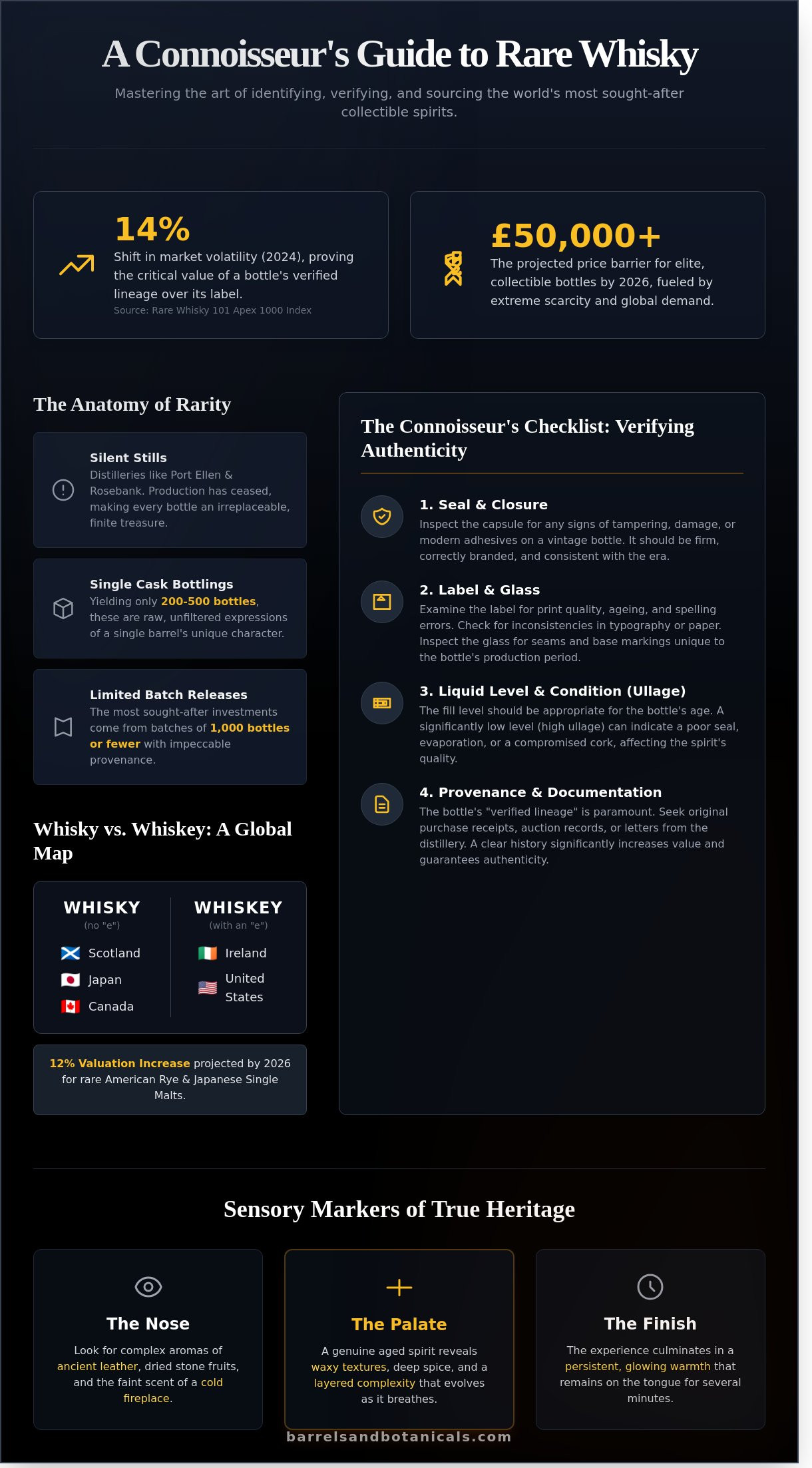
In 2024, the Rare Whisky 101 Apex 1000 Index highlighted a 14% shift in market volatility, proving that the true value of a bottle lies not in its label but in its verified lineage. You know that a legendary spirit is far more than just liquid in glass. It's a liquid history, a sensory ritual, and a significant financial commitment. Yet, finding a genuine bottle of rare whiskey in the current UK market often feels like chasing a ghost through a fog of sophisticated counterfeits and terminology traps. The stakes are high when a single purchase can define a collection.
We'll help you master the art of identifying authentic collectibles, decoding the "whisky" versus "whiskey" distinction in high-end auctions, and judging a bottle's condition with the precision of a master blender. You'll gain the confidence to secure your next acquisition without the lingering fear of a forged seal or a compromised cork. This guide reveals the essential factors driving the £50,000 plus price tags of 2026 and introduces you to the world of private brokerage for the truly exceptional. Prepare to transform your approach to the auction house and the private cellar alike.
Key Takeaways
- Discover the shift towards mindful, sensory-led collecting and why the modern connoisseur values the heritage and story behind the spirit as much as the liquid itself.
- Understand the anatomy of rarity, from the prestigious allure of "Silent Stills" to the unique investment potential of limited single cask releases.
- Master the essential physical inspection techniques required to verify the authenticity of rare whiskey and identify the subtle red flags of tampered bottles.
- Navigate the UK’s specialist market with confidence by weighing the pros and cons of traditional auctions against the security of expert-led online retailers.
- Learn how an artisanal, family-run approach preserves the ritual of the craft while providing a seamless bridge to modern, high-end spirit acquisition.
The Allure of Rare Whiskey: A Sensory Journey Beyond the Label
To hold a bottle of rare whiskey is to hold a piece of liquid history. It isn't just about the alcohol; it's about the decades spent in damp, stone-walled warehouses in the Scottish Highlands or the humid forests of Japan. Modern collectors have moved beyond simple consumption. They seek a narrative. They want the story of the wood, the water, and the master blender's intuition. This shift represents a move towards intentional living. Quality over quantity. The ritual of the pour becomes a moment of stillness. A deliberate pause. The heavy clink of glass. Every bottle tells a story of survival against the odds.
The term "rare" is multifaceted. It isn't merely a marketing buzzword. It's a reflection of craftsmanship that can't be replicated. It involves the precise chemistry of the peat, the mineral content of a specific spring, and the unpredictable nature of oak maturation. When you invest in rare whiskey, you're honouring a process that began long before the current market trends. You're valuing the essence of the craft over the noise of the crowd.
The Distinction Between Rarity and Price
A high price tag often masks a lack of true heritage. You might pay £5,000 for a limited edition release that has 10,000 bottles in circulation. That isn't rarity; it's clever positioning. True rarity often stems from "ghost distilleries" like Port Ellen or Rosebank. These sites ceased production decades ago. Every drop consumed brings the world closer to their total extinction. When evaluating these spirits, the sensory profile must match the pedigree. Understanding Single malt Scotch production standards helps collectors identify when a spirit has been crafted with the patience required for such depth. Look for these sensory markers:
- The Nose: Ancient leather, dried stone fruits, and the faint scent of a cold fireplace.
- The Palate: Waxy textures, deep spice, and a layered complexity that evolves as it breathes.
- The Finish: A persistent, glowing warmth that stays on the tongue for several minutes.
Whisky vs Whiskey: Navigating the Global Rare Market
The missing "e" is a geographical map. Scotland, Japan, and Canada produce "whisky." Ireland and the United States craft "whiskey." While Scotch remains the undisputed titan of the rare market, the landscape is broadening. By 2026, market data suggests a 12 per cent increase in the valuation of rare American rye and Japanese single malts. Collectors now hunt for Karuizawa or early Pappy Van Winkle with the same ferocity once reserved for Macallan. This global expansion offers a vibrant palette of flavours. Spicy American oak. Delicate Japanese Mizunara. Peated Scottish barley. Choosing rare whiskey from these diverse regions is a curated choice for those who value clarity and excellence in their collection.
The Anatomy of Rarity: What Defines a Collectible Bottle?
Rare whiskey isn't merely a spirit. It's a captured moment. A liquid history. For the serious collector, the allure often begins with "Silent Stills." These are the ghosts of the industry, distilleries like Port Ellen or Rosebank that ceased production decades ago. Every bottle from these sites is a finite treasure. Once the final cork is pulled, that specific profile vanishes from the physical world forever. This absolute scarcity drives the market, turning dusty bottles into liquid gold.
Single cask bottlings represent the peak of this exclusivity. Unlike standard expressions that blend hundreds of barrels for consistency, a single cask release is raw and unfiltered. It typically yields a tiny number of bottles, often between 200 and 500. The bottle number on the label provides a sense of personal ownership; it's a direct connection to a specific piece of oak. Many collectors now view rare whiskey as a luxury investment because its value is tied to this physical limitation. According to luxury investment data from 2023, the most sought-after bottles are those from limited batches of 1,000 or fewer, where the provenance is impeccable.
Distillery Heritage and Provenance
The "Big Names" of Islay and Speyside command the highest prices. Macallan and Ardbeg are the titans. Yet, the true joy of collecting often lies in the "Hidden Gems" of the Highlands. These distilleries offer nuanced, vibrant profiles that reward the adventurous palate. A Master Blender's reputation adds a layer of artisanal trust. Their expertise ensures that the ritual of the pour is always exceptional. Integrating vintage whisky into your collection provides a roadmap of a distillery's evolution. It's about more than an age statement. It's about the specific character of a single year's harvest and the climate that shaped it.
The Influence of Cask Type
Wood is the architect of character. Sherry butts from Spain lend deep, dried-fruit notes and a dark, mahogany colour. Bourbon barrels offer a different essence, bringing vanilla, caramel, and a lighter, golden hue. Experimental finishes in Madeira or Rum casks are the new frontier for those seeking a unique palate. Then there's the "Angel's Share." This natural evaporation claims roughly 2% of the spirit every year it sits in the warehouse. Over 40 years, this loss is significant. It leaves behind a liquid that's incredibly concentrated and viscous. High intensity. Bold flavours. Zero compromise. If you're ready to explore these depths, discovering the nuanced profiles of craft spirits is the first step toward a more intentional, sophisticated lifestyle.
The Connoisseur’s Checklist: Verifying Authenticity and Condition
Holding a bottle of rare whiskey is a sensory experience that begins long before the cork is pulled. It’s an exercise in forensic appreciation. You must look for the stories the glass tells. Every scuff and stain on a vintage release is a data point in its biography. Authenticity isn't just a label; it's a physical history.
Start with the ullage, the air gap between the spirit and the cork. For a liquid distilled in 1965, a fill level at the mid-shoulder of the bottle is expected. A high-fill level on a fifty year old expression is a red flag. It suggests a modern refill. Oxygen is a patient thief. It claims its portion over decades through natural evaporation, often called the "Angels' Share."
- High Fill: Potential refill or modern counterfeit.
- Mid-Shoulder: Common for bottles 40+ years old.
- Low-Shoulder: Indicates a poor seal; the spirit may be oxidised.
Labels, Strips, and Seals
Authentic labels from the mid-20th century possess a specific tactile quality. They use heavy, porous paper stock. Modern fakes often fail here, appearing too smooth or showing the tell-tale dots of digital printing under a 10x loupe. Check the alignment. Distilleries in the 1970s used mechanical labelling that often resulted in slight, consistent tilts. Perfect symmetry is often a modern invention.
The UK duty stamp is your safeguard. Look for the "UK Internal" mark or the classic red paper tax strips on older imports. If a label looks pristine on a bottle claiming to be sixty years old, be wary. Paper ages. It yellows. It attracts "foxing," those small brown spots caused by humidity. A perfect label is often a replaced label.
The Liquid Integrity
Tilt the bottle gently. Observe the bead, the bubbles that form when the liquid is agitated. High-alcohol spirits produce larger, faster-dissolving bubbles. Use a high-intensity torch to pierce the amber depths. You’re looking for "floaters" or "beeswings." These are natural precipitates found in non-chill filtered rare whiskey. They are marks of a pure, unadulterated spirit.
Cloudiness isn't always a flaw. In expressions bottled at 46% ABV or higher without chill-filtration, the liquid may turn slightly opaque when cold. This is the essence of the grain. However, if you see large, dark chunks or a syrupy consistency that doesn't match the age statement, the liquid has likely been tampered with. Inspect the cork through the capsule. A genuine cork should show some contraction. If it looks brand new and expansive, the ritual of the seal has likely been broken.
Sourcing with Confidence: How to Navigate the Rare Market
The pursuit of a rare whiskey is a sensory journey that demands both passion and precision. While global auctions offer a pulse-quickening thrill, they often carry risks that a dedicated retailer eliminates. Auctions operate on a "buyer beware" basis, whereas specialist shops provide a layer of protection by vetting every bottle for authenticity before it ever reaches the shelf. When you look to buy rare scotch online UK, digital transparency is your greatest ally. Reputable platforms provide high-resolution imagery of tax stamps, fill levels, and cork integrity to ensure the spirit remains pristine.
Protecting your investment is about environmental discipline. A rare whiskey is a living piece of history that reacts to its surroundings. To preserve the nuanced profile of an aged malt, follow these essential storage rituals:
- Maintain Verticality: Unlike wine, spirits must be stored upright. High-proof alcohol eventually degrades the cork, leading to leaks and tainted flavours.
- Controlled Climate: Keep your collection at a steady temperature between 15°C and 18°C. Fluctuations cause the liquid to expand and contract, which compromises the seal.
- Shadow Play: UV light is the enemy of the palate. It bleaches the natural colour and dulls the vibrant essence of the wood. A dark, cool cabinet is a sanctuary for your bottles.
The Role of the Specialist Retailer
A curated shop is more than a marketplace; it's a sanctuary for the liquid arts. Here, the "tasting notes" come from a human host who understands the soul of the distillery. Specialist retailers often have exclusive access to independent bottlers like Gordon & MacPhail or Signatory Vintage. These bottlers offer a unique entry point into the market, releasing single casks from "ghost" distilleries that haven't produced a drop in 30 years. This expert guidance ensures your choice is a curated acquisition rather than a gamble.
Building a Relationship with a Broker
High-value acquisitions often happen away from the public eye through private brokerage. This method relies on discretion and a deep network of global collectors. Transparency is the cornerstone of this ritual. Professional brokers typically operate on a commission-based structure, often ranging from 10% to 15% of the sale price. This ensures their interests align with yours. A broker doesn't just find a bottle; they verify the provenance and manage the logistics of a secure trade, maintaining the elegance of the transaction from cellar to cellar.
Discover a world where quality is never compromised. Explore the curated collection at Barrels and Botanicals today.
Curating Your Legacy with Barrels & Botanicals
We are a family-run house dedicated to the art of the find. Our approach to sourcing the world’s most exceptional spirits is personal. It is meticulous. We bridge the gap between the dusty dunnage warehouses of old and the sharp, analytical world of modern collecting. Whether you are hunting for a 1960s vintage or a modern masterpiece, we ensure every bottle tells a story of authenticity. For those looking to part with their own liquid gold, our private bottle sale service offers a discreet, expert-led path to selling your treasures. We understand that a bottle of rare whiskey is more than an asset; it is a piece of history captured in glass.
Our team treats every acquisition as a partnership. We navigate the complexities of the UK market, ensuring all bottles meet stringent standards of provenance. This commitment to quality allows us to serve as a trusted guide for both seasoned connoisseurs and those just beginning their journey into the world of high-end spirits. We celebrate the craft. We honour the tradition. By focusing on the liquid integrity and the heritage of the producer, we help you build a portfolio that stands the test of time.
Our Expertise in Single Malt Scotch
Scotland’s distilleries offer a map of flavour. From the medicinal peat of Islay to the honeyed orchard fruits of Speyside, we focus on the nuanced profiles that define a region. Our vetting process is rigorous. We examine labels, seals, and fill levels to guarantee liquid integrity. We look for the subtle markers of age and the specific characteristics of the cask. This isn't just about investment. It's about building a bespoke collection that reflects your personal palate. We help you find the essence of the Highlands or the vibrant character of the Lowlands, ensuring your rare whiskey collection is as unique as your own signature.
Beyond the Bottle: The Full Ritual
The experience does not end when the cork is pulled. It begins there. We believe in the ritual of the pour. This means selecting the correct glassware to concentrate the nose and finding the right environment to savour the finish. Every detail matters. The weight of the glass. The temperature of the room. The clarity of the light. This is about intentional living and the celebration of quality.
- Sensory Pairings: We often pair our rare finds with a curated selection of New World and Cuban cigars. A Montecristo No. 4 or a robust Nicaraguan leaf can transform a simple tasting into an evocative journey.
- Glassware Excellence: Using the right vessel is paramount to unlocking the volatile aromatics of an old malt. We recommend tulip-shaped glasses for the most concentrated experience.
- Mindful Consumption: We advocate for quality over quantity. Every sip should be a celebration of the distiller's art and the years of maturation that preceded it.
Final words on mindful drinking always return to the same principle: respect the liquid. We invite you to explore our curated selection of rare malts and artisanal gins. Slow down. Savour the craft. Whether you are buying or selling, Barrels & Botanicals Ltd is your partner in refined taste and modern sophistication.
Crafting Your Legacy in Liquid History
The pursuit of the truly exceptional is a slow, deliberate ritual. It isn't just about the liquid in the glass; it's about capturing a specific moment in time. To navigate the 2026 market successfully, you've got to prioritise rigorous authenticity checks and understand the nuanced profiles of silent distillery releases. Since 2019, our family-run team has acted as a bridge between the world's most elusive cellars and discerning UK collectors. We provide a specialist private bottle brokerage service designed to uncover the hidden gems of the spirits world. Bold profiles. Timeless character. Exceptional provenance. Sourcing rare whiskey requires patience, expert knowledge, and an eye for the finest details. We invite you to slow down and savour the process of discovery. Explore our curated collection of rare and exceptional spirits at Barrels & Botanicals. Your next landmark bottle is waiting to be found.
Frequently Asked Questions
What makes a whiskey "rare" rather than just expensive?
Rarity is defined by finite availability and historical provenance. While expensive bottles might be high-volume luxury releases, a truly rare whiskey often originates from a "ghost" distillery or a single cask yielding fewer than 450 bottles. It's the liquid history of a specific moment. The essence of a lost era. Scarcity drives the soul of the collection.
Is rare whiskey a good financial investment in 2026?
Market data suggests potential for growth, though volatility remains a factor for 2026. According to the Knight Frank Luxury Investment Index, the rare whiskey asset class saw a 373% growth over the decade leading into 2024. Investors often look for annualised returns between 5% and 12%. Success requires a keen eye for provenance and a palate for patience. It's an artisanal asset class for the mindful collector.
How can I tell if a bottle of rare whiskey has been tampered with?
Examine the capsule and the "ullage" or fill level with a jeweler's loupe. Authentic bottles from the 1980s should show natural evaporation consistent with their age. Look for glue residue around the tax strip or micro-scratches on the glass that suggest a refill. A UV light reveals modern paper brighteners on labels that should be decades old. Precision is everything.
What is the best way to store a bottle of rare whiskey to preserve its value?
Store your collection upright in a temperature-controlled environment between 15°C and 18°C. Fluctuations damage the seal. Unlike wine, the high ABV of spirits will erode a cork if the bottle lies flat. Keep the labels away from direct UV light to prevent fading. This protects the vibrant visual history of the liquid. Ritual meets preservation.
Why is Scotch whisky usually the focus of rare spirit collecting?
Scotch whisky commands the market due to its 500-year heritage and rigorous legal protections. The Scotch Whisky Regulations 2009 ensure every drop meets exacting standards of craft. With 146 active distilleries in Scotland and a secondary market turnover exceeding £75 million annually, it offers unparalleled depth. It's the gold standard of distilled excellence. Bold history. Refined taste.
Can I sell my own rare bottles through a specialist shop?
Specialist retailers often accept bottles for "Sale or Return" or offer immediate cash buyouts. Expect to pay a commission fee ranging from 15% to 20% of the final sale price. Ensure the merchant holds a valid licence under the Licensing Act 2003. This professional path guarantees your bottle reaches an audience of curated collectors. A seamless transition for a prized asset.
Does the age of the whiskey always determine its rarity?
Rarity is a product of remaining inventory, not just the years spent in oak. A 12-year-old expression from a distillery that ceased production in 1983 is significantly harder to find than a modern 30-year-old release. The rare whiskey market prizes these finite snapshots of time. It's about the "lost" liquid. Age is a factor; scarcity is the true prize.
What should I do if the cork breaks on an old and rare bottle?
Use a two-pronged "Ah-So" extractor to gently lift the remains without crumbling the wood. If fragments fall, filter the liquid through a sterile muslin cloth into a clean glass decanter. Don't let the sediment linger. It's a delicate operation that preserves the nuanced profile of the spirit. Clean. Swift. Effective. The ritual remains intact despite the hurdle.