
What if the most complex liquid in your glass is actually just a rhythmic conversation between rain-soaked barley and a century-old oak tree? You've likely stood before a wall of amber bottles, asking how is single malt scotch made while feeling the weight of technical terms like reflux or mashing. It's easy to feel overwhelmed by the variety of cask finishes and the industry's dense jargon. We believe the world of spirits should be an invitation, not a barrier. A moment of clarity in a glass.
We're peeling back the curtain on this artisanal ritual to reveal the heart of the distillery. This journey transforms raw elements into a sensory masterpiece through a process governed by the strict Scotch Whisky Regulations 2009. You'll discover the six core stages of production, from the heat of the copper pot stills to the quiet magic of the oak. By the end, you'll possess the confidence to decode every label and appreciate the justified premium of a well-crafted dram. Vibrant essence. Meticulous craft. A ritual worth savoring.
Key Takeaways
- Uncover the legal definitions and artisanal standards that dictate how is single malt scotch made using only water, yeast, and 100% malted barley.
- Trace the sensory journey of the grain from the initial hydration of steeping to the aromatic ritual of the peat-fired kiln.
- Recognize the critical role of copper pot stills in distilling a refined, high-proof spirit from the initial fermentation.
- Appreciate the "Angels’ Share" and the transformative power of oak during the mandatory three-year maturation on Scottish soil.
- Master the nuances of whisky labels by understanding the curated choices behind single cask releases and small-batch marriages.
The Alchemy of Elements: What Defines Single Malt Scotch?
To truly grasp how is single malt scotch made, you must first respect the raw materials. This is a dialogue between three humble elements. Water. Yeast. The golden grain. While other spirits might lean on a complex list of additives, the Scotch Whisky Regulations 2009 demand a stricter path. To carry the title, the spirit must be crafted from 100% malted barley and distilled at a single distillery within the borders of Scotland. This isn't just a legal requirement; it's a commitment to provenance. Single malt Scotch represents the unfiltered expression of one specific place. One house style. One vision. The "single" in the name refers to the distillery itself, ensuring that every drop in the bottle share the same artisanal heritage.
The Botanical Soul of Barley
Modern distilling in 2026 favors barley strains like Laureate and Sassy for their high starch content. This starch is the essential precursor to sugar, which yeast eventually transforms into alcohol. Different strains contribute subtly to the base "nose" of the spirit, offering hints of green apple or toasted cereal. Terroir in Scottish grain sourcing is the unique intersection of soil, climate, and topography that imprints a specific character onto the barley before it ever touches a kiln. It is the foundation of the spirit's identity.
Water: The Lifeblood of the Distillery
The foundational secret of how is single malt scotch made lies in the purity of its source. Soft water, filtered through ancient peat and purple heather, provides a clean canvas for delicate floral notes. Harder water, rich in minerals, creates a heavier, more textured palate. Distilleries are traditionally built near vibrant river sources, a necessity for the cooling ritual that turns hot vapor back into liquid gold. In 2026, these sites act as environmental stewards. They use advanced water-recovery systems to protect the rivers that define their flavor profiles, ensuring the ritual remains sustainable for the next century. Meticulous sourcing. Pristine elements. The journey begins here.
The Awakening: Malting and Mashing the Grain
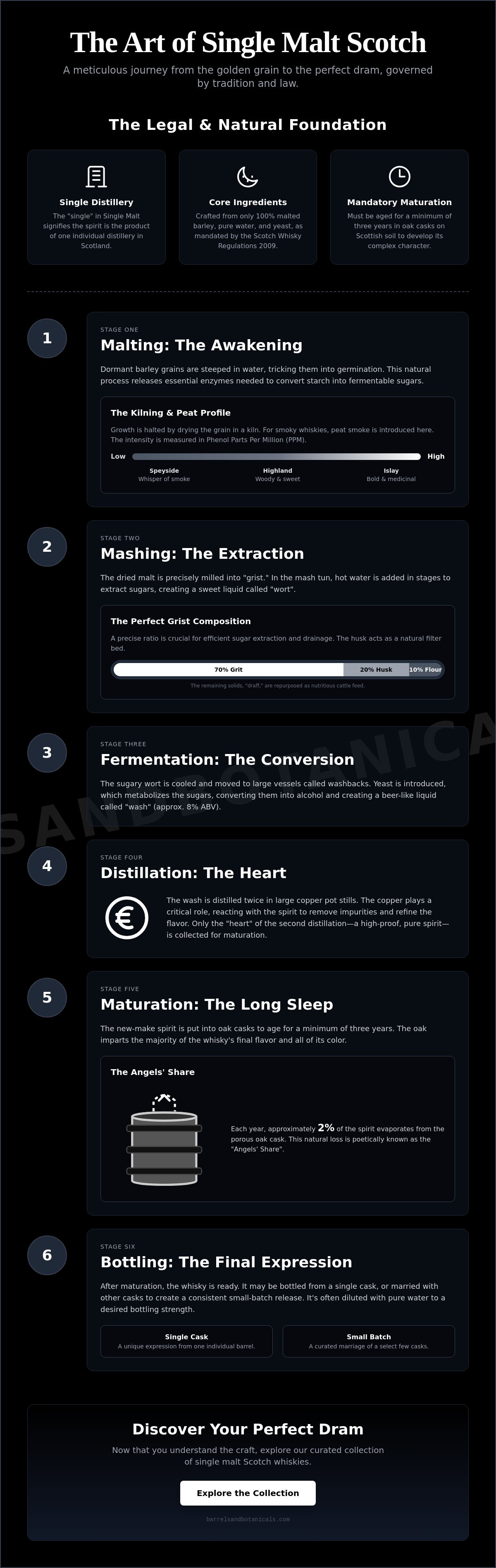
The journey of how is single malt scotch made truly begins with a biological awakening. Dormant grains of barley are steeped in cool water, tricking them into thinking spring has arrived. This germination process is essential. It releases the enzymes required to later convert starch into fermentable sugars. Maltsters carefully turn the grain to manage heat and ensure even growth. It's a slow, deliberate dance with nature that prepares the grain for its next transformation.
Once the grain begins to sprout, the master maltster halts the growth. This stage is kilning. Intense heat dries the grain, locking in those vital sugars and stopping the biological clock. If a distillery seeks a smoky profile, they introduce the aromatic ritual of peat smoke during this drying phase. This is where the spirit begins to claim its regional identity and its first layer of sensory depth.
The Ritual of the Peat Smoke
Burning ancient earth creates the iconic, nuanced smoky finish that many aficionados crave. We measure this intensity in Phenol Parts Per Million (PPM). Islay whiskies often feature high PPM counts, delivering bold, medicinal, and briny notes. Highland smoke tends to be woodier and sweeter. Speyside versions might offer just a ghostly whisper of bonfire. Understanding these profiles helps you choose a single malt scotch that resonates with your personal taste and desired experience.
The dried malted barley then meets the mill. This isn't a simple grind. It's a precise calibration to create "grist." A perfect grist contains roughly 70 percent grit, 20 percent husk, and 10 percent flour. If the grind is too fine, the mash tun will clog. Too coarse, and the sugars stay locked away. The husk acts as a natural filter, allowing the sweet liquid to flow while trapping the solids. Every millimeter of the mill's setting influences the efficiency of how is single malt scotch made.
Inside the Mash Tun
Mashing is a rhythmic extraction. In the mash tun, the grist meets hot water in three or four successive stages. Each addition is hotter than the last, leaching out the sugars to create a sweet, cereal-rich liquid called wort. The remaining solids, known as draff, return to the Scottish earth as high-protein cattle feed for local farms. A clear, vibrant wort is the hallmark of a distillery aiming for a clean, fruity spirit. This liquid foundation carries the essence of the grain into the heat of the stills.
The Heart of the Spirit: Distillation in Copper
The sweet, cereal-rich wort now enters a more volatile phase of its journey. In the quiet of the fermentation room, yeast is introduced to the liquid within massive vessels called washbacks. Over the next 48 to 100 hours, a vigorous transformation occurs. The yeast feasts on the sugars, creating a bubbling, pungent "distiller’s beer" known as the wash. It's a raw, lively liquid sitting at roughly 8 percent alcohol. This is the essential precursor to the refined elegance of the final dram. This stage is where the foundational flavors of the grain are first captured in an alcoholic base.
The true mastery of how is single malt scotch made happens within the heat of the copper pot stills. This process traditionally involves two distinct distillations. The first occurs in the wash still, a large copper vessel that separates the alcohol from the water and solids. The resulting liquid, called low wines, reaches about 25 percent ABV. But it's the second distillation in the smaller spirit still where the magic of refinement truly takes place. Copper acts as a chemical catalyst during this ritual. It actively strips away unwanted sulphury compounds that would otherwise cloud the spirit’s clarity. Pure essence. Pristine texture. Without the "chemical scrub" of the copper, the spirit would lack its signature vibrance.
The Magic of the Copper Pot Still
The physical anatomy of the still dictates the spirit's destiny. Taller stills with long, elegant necks encourage a phenomenon called reflux. This is where heavier vapors condense and fall back into the pot to be re-distilled, allowing only the lightest, most floral molecules to reach the top. Conversely, shorter, squat stills produce a heavier, oilier spirit rich with cereal notes. Copper is the preferred metal for master blenders because it is exceptionally efficient at conducting heat and uniquely capable of purifying the spirit through reactive contact.
Capturing the Heart
Precision is everything at the spirit safe. The stillman must divide the run into three parts. The foreshots are the first to emerge, often too high in alcohol and containing unwanted volatiles. Then comes the heart, the "middle cut" that contains the purest, most balanced flavors. Finally, the feints appear as the alcohol level drops and heavier oils emerge. Only the heart is collected to become the vibrant, clear "new make" spirit. This colorless liquid is the raw soul of the distillery, waiting for the long sleep in the wood to find its final voice.
The Long Sleep: Maturation and the Art of the Cask
The clear, potent "new make" spirit now enters its long sleep. To legally be called Scotch, it must rest in oak casks on Scottish soil for at least three years. This isn't just a legal boundary; it's a profound transformation. The wood breathes. The spirit expands and contracts with the seasons, pulling complex flavors from the staves while the humid Scottish air works its quiet magic. To understand how is single malt scotch made, you must appreciate the patience of the oak. It's a slow, rhythmic exchange between the liquid and the landscape.
About 2 percent of the volume evaporates every year. We call this the Angels' Share. It's a poetic sacrifice to the Scottish mist. As the liquid disappears, the remaining spirit becomes more concentrated and nuanced. The choice of cask is the master blender's palette. Ex-bourbon barrels, crafted from American white oak, lend creamy notes of vanilla, honey, and coconut. Ex-sherry casks, usually European oak, provide a deeper, darker profile. Think sun-dried raisins, ginger, and dark chocolate. Vibrant color. Layered depth. The cask provides up to 70 percent of the final flavor.
The Chemistry of Oak
Lignins, tannins, and vanillins are the botanical heroes of the warehouse. Lignins break down over time into the vanillins that provide familiar sweetness. Tannins offer structure and a pleasant dryness on the finish. Before the spirit ever arrives, the cask undergoes a charring ritual. Fire opens the wood's pores and creates a layer of charcoal that acts as a final filter. First-fill casks are aggressive and bold, imparting intense color and flavor. Refill casks are more subtle, allowing the distillery's original spirit character to shine through with clarity.
The 2026 Perspective on Cask Finishing
In 2026, the focus has shifted toward justified premiumization and transparency. Connoisseurs now look for specific cask provenance. Rare Mizunara oak from Japan is highly coveted for its sandalwood and incense notes, while artisanal wine-cask finishes add vibrant berry layers. It's a common misconception that older is always better. A master blender knows when a whisky has reached its peak balance between spirit and wood. Over-maturation can lead to a "woody" palate that masks the grain's essence. You can explore these artisanal peaks when you buy rare scotch online UK and experience the results of decades of patience. Explore our selection of masterfully aged Single Malt Scotch to find your perfect profile.
From Cask to Glass: Curating the Ultimate Whisky Ritual
The final movement in this artisanal symphony happens far from the heat of the copper stills. It occurs in the quiet sanctuary of the sample room. Here, the Master Blender performs the ultimate creative act: marrying the casks. This isn't a mere mixing of liquids. It's a composition. By selecting casks of varying ages and wood types, the blender ensures a consistent, vibrant profile that defines the distillery’s house style. Understanding this final stage of how is single malt scotch made reveals why the blender is often considered the spirit's true architect. It is a moment of intense sensory evaluation where years of patience are finally validated.
While core ranges offer reliability, the allure of the unrepeatable often leads enthusiasts toward single cask or small-batch expressions. A single cask bottling is a singular event in time. Once the bottle is empty, that specific flavor profile is gone forever. Small batches offer a middle ground, allowing for a more nuanced exploration of a distillery’s character without sacrificing complexity. At Barrels & Botanicals Ltd, we curate these stories with a focus on transparency and provenance. We prioritize spirits that avoid chill-filtration and artificial coloring, ensuring the botanical essence of the oak remains undisturbed. Pure. Honest. Refined.
The Ritual of the Pour
Proper appreciation requires a dedicated ritual to honor the years of production. Use a tulip-shaped glass to concentrate the nuanced aromas and allow the spirit to breathe. Take a moment to observe the natural "legs" on the glass. This is the gain of mindful drinking. You aren't just consuming a spirit; you are participating in a century-old tradition. Slow down. Breathe in the nose. Let the palate evolve from initial cereal sweetness to a complex, lingering finish. You can explore these sensory heights by visiting Your Expert Whisky Shop to discover our latest curated arrivals.
Building Your Own Collection
Evolving a collection is an adventurous journey for the modern epicurean. Start by identifying the regional styles that resonate with your palate, from the honeyed malts of the Highlands to the briny, peat-heavy depths of the Islands. Rare bottles serve as both a sensory treasure and a tangible piece of history. For those looking to refine or rotate their current inventory, our private bottle sale service provides a professional, authoritative path for the discerning collector. Every bottle added is a new chapter in your personal whisky story, reflecting a commitment to quality and intentional living.
Savoring the Spirit of Scotland
The journey from a single grain of barley to a sophisticated dram is a testament to human patience and natural alchemy. You've seen how the copper stills refine the essence and how the oak casks breathe life into the spirit over years of silence. Understanding how is single malt scotch made transforms every sip into a conscious ritual of appreciation. It's no longer just a drink. It's a story of landscape, craft, and time. This knowledge allows you to read every label with confidence and select expressions that truly resonate with your personal palate.
At Barrels & Botanicals Ltd, we celebrate this meticulous journey. As specialists in rare and old whiskies, we've shared our family-run expertise with connoisseurs since 2019. Our passion lies in sourcing spirits that offer a vibrant, unadulterated experience of Scottish heritage. Whether you're seeking a bold Islay peat or a nuanced Highland malt, our collection is curated for those who value quality over haste. We offer nationwide UK delivery to ensure your next discovery arrives safely at your door. Rare finds. Professional service. Exceptional taste.
Explore our curated selection of artisanal Single Malts and find the bottle that speaks to your spirit. Your next great whisky experience is waiting to be poured. Slàinte.
Frequently Asked Questions
Is single malt better than blended Scotch?
Single malt isn't inherently better; it simply represents the unique soul of a single distillery. Blends marry multiple malt and grain whiskies to create a smooth, consistent profile. Single malts are often more expensive because they're limited by the production capacity of one site and the higher cost of 100 percent malted barley. They offer a specific, unrepeatable character that enthusiasts often find more adventurous.
What is the difference between a pot still and a column still?
Pot stills are traditional copper vessels that operate in batches to preserve the heavy, flavorful essence of the barley. Column stills work continuously to produce a higher-proof, lighter spirit. The batch process of the pot still is central to how is single malt scotch made, favoring complex flavor over industrial volume. This artisanal method ensures each run captures the distillery's signature house style.
How much of the whisky evaporates during the Angels' Share?
Approximately 2 percent of the whisky evaporates from the oak cask every year during maturation. This poetic loss is essential for the spirit to interact with the humid Scottish air and concentrate its flavors. Over decades, this cumulative evaporation significantly reduces the volume of the spirit. It's a primary reason why older, well-aged expressions are so rare and carry a justified premium price.
Can any grain be used to make single malt scotch?
No, legally only 100 percent malted barley can be used to produce Single Malt Scotch. While other grains like wheat or corn are common in Single Grain or Blended whiskies, the single malt category is strictly defined by the Scotch Whisky Regulations 2009. This ensures a consistent, high-end standard across the industry. The choice of barley is the first step in the spirit's sensory journey.
What does 'non-chill filtered' mean on a whisky label?
Non-chill filtered means the spirit hasn't been cooled to near-freezing temperatures to remove natural oils and esters. This artisanal choice preserves the full texture and vibrant mouthfeel of the whisky. When you add water to these expressions, they may turn slightly cloudy. This is a hallmark of a refined, unadulterated spirit that hasn't sacrificed flavor for cosmetic clarity. It's a mark of quality.
Why is copper used in the distillation of single malt scotch?
Copper is used because it actively purifies the spirit by removing harsh sulfur compounds during the heat of distillation. It acts as a chemical catalyst, ensuring the "new make" spirit is clean and nuanced. The interaction between the liquid and the copper is vital to how is single malt scotch made, as it shapes the final texture. Without this reactive metal, the spirit would taste metallic and unrefined.
What happens if scotch is aged for longer than 30 years?
Scotch aged beyond 30 years becomes a rare, concentrated essence of the wood and the warehouse environment. The spirit often takes on deep, resinous notes of old leather, spice, and tropical fruit. However, the risk of "over-oaking" is real. If the wood tannins eventually overwhelm the delicate distillery character, the whisky can lose its balance. A master blender carefully monitors these ancient casks to find the perfect peak.
Is the colour of single malt scotch always natural?
The color of single malt scotch isn't always natural, as regulations permit the addition of plain caramel coloring (E150a) for visual consistency. Many premium, artisanal distilleries avoid this practice to showcase the authentic, nuanced influence of the oak. Look for "natural color" on the label to ensure the amber hue in your glass is the result of years in the cask rather than an additive. Honest. Transparent. Vibrant.