
To label a bottle as highland is to describe a vast, untamed wilderness rather than a single flavour profile. You've likely stood in a quiet shop, perhaps in London's St James's, feeling the pressure of a £120 investment while staring at a wall of amber glass. It's frustrating when the label offers little more than a generic geography, leaving you to guess if you're buying a delicate, heather-scented malt or a robust, coastal powerhouse. You deserve an artisanal experience that rewards your curiosity rather than a mass-market bottle that prioritises volume over character.
We understand that the true joy of whisky lies in the intentional discovery of these hidden complexities. This guide provides the clarity you need to master the nuances of Scotland's most diverse region and select a dram that perfectly aligns with your personal taste. We'll deconstruct the four distinct sub-regions, explore the sensory ritual of the perfect serve, and highlight the craft bottles that define modern excellence.
Key Takeaways
- Journey through the four distinct flavour zones to discover a landscape of taste, from light, floral essences to the richest peated profiles.
- Master the art of selection by matching your preferred notes to the perfect highland dram, finding clarity in the region's vast diversity.
- Explore a hand-picked collection of premium spirits that celebrate the nuanced craft and artisanal heritage of Scotland’s most varied region.
- Elevate your experience through the ritual of the pour, understanding why specialised glassware is essential for unlocking a malt's true character.
The Highland Spirit: Defining Scotland’s Most Diverse Whisky Region
To understand the highland spirit is to embrace a landscape of contradictions. It is Scotland's largest distilling region, a vast, untamed expanse stretching from the fringes of the Lowlands to the salt-sprayed northern coasts. Unlike the medicinal punch of Islay or the honeyed consistency of Speyside, this region refuses to be pinned down. Diversity is its signature. Every bottle offers a different story of the land. Wild heather. Coastal brine. Delicate smoke. This is a region defined not by a single flavour, but by an uncompromising commitment to variety.
Distilling here began as a defiant act of survival, with small, illicit pots hidden in mist-veiled glens to evade the taxman. Today, those rugged roots have blossomed into a premium global craft that values quality over volume. Highland single malts represent a deep commitment to the slow, intentional ritual of the copper still. This evolution from mountain moonshine to artisanal excellence reflects a broader cultural shift. The modern enthusiast seeks more than just a drink; they seek a curated experience. Nuanced botanicals. Vibrant textures. A finish that lingers like a Scottish sunset.
Geography and Its Influence on the Cask
The rugged terrain shapes the spirit's soul. High altitudes mean cooler maturation, where the liquid breathes slowly within the oak, undisturbed by the haste of warmer climates. Water sources define the palate. Some distilleries draw from granite-filtered streams for a crisp, mineral finish. Others use peat-rich burns that impart a subtle, earthy smoke. The "Highland Line" serves as a geological boundary that separates the soft, rolling Lowlands from the dramatic peaks of the north. It is a threshold of flavour. Bold character. Untamed essence. A landscape captured in glass.
The Distinction Between Highland and Speyside
Geography creates a curious overlap. Speyside sits physically within the Highlands, yet it stands alone as a protected region because of its dense concentration of distilleries. While Speyside favours orchard fruits and a delicate, honeyed sweetness, the broader highland malts are often more robust. They lean into spice, wild flora, and a heavier mouthfeel. The Scotch Whisky Regulations 2009 define the Highland region as the area of Scotland north of the line between the Firth of Clyde and the Firth of Tay, excluding the Speyside region and the Islay, Campbeltown, and Lowland areas. This distinction ensures that the specific botanical influences of the northern wilds remain protected and celebrated.
A Landscape of Flavour: Mapping the Highland Palate
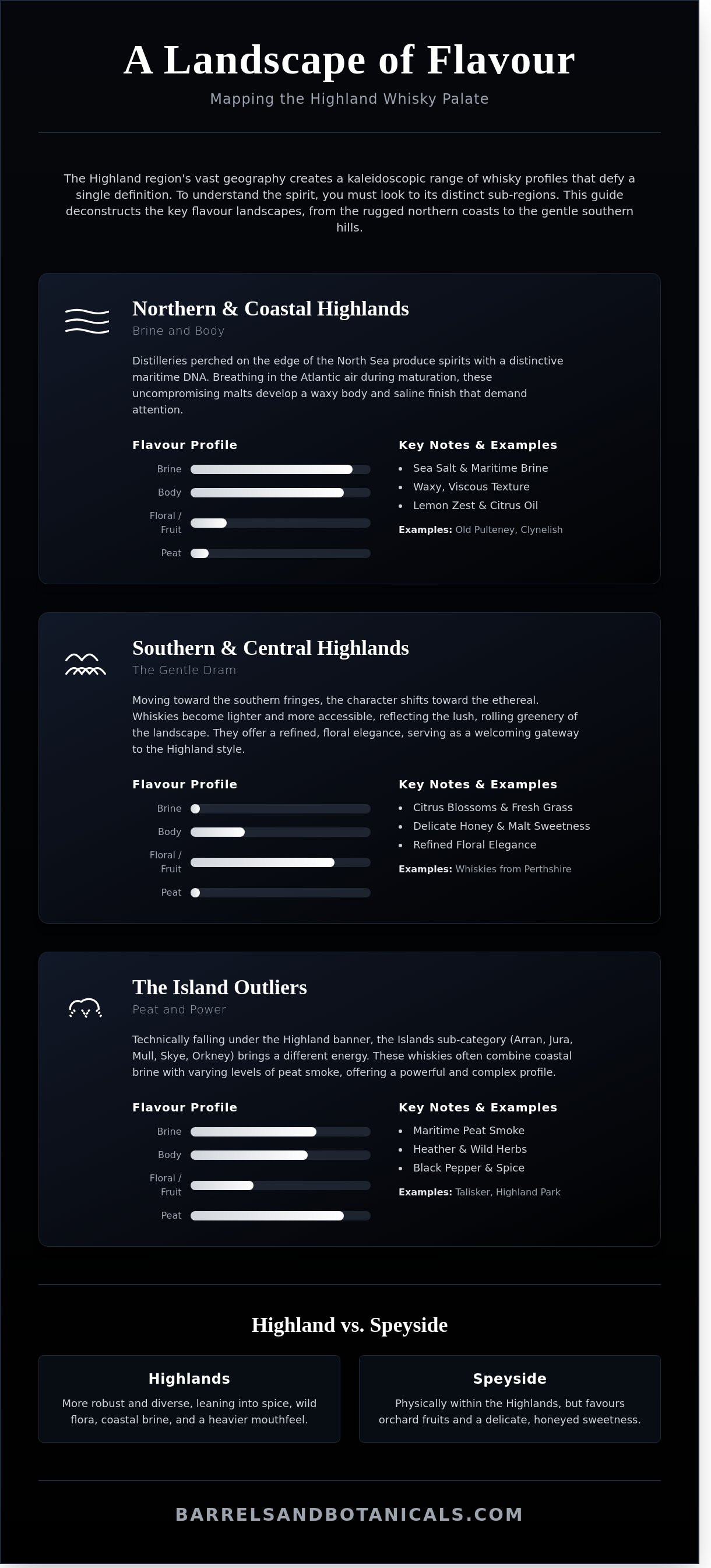
The Highland region encompasses a staggering geographical spread. This vastness results in a kaleidoscopic range of profiles that defy a single definition. To understand the liquid inside the glass, you've got to look to the cardinal points. The North offers rugged intensity; the South provides sun-dappled delicacy. East and West bridge the gap with orchard fruits and coastal smoke. It's a sensory journey through heather-clad hills and salt-sprayed cliffs. Each bottle tells a story of its specific microclimate. Nuanced. Vibrant. Distinct.
Northern and Coastal Highlands: Brine and Body
Distilleries perched on the edge of the North Sea produce spirits with a distinctive maritime DNA. Take Old Pulteney as a prime example. Its warehouses in Wick have breathed in the Atlantic air for over 190 years. This long-term maturation creates a subtle, saline finish. Clynelish is equally renowned for its unique mouthfeel. A waxy, viscous texture coats the tongue. These malts are uncompromising. They demand attention. Expect notes of sea salt, lemon zest, and a satisfying oiliness that lingers long after the final sip. The North Sea air isn't just a backdrop; it's an ingredient.
Southern and Central Highlands: The Gentle Dram
Moving toward the southern fringes, the character shifts toward the ethereal. The whiskies become lighter and more accessible. Here, the spirit often reflects the lush, rolling greenery of the landscape. Citrus blossoms. Freshly cut grass. Delicate honey. These expressions act as a welcoming gateway for those beginning their exploration of the highland style. They lack the aggressive peat of the west or the heavy brine of the north. Instead, they offer a refined, floral elegance that rewards a slow, mindful ritual. It's the taste of a summer afternoon in Perthshire captured in crystal.
For those seeking to explore these nuanced profiles at home, you can browse our curated selection of highland spirits to find your perfect match.
The Island Outliers: Peat and Power
Technically falling under the Highland banner, the Islands sub-category brings a different energy to the table. Whiskies from Skye or Orkney introduce the element of fire. Talisker is famous for its peppery kick and volcanic smoke. Highland Park balances this with a floral, heathery sweetness that's unique to the northern isles. The peat here differs from the heavy, medicinal notes of Islay. It's more atmospheric. It captures the essence of a storm-lashed coast and ancient moorland. These drams are powerhouses of flavour, yet they maintain the core regional DNA of balance and complexity. Bold botanicals. Deep roots.
- North: Waxy, salty, and robust.
- South: Grassy, floral, and light.
- East: Rich, spicy, and fruit-forward.
- West: Peaty, smoky, and maritime.
Navigating the Collection: How to Choose Your Perfect Highland Dram
Selecting a highland malt is an exercise in intentionality. It's a sensory journey that requires you to look beyond the price tag and focus on the essence of the spirit. Your choice should reflect a specific moment in time; a ritual designed for clarity and pleasure. To find your perfect match, start with your existing palate. If you enjoy the crispness of a dry white wine, look for malts aged in American oak. If you prefer the depth of a vintage port, European oak sherry casks will satisfy that craving. Bold character. Subtle finish. The region is a canvas of possibilities.
Age statements are often misunderstood. An 18-year-old whisky offers a different experience, not necessarily a superior one. Older liquids absorb more tannins from the wood, resulting in a drier, more oak-forward profile. Conversely, a 10 or 12-year-old expression often retains the vibrant, cereal-driven character of the distillery. Many boutique bottlings now opt for No Age Statement (NAS) labels. This allows blenders to select casks based on peak flavour rather than a chronological requirement. It's about the maturity of the taste, not the length of the slumber. Don't overlook these releases; they often represent the most innovative work of a master blender.
- Bourbon Barrels: These deliver notes of vanilla, honey, and coconut. Bright and inviting.
- Sherry Butts: Look for rich layers of cinnamon, dark chocolate, and raisins. Deep and celebratory.
- Wine Finishes: Port or Madeira casks offer nuances of berry or stone fruit. Complex and nuanced.
Matching the Dram to the Occasion
Context defines the experience. For a bright afternoon aperitif, choose a highland malt with citrus leanings, perhaps something with a saline edge from the northern coast. It's refreshing and sharp. For a post-dinner ritual, seek out the velvet texture of a Pedro Ximénez finish. When gifting, look for heritage brands that offer limited "Distillers Editions." These provide the prestige of a known name with the excitement of a unique flavour profile. It's a gift of discovery.
Decoding the Label: ABV, Chill-Filtration, and Colour
The label is a roadmap to quality. Seek out "natural colour." This ensures the golden hue comes from the wood, not E150a caramel dye. Look for "non-chill-filtered" text. This process preserves the natural oils and esters that provide a creamy mouthfeel. A higher ABV, typically 46% or above, ensures the botanical complexity remains intact when you add a drop of water. This is the hallmark of an artisanal, premium product. Pure essence. Zero compromise. It's a choice for quality that respects the craft of the distillery.
Curated Selections: Standout Highland Whiskies to Explore
Choosing a bottle from such a vast territory requires a discerning eye and an appreciation for nuance. The highland region doesn't follow a single script. It offers a spectrum of flavours that range from the delicate floral notes of the north to the robust, salt-flecked profiles of the coast. We've hand-picked these selections to showcase that breathtaking diversity. Whether you're seeking a familiar masterpiece or a rare discovery, these bottles represent the pinnacle of Scottish craft.
The Icons: Glenmorangie and The Dalmore
These two distilleries represent the gold standard of luxury. They've earned their reputations through decades of uncompromising quality and a commitment to the art of maturation. They aren't just household names; they're benchmarks for the entire industry.
- Glenmorangie 18 Year Old: This is a masterclass in floral elegance. It's matured for fifteen years in American white oak before a portion is finished in Oloroso sherry casks. The result is a silk-like texture. You'll find notes of honeysuckle, jasmine, and creamy vanilla on the palate.
- The Dalmore 15 Year Old: A deep dive into rich, chocolatey depths. It spends twelve years in American white oak before a three-way split finish in different Sherry woods. It's liquid velvet. Expect bold hits of Seville orange, roasted coffee, and stewed plums.
The Coastal Contenders: Oban and Old Pulteney
The geography of the Highlands dictates its character. Where the land meets the sea, the whisky takes on a vibrant, maritime personality. These bottles are essential for those who enjoy a hint of the elements in their glass.
Oban 14 Year Old is a coastal classic that provides the perfect marriage of light smoke and maritime salt. The unique, salty finish of Oban is a direct result of its harbour-front maturation, where the sea air breathes into every cask. It's balanced by a surprising citrus sweetness. In contrast, Old Pulteney 12 Year Old is known as the 'Maritime Malt' for its distinct briny honey profile. It's fresh, vibrant, and finishes with a crisp green apple snap that lingers beautifully.
The Hidden Gems: Boutique and Rare Finds
True enthusiasts often look beyond the standard distillery releases to find something truly unique. Independent bottlers play a vital role here. They source exceptional casks from famous distilleries, often bottling them at cask strength or without chill-filtration to preserve the raw essence of the spirit.
Our collection features treasures like the Gordon & MacPhail Connoisseurs Choice bottlings. These rare expressions offer a different lens on familiar names. They highlight specific vintages or experimental wood finishes that you won't find in a standard core range. It's an opportunity to experience a one-off moment in whisky history. Exploring these boutique releases is the ultimate ritual for the mindful drinker who values rarity and artisanal storytelling.
The Ritual of the Dram: Serving and Sourcing Premium Highland Malt
A fine Highland single malt represents years of patient maturation and artisanal craft. Honouring that history requires more than just a glass; it demands a mindful environment where you can appreciate every nuanced layer. The drinking experience begins with the nose. Using a tapered Glencairn glass is essential because its tulip shape concentrates the delicate aromas, allowing the heather, honey, or light peat of the highland spirit to reach your senses before the first sip. This focused design ensures the volatile esters don't escape, preserving the complex bouquet the distiller intended.
High-proof spirits often benefit from a single drop of room-temperature water. This simple addition breaks the surface tension and triggers a chemical reaction that releases hidden flavour molecules. It's a scientific method to "open up" the dram, particularly for cask-strength expressions that might otherwise overwhelm the palate with heat. To keep your collection in peak condition, store bottles upright in a cool, dark space. Unlike wine, whisky corks shouldn't stay in constant contact with the liquid, as the high ABV can degrade the seal over time.
Crafting the Perfect Tasting Ritual
Mastering the three-sip rule transforms a casual drink into a deep sensory exploration. Your first sip prepares the palate, coating the tongue to adjust to the alcohol. The second sip allows you to identify core profiles like orchard fruits or toasted oak. By the third, you'll discover the long, lingering finish. Pair your dram with intention. A rich, sherry-casked highland malt finds its perfect partner in 70% dark chocolate, while a coastal expression with a hint of brine sings alongside locally sourced smoked salmon. These combinations elevate the spirit, creating a celebratory atmosphere that respects the liquid's heritage.
Sourcing with Confidence at Barrels & Botanicals
Finding a truly exceptional bottle requires moving beyond the limited aisles of a supermarket. At Barrels & Botanicals, we operate as a specialist guide to Scotland's most diverse region. Our expertise allows us to curate a selection of rare, old, and vibrant expressions that reflect the true soul of the north. We focus on independent bottlings and limited releases that highlight the unique character of individual distilleries.
Our national delivery service is designed for the discerning enthusiast. Every bottle is packed with care, ensuring your next discovery arrives safely at your door anywhere in the UK. Whether you're seeking a gift or a cornerstone for your personal cellar, we provide the clarity and quality your collection deserves. Explore the Highland Collection and start your next flavour journey today.
Your Journey Through the Highland Peaks Begins Here
The vast terrain of the highland region offers a sensory map unlike any other in Scotland. You've explored how the landscape dictates the liquid, from the brine-washed shores of the north to the rich, fruit-forward profiles of the south. Mastering this region means embracing its sheer diversity. It's about finding that specific ritual that elevates a simple pour into a curated experience. Every bottle tells a story of weather, water, and wood.
At Barrels and Botanicals, we celebrate this craft through a collection of over 150 unique Highland expressions curated by our expert team. We're a family-run business with a deep passion for Scottish craft spirits, specialising in rare and old vintage bottlings that are often hard to find elsewhere. We believe every glass should be a mindful choice for quality. Whether you seek the nuanced nose of a coastal malt or the vibrant finish of a sherry-cask aged spirit, your perfect dram is waiting to be uncovered.
Discover Your Next Favourite Dram in Our Highland Collection
Savour the complexity of the landscape. Enjoy the clarity of a well-chosen spirit. Your next great discovery is just a single pour away.
Frequently Asked Questions
What is the typical flavour profile of a Highland whisky?
Highland whisky offers a vast sensory spectrum, typically defined by robust notes of heather honey, dried fruit, and a subtle floral essence. While the North offers firm, cereal-forward malts like Clynelish, the South tends toward a gentler, grassy elegance. It's a region of immense complexity. Expect a weightier mouthfeel compared to Lowland expressions, often accompanied by a delicate, lingering spice on the finish.
Is Highland whisky smokier than Speyside whisky?
Highland malts often carry a more pronounced peat influence than their Speyside cousins, though they rarely reach the medicinal intensity of Islay. This smoke is frequently earthy or wood-driven rather than briny. In a 2023 industry survey, Highland whiskies showed a broader range of phenol levels than the typically sweeter Speyside profiles. You'll find a nuanced wisp of smoke that enhances rather than dominates the palate.
Which Highland whisky is best for a beginner?
Glenmorangie The Original 10 Year Old is widely considered the gold standard for those beginning their Highland journey. Distilled in Scotland’s tallest stills, it's remarkably smooth with vibrant bursts of orange, honey, and creamy vanilla. It provides a clean, accessible introduction to the region's character. At approximately 40% ABV, it's gentle enough for the uninitiated while remaining deeply respected by seasoned connoisseurs.
What does 'Coastal Highland' mean in terms of taste?
Coastal Highland refers to whiskies distilled near the sea that absorb a distinct saline quality and maritime character. Distilleries like Old Pulteney in Wick or Oban on the west coast produce spirits with a discernible saltiness and a crisp, bracing finish. It's a liquid reflection of the rugged Scottish shoreline. These malts often pair exceptionally well with seafood, bridging the gap between land and sea through a mineral-rich palate.
How should I drink a premium Highland single malt?
Savouring a premium Highland single malt is a ritual that demands patience and a clean palate. Begin by tasting it neat to appreciate the master blender's original intent. Add a few drops of room-temperature spring water to unlock hidden aromatics and soften any alcohol burn. This small addition can transform the experience, revealing layers of stone fruit or delicate spice that were previously tightly bound within the spirit.
Why are some Highland whiskies so much more expensive than others?
Price variations in the Highland region are primarily driven by age statements, cask rarity, and limited production runs. A 25-year-old expression costs more due to the 2% annual evaporation known as the Angel’s Share. Rare finishes in Oloroso sherry or French oak casks also command a premium. For instance, some ultra-premium Dalmore releases have reached auction prices exceeding £100,000, reflecting their status as liquid art rather than a mere beverage.
Can I find peated whiskies in the Highland region?
You can certainly find peated Highland whiskies, with Ardmore being one of the few distilleries in the region traditionally producing a fully peated malt. Unlike the seaweed-heavy peat of the islands, Highland peat is often composed of ancient wood and heather, resulting in a drier, bonfire-like smoke. Several distilleries now release specific peated expressions alongside their unpeated core range to satisfy the growing global demand for smoky profiles.
What is the best glassware for tasting Highland scotch?
The Glencairn glass is the definitive choice for tasting Highland scotch because its tapered neck concentrates the delicate aromas toward the nose. Its wide bowl allows for easy swirling, which aerates the liquid and releases complex botanicals. Alternatively, a stemmed copita glass offers a similar sensory advantage while keeping the warmth of your hand away from the spirit. Choosing the right vessel turns a simple drink into a curated experience.