
The most divisive scent in the spirits world isn't a delicate botanical, but the ancient, decaying moss of a Scottish bog. For many, the first encounter with Islay whisky feels less like a drink and more like a medicinal dare. You likely recognize that distinctive iodine punch. The scent of sea-slicked rocks. The heavy woodsmoke that lingers. It’s a profile that demands respect, yet often leaves enthusiasts feeling overwhelmed by its intensity.
You don't have to settle for confusion when choosing between the 9 active distilleries on the island. We'll show you how to distinguish between the briny, medicinal giants of the south and the surprisingly floral, elegant malts of the north. You'll learn why a £95 cask strength bottle might offer more character than a 25 year old age statement. We're exploring the full flavor spectrum, providing you with the knowledge to gift a rare bottle or serve a masterclass at home. Salt air. Smouldering peat. Pure craft. We’re detailing the essential ritual of the pour to ensure every sip is a mindful celebration of the island’s rugged essence.
Key Takeaways
- Explore the geographical divide of the "Queen of the Hebrides" to distinguish between the bold, medicinal south and the nuanced, elegant north.
- Master the buyer’s framework for evaluating islay whisky, focusing on how higher ABV preserves the spirit’s signature oily texture and peated essence.
- Uncover the curated selections every connoisseur should own, including foundational bottles that define the region’s iconic smoky character.
- Elevate your drinking ritual with professional serving techniques, from choosing the right glassware to appreciating the vibrant finish of each dram.
What is Islay Whisky? Understanding the Peated Essence
Islay is the undisputed Queen of the Hebrides. This rugged island off Scotland’s west coast isn't just a geographical landmark; it's a protected Scotch Whisky region under the Scotch Whisky Regulations 2009. To understand the essence of Islay single malts, you must look to the earth. Peat is the defining ingredient here. It's a dense, dark layer of decayed organic matter, comprised of sphagnum moss, heather, and ancient roots. When this peat is burned to dry the malted barley, it releases a pungent, aromatic smoke that becomes chemically bonded to the grain.
The result is a spirit that's unapologetically bold. It's nuanced. It's vibrant. The Islay Ritual is a departure from the quick, casual drinks of the mainland. These whiskies demand a slower, more mindful consumption. It's an invitation to sit by a fire and let the layers of smoke, medicinal iodine, and sea salt unfold on the palate. This isn't just a drink; it's a curated experience for the senses. The ritual begins with the right glassware and ends only when the long, smouldering finish finally fades.
The Role of Terroir: Sea Spray and Heather
The island's exposed location dictates the character of every maturing cask. Atlantic storms batter the warehouses on the shore, forcing salt-heavy air into the porous oak. This creates the briny, maritime notes that define the region's profile. Water sources also contribute to the depth of flavour. Many distilleries use water that has filtered through thick layers of peat for centuries. Islay terroir is the marriage of Atlantic brine and ancient moss.
Peat Intensity: Understanding PPM
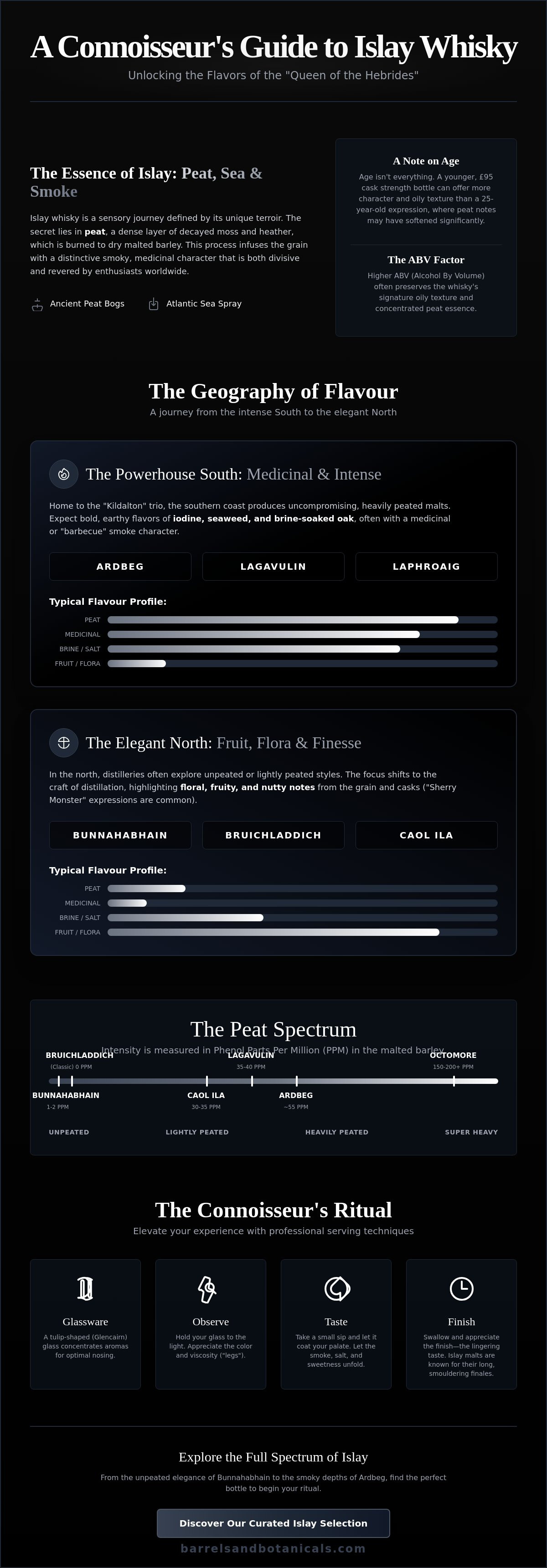
Peat intensity is measured in Parts Per Million (PPM) of phenols found in the malted barley. It's a technical figure that enthusiasts often use to gauge "smokiness," but it doesn't tell the whole story. The distillation process and the shape of the stills can strip away or concentrate these phenols. A heavily peated Octomore release might reach 208 PPM, yet it remains sophisticated and floral. This contrasts sharply with the unpeated elegance of Bunnahabhain, which focuses on fruit and nut profiles. A high PPM doesn't always mean an aggressive spirit; it's the balance that matters.
The Geography of Flavour: South Coast vs. North Islay
To master the islay ritual, you must first understand the island’s topography. Geography dictates the spirit. The island naturally divides into two primary stylistic camps, offering a roadmap for the discerning palate. On the rugged south coast, the air is thick with salt and history. In the north and west, the character shifts toward the floral and the experimental. This distinction is the first step in narrowing your search for the perfect bottle. It's about finding the balance between fire and finesse.
The Powerhouse South: Medicinal and Intense
The "Kildalton" trio defines the southern edge. Ardbeg, Lagavulin, and Laphroaig stand as the three pillars of intensity. These distilleries produce the holy grail for seasoned peat-heads. The profile here is uncompromising. Bold botanicals. Earthy depths. Think heavy iodine. Seaweed drying on a sun-warmed pier. Brine-soaked oak. Laphroaig is famous for its medicinal punch, often compared to antiseptic or bandages. Lagavulin offers a more structured, elegant smoke, reminiscent of lapsang souchong tea and dried fruit. According to Forbes' Guide to Islay Whiskies, these southern malts provide the most traditional gateway into the world of heavy peat. When tasting, look for the "barbecue" profile in Ardbeg, where the smoke feels like charred wood and sweet bacon rather than a pharmacy shelf.
The Elegant North: Fruit, Flora, and Subtle Smoke
Head north to find a softer, more nuanced islay experience. Distilleries like Bunnahabhain and Bruichladdich often eschew heavy peat entirely. Bunnahabhain is renowned for its "Sherry Monster" expressions. These are rich, unpeated whiskies aged in Oloroso casks. They offer notes of roasted nuts and dark chocolate. It’s an ideal entry point for those wary of smoke. Bruichladdich takes an artisanal approach. They focus on Scottish barley and transparency. Their "Classic Laddie" is unpeated, floral, and vibrant. It celebrates the essence of the grain over the influence of the bog. These expressions prove that the island’s soul isn't just found in the smoke, but in the meticulous craft of the distillation itself. For those ready to explore these lighter profiles, you can find a curated selection of premium Islay spirits that highlight this diversity.
The central "hidden gems" complete the picture. Caol Ila sits quietly on the northeast coast, producing an oily, citrus-forward spirit that provides the backbone for many famous blends. It's elegant and understated. On the west, Kilchoman operates as a true farm distillery. Founded in 2005, it was the first new distillery on the island in 124 years. It brings a fresh, farmyard peat that feels distinct and raw. Every corner of the island offers a different ritual. Every bottle tells a different story of the land. Nuanced. Vibrant. Essential.
How to Choose Your Islay: A Buyer’s Framework
Selecting an islay expression requires a shift in focus from heritage to technical specifications. You're looking for the structural integrity of the spirit. Start with the ABV. Standard 40% bottlings often undergo chill-filtration; this process removes fatty acids to prevent cloudiness but strips away the texture. Seek out whiskies at 46% or higher. Cask strength offerings, frequently exceeding 50% ABV, deliver a viscous, mouth-coating experience. This higher proof preserves the essential oils that carry the smoke. It's a sensory gain. Pure. Unfiltered. Intense.
Cask Selection: Bourbon vs. Sherry
The vessel defines the narrative. Most Islay whiskies mature in ex-bourbon barrels. These casks impart bright notes of vanilla, toasted coconut, and citrus. They allow the medicinal, briny smoke to remain the protagonist. Sherry casks, particularly Oloroso or Pedro Ximénez, introduce a different ritual. They weave layers of sun-dried figs, dark chocolate, and "Christmas cake" spice into the peat. A 2023 industry report noted a 12% increase in wine-cask finishes across the Hebrides. Distillers now experiment with French oak, Amarone, or Sauternes casks to add a vibrant, vinous acidity to the traditional profile.
- Bourbon Casks: Clean smoke, lemon zest, honeyed sweetness.
- Sherry Casks: Treacle, walnut, spiced plum.
- Wine Finishes: Red berry brightness, tannic structure, floral lift.
Age and the "Peat Fade" Phenomenon
Age isn't a linear measurement of quality. In the peated landscape, time is a transformative agent that actually reduces smoke intensity. Younger whiskies, aged between 5 and 10 years, possess a punchy, aggressive phenol character. They're vibrant and raw. As the spirit spends decades in wood, the volatile smoke molecules break down. A 25-year-old bottle won't hit with the same campfire blast as a 10-year-old. Instead, it offers a sophisticated integration of wood and spirit. Age softens the phenol bite but deepens the rancio and oak character. You're trading raw power for nuanced elegance. Choose your bottle based on the energy you desire for your ritual.
Standout Selections: Featured Islay Whiskies to Buy
Selecting the right bottle is a sensory journey through salt, soil, and spirit. The Islay collection at Barrels & Botanicals acts as a curated map of this rugged terrain. Each expression represents a specific moment in the island’s history. For the newcomer, the Laphroaig 10 Year Old is the definitive starting point. It's unapologetically medicinal. Notes of iodine and seaweed mingle with a sharp, cold smoke. It isn't just a drink; it's a profound initiation into the peated ritual.
Those seeking a more contemporary expression will find it in the Port Charlotte 10. This heavily peated malt showcases the North Islay style with absolute precision. It's vibrant and bracing. The smoke is cleaner than its southern neighbours, balanced by a creamy texture and hints of ginger. Conversely, the Bunnahabhain 12 offers the perfect sanctuary for those who prefer Islay heritage without the heavy smoke. It's a rich, sherried dram defined by dried fruits and roasted nuts. It proves that the spirit of the island remains potent even when the peat fire is dimmed.
For the serious collector, our selection occasionally features independent bottlings or limited releases that transcend the standard range. These bottles represent the peak of craftsmanship. They're often bottled at cask strength, preserving the raw, unfiltered essence of the distillery. Such acquisitions are more than mere purchases. They are investments in liquid art that tell a story of a single season or a specific warehouse corner.
The Peat-Head’s Choice: Ardbeg and Laphroaig
Ardbeg remains the wild child of the south coast. The An Oa expression offers a rounded, smoky sweetness thanks to its time in Pedro Ximénez casks. If you crave intensity, the Uigeadail delivers a collision of dark chocolate and heavy peat smoke. For fans of layered complexity, the Laphroaig Lore is essential. It blends whiskies of various ages to create a deep, silken texture. You can explore current availability in our Islay collection to secure your next bottle.
The Sophisticated Alternative: Caol Ila and Bowmore
Caol Ila 12 is often called the hidden workhorse of the island. It's refined and oily. Expect a coastal profile with flickers of lemon peel and gentle campfire. Bowmore offers a different balance entirely. It's famous for a distinct tropical fruit note, such as charred pineapple, that sits beneath the smoke. Pricing varies significantly to suit different intentions. Entry-level bottles typically start around £45, while premium collector editions can reach £250 or more for aged expressions.
Ready to elevate your home bar with the finest peated spirits? Shop the full Islay whisky collection now.
The Connoisseur’s Ritual: Serving and Pairing Islay
The ritual of islay is a deliberate act of appreciation. It's a sensory performance that rewards patience and precision. To truly elevate the experience, your environment should reflect the liquid in your glass. Quiet surroundings, a comfortable leather chair, and the right temperature are essential. Serve your dram at a steady room temperature, typically between 15°C and 18°C. This range ensures the volatile compounds remain active without the alcohol becoming overly aggressive.
Glassware selection is your first critical decision. The Glencairn glass is the industry standard for a reason. Its unique tulip shape concentrates the peat smoke toward the rim, allowing you to dissect the nuanced layers of brine and medicinal spice. Conversely, a traditional heavy-bottomed tumbler offers a tactile, weighted satisfaction. It's better suited for those who prefer their whisky with a large, slow-melting ice sphere, though purists often argue this mutes the complex botanical essence of the spirit.
The water debate is a matter of chemistry. A single drop of filtered, room-temperature water can transform a dram. It breaks the surface tension and releases trapped esters. The oils bloom. In many high-strength expressions, this small addition tames the initial heat, revealing hidden notes of citrus peel or dark chocolate that were previously masked by the peat’s intensity.
The Art of the Pour
Patience is the secret ingredient. Once poured, let the spirit breathe for at least ten minutes. This allows the heavier phenolic compounds to settle and the more delicate aromas to rise. When you begin the nosing process, keep your mouth slightly open. This technique prevents the high ABV from singeing your olfactory senses, allowing you to detect the scent of damp earth and sea spray. For a deeper look at these techniques, explore this whisky shop Turriff guide to refine your personal tasting ritual.
Islay and the Cigar Ritual
The smoky profile of islay whiskies finds a natural companion in premium tobacco. There is a profound synergy between the medicinal peat of a Laphroaig and the earthy, spicy notes of a full-bodied New World or Cuban cigar. The saltiness of the whisky cuts through the richness of the smoke, creating a balanced, lingering finish on the palate. It’s a sensory explosion designed for slow consumption. You can find curated pairing inspiration in this cigar shop Turriff guide, which explores the intersection of fine spirits and artisanal cigars.
- Bold botanicals. The essence of the island.
- Intentional service. Every detail matters.
- Refined pairings. A legacy of flavor.
Embrace the Spirit of the Hebrides
Islay whisky isn't just a spirit. It's a rugged, sensory map of the Scottish coast. You've now navigated the contrast between the medicinal intensity of the southern distilleries and the nuanced, floral notes found in the north. Every drop tells a story of peat, salt, and time. At Barrels and Botanicals, our family-run expertise is rooted in generations of Scottish distilling tradition. We've hand-selected a range of over 70 islay expressions to ensure your home bar reflects true artisanal quality. Peat smoke. Sea salt. Refined craftsmanship. From the first nose to the lingering finish, the right dram transforms a simple evening into a curated ritual. We provide national UK delivery on all our premium spirits and cigars, bringing the essence of the islands directly to your door. It's time to slow down and savour the complexity of a masterfully distilled bottle. Your next discovery is waiting.
Explore our curated Islay Whisky Collection and find your next exceptional dram
Frequently Asked Questions
What makes Islay whisky different from other Scotch regions?
Islay whisky is defined by its intense, peat-driven profile and maritime influence. While other regions focus on fruit or malt, Islay's 9 active distilleries harness the island's unique peat, which contains high levels of marine vegetation. This creates a bold, medicinal character. Expect salt spray on the nose and an earthy, bonfire finish on the palate. It's a sensory ritual unlike any other.
Is all Islay whisky smoky?
No, not all islay whisky is smoky. While the region is famous for its peat, distilleries like Bunnahabhain and Bruichladdich produce exceptional unpeated expressions. These bottles highlight the coastal influence without the veil of smoke. The Bunnahabhain 12 Year Old, for instance, offers a rich, nutty profile with a hint of sea air. It's a nuanced choice for those seeking the island's essence without the fire.
What is the best Islay whisky for a beginner?
The best Islay whisky for a beginner is often the Bowmore 12 Year Old or Bunnahabhain 12 Year Old. These expressions provide a gentle introduction to the island's character. Bowmore offers a subtle, honeyed smoke that doesn't overwhelm the palate. It's a balanced dram. For those wary of smoke, Bunnahabhain provides a coastal, malty experience that's incredibly approachable and sophisticated.
How should I drink Islay whisky to get the best flavour?
You should drink Islay whisky neat in a tulip-shaped Glencairn glass to experience its full aromatic complexity. This specific glassware concentrates the volatile phenols, allowing the nose to capture every nuance of brine and smoke. Sip slowly. Let the liquid rest on your tongue. The ritual of the pour is as important as the drink itself. It's about intentional living and savouring the craft.
Why does some Islay whisky taste like medicine or iodine?
The medicinal or iodine taste comes from the high concentration of phenolic compounds in the peat used during the malting process. Laphroaig is the most famous example of this profile. The island's peat is rich in sphagnum moss and seaweed, which imparts those distinct antiseptic notes. It's a bold, polarizing flavour. For many, it's the ultimate mark of Islay authenticity.
Does adding water to Islay whisky ruin the smoky taste?
Adding a few drops of room-temperature water doesn't ruin the smoky taste; it actually releases trapped esters and oils. This process, known as opening up the dram, can reveal hidden layers of citrus or vanilla beneath the heavy peat. Use a pipette for precision. One or two drops are often enough to transform the palate. It's a master blender’s secret for a more vibrant experience.
What are the most famous distilleries on Islay?
The most famous distilleries on islay include the Kildalton Trio of Ardbeg, Laphroaig, and Lagavulin. These three icons are located on the island's south coast and are known for the most intense peated profiles in the world. Other essential names include Bowmore, the island's oldest distillery founded in 1779, and Caol Ila, which provides the smoky backbone for many world-famous blends.
Can I buy rare Islay whiskies online for delivery in the UK?
You can certainly buy rare Islay whiskies online for delivery across the UK through specialist spirits retailers. Most reputable shops offer next-day delivery for orders placed before 2 pm. Expect to pay between £5 and £12 for secure, insured shipping. Whether you're seeking a limited Feis Ile release or a vintage Ardbeg, the UK's digital marketplace provides direct access to the island's finest liquid gold.